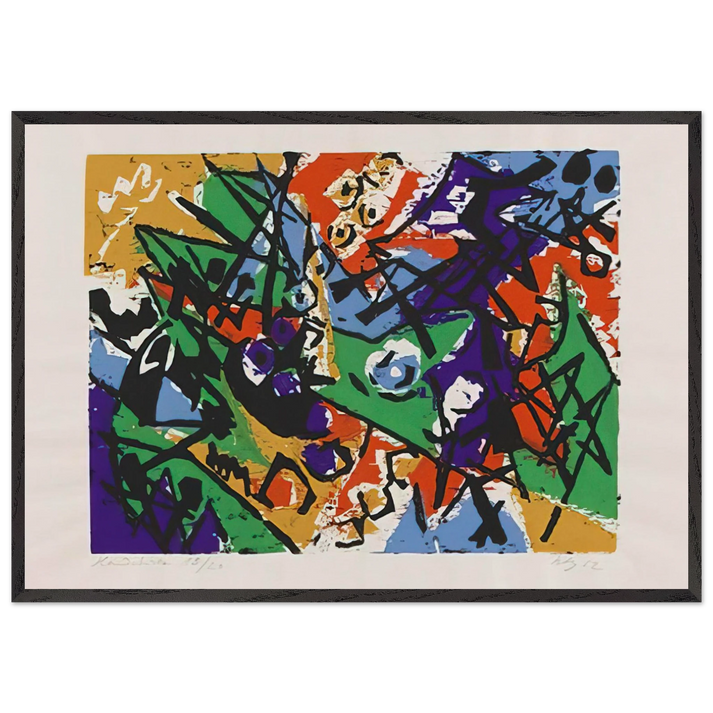
What is the historical significance of Ernst Wilhelm Nay's Farbholzschnitt 1952-2?
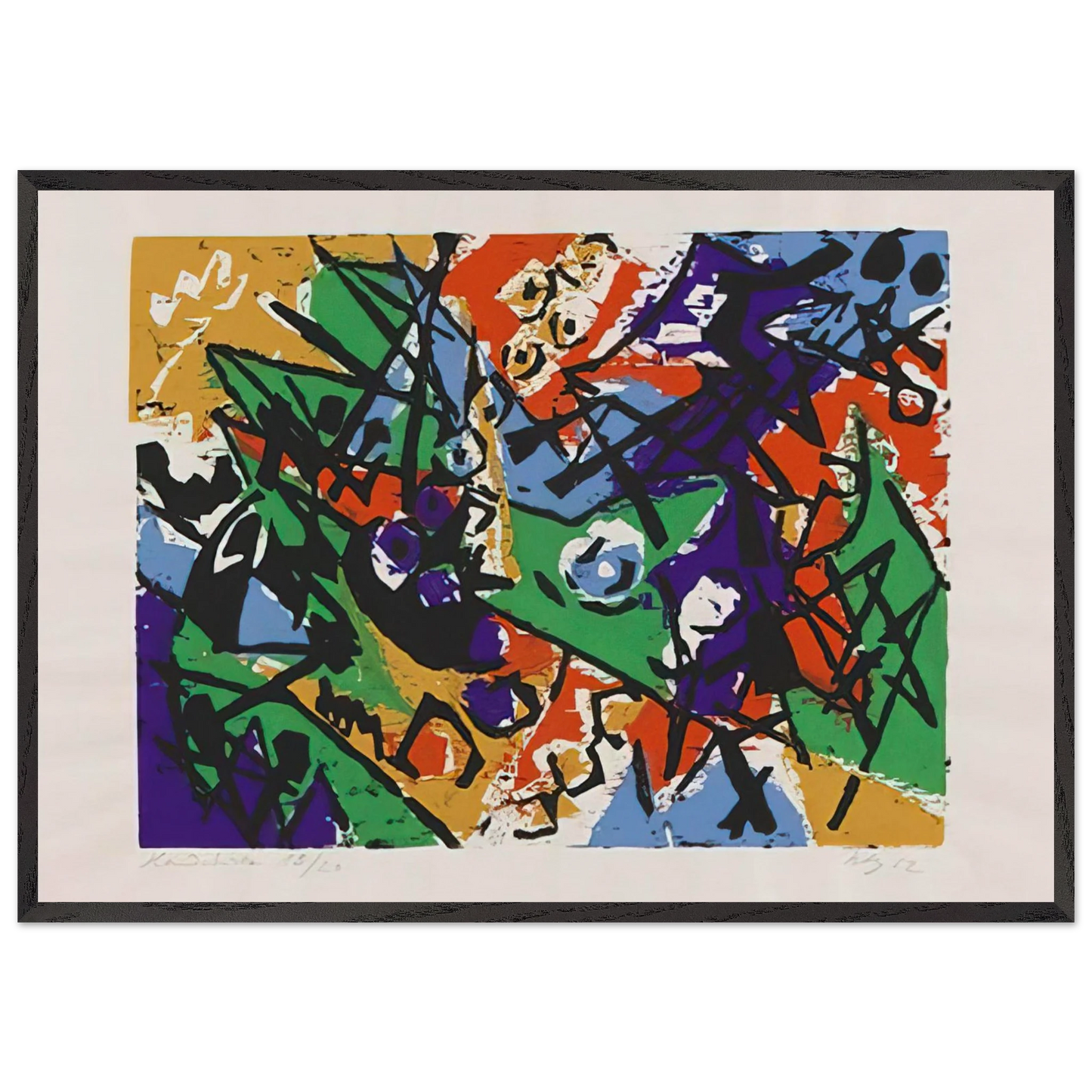
Farbholzschnitt 1952-2 is a pivotal color woodcut from 1952 by German abstract artist Ernst Wilhelm Nay, reflecting his post-war exploration of rhythmic forms and vibrant palettes that influenced European modern art.
What are the specifications of the paper used for this fine art print?
This museum-quality reproduction uses 250 gsm (110 lb) matte, uncoated, natural white archival paper with a thickness of 0.29 mm (11.4 mils), ensuring durability and optimal color reproduction for your framed art print.
How is the black wooden frame constructed and what are its measurements?
The frame is made from responsibly sourced oak and ash wood, measuring 20mm (0.79") thick and wide—wider than classic 14mm frames—providing a sturdy, gallery-style presentation for your ready-to-hang art piece.
Does this print include protection and is it ready to hang?
Yes, it features shatterproof plexiglass for protection and comes with a hanging kit, making it a ready-to-hang framed art print that you can display immediately upon arrival.
What makes this reproduction archival and sustainable?
This print uses FSC-certified sustainable materials and archival museum-quality paper, designed to resist fading and degradation, ensuring long-term preservation of your color woodcut reproduction.
How does Nay's technique in this woodcut reflect his artistic style?
Nay employed layered color woodcut techniques in Farbholzschnitt 1952-2 to create dynamic, abstract compositions, showcasing his mastery of form and hue that defined his mid-century oeuvre.
What is the overall size of the framed print including the frame?
The overall dimensions including the 20mm black wooden frame are approximately 74x104 cm (29.1x40.9 inches), offering a substantial presence for your home or office decor.