
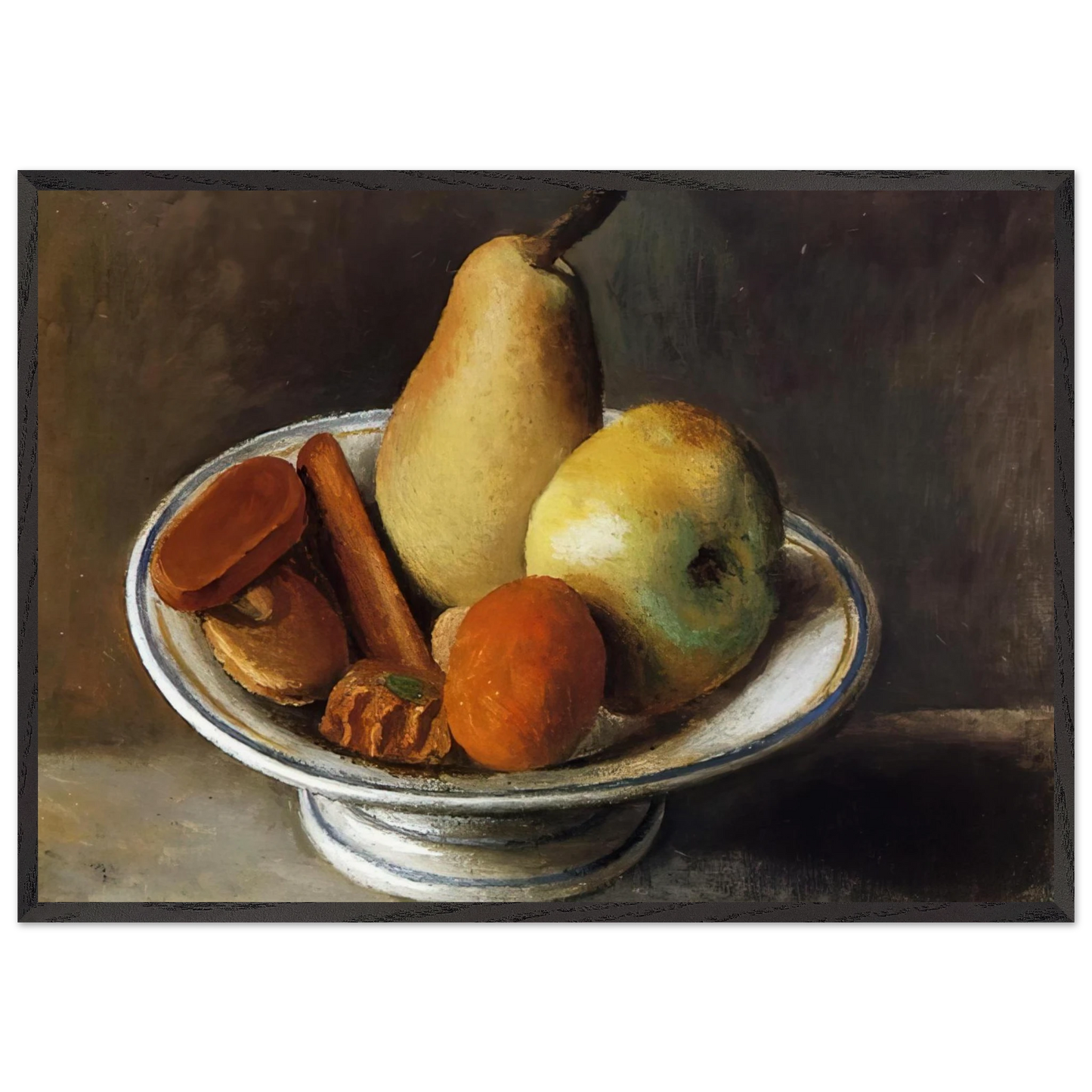
What is the historical significance of Picasso's Fruit Bowl with Fruit (1918)?
Created during Picasso's Synthetic Cubist phase, this artwork exemplifies his shift toward collage-like compositions, using geometric shapes and bold colors to deconstruct and reassemble everyday objects, influencing modern art movements.
How does the frame enhance this art print?
The black wooden frame, made from responsibly sourced oak and ash with a 20mm thickness, provides a sturdy, gallery-style border that complements the Cubist aesthetic and ensures long-term protection.
What are the specifications of the archival paper used?
This fine art print uses 250 gsm (110 lb) matte, uncoated archival museum-quality paper, 0.29 mm thick, offering excellent color fidelity and durability for a premium reproduction.
Is this framed print ready to hang?
Yes, it includes a hanging kit and is fully assembled, allowing for immediate display as a ready-to-hang masterpiece in your home or office.
How does the shatterproof plexiglass protect the artwork?
The shatterproof plexiglass safeguards the print from dust, UV rays, and physical damage while maintaining optical clarity, ensuring your museum-quality art print remains pristine.
What makes this a sustainable art print option?
It features FSC-certified or equivalent sustainable paper and responsibly sourced wood frames, reflecting RedKalion's commitment to eco-friendly fine art reproductions.
Can you describe Picasso's technique in this still life?
Picasso employed Synthetic Cubism here, layering flat, angular forms and vibrant hues to create a dynamic, almost collage-like effect that challenges traditional perspective and realism.