
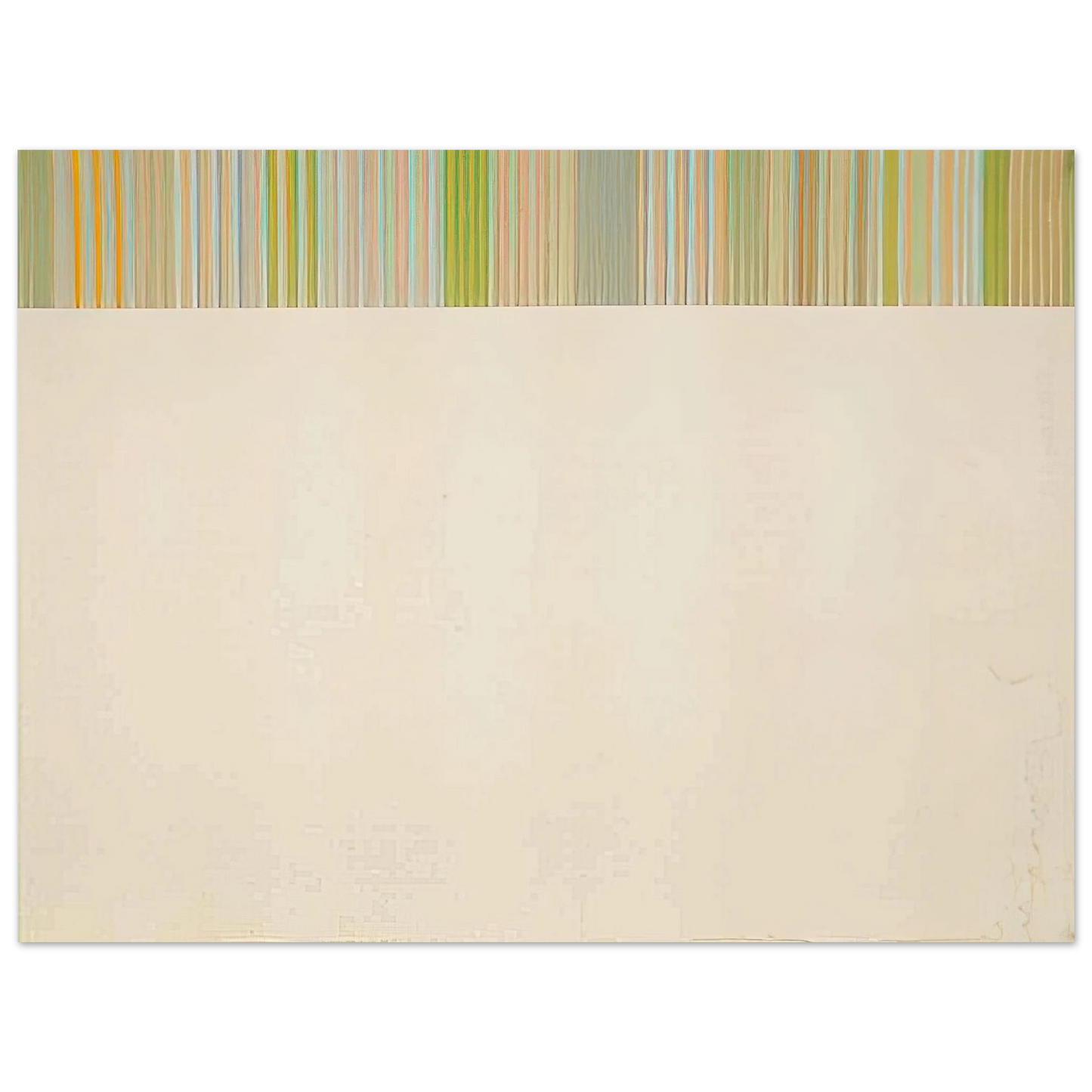
What is the historical significance of Gene Davis's "Treble" (1975)?
"Treble" (1975) is a key work by Gene Davis, a leading figure in the Washington Color School. It exemplifies Color Field painting with vertical stripes that explore color perception and rhythm, reflecting mid-20th century American abstraction.
How does the stripe pattern in "Treble" create visual effects?
The alternating bold stripes in "Treble" use contrasting hues to produce optical vibrations and a sense of movement, engaging viewers in a dynamic experience that mimics musical treble tones.
What are the specifications of the fine art print paper?
This museum-quality reproduction uses Master's Edition archival paper: matte, uncoated, natural white, 250 gsm (110 lb) weight, 0.29 mm (11.4 mils) thickness, acid-free (pH above 7) to prevent yellowing, and FSC-certified for sustainability.
How is the print shipped and is there a minimum order?
We offer no minimum orders; each Gene Davis Treble print is printed and shipped on demand to ensure freshness and reduce waste, with careful packaging for protection.
How long will this archival print last without fading?
Our acid-free, museum-quality paper ensures this fine art print resists yellowing and fading for decades, making it a durable investment for home or office decor.