
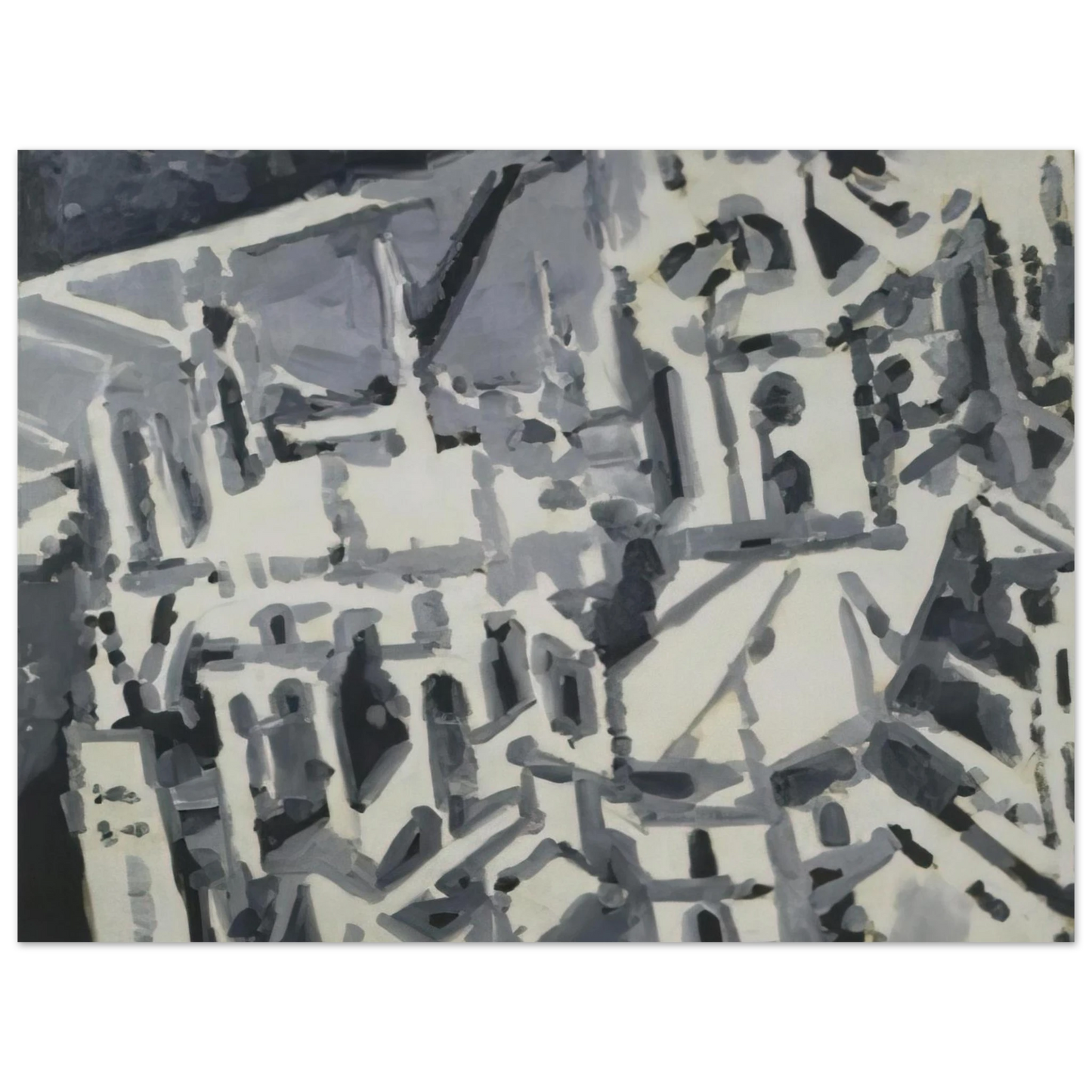
What is the historical significance of Gerhard Richter's TOWNSCAPE M9 1968?
TOWNSCAPE M9 1968 is a pivotal work from Gerhard Richter's early photorealist period, showcasing his innovative blur technique that bridges photography and painting, influencing 20th-century abstract art and capturing urban nostalgia.
How does the blur effect in TOWNSCAPE M9 enhance its artistic meaning?
Richter's blur dissolves concrete architectural forms into atmospheric light, creating a dreamlike quality that evokes ambiguity and emotional depth, transforming a townscape into a meditative visual experience.
What are the specifications of the Master's Edition archival paper used for this fine art print?
This museum-quality reproduction features acid-free, FSC-certified paper with a matte finish, 250 gsm weight, 0.29 mm thickness, and natural white color for premium durability and texture.
How is the print packaged and shipped to ensure it arrives in perfect condition?
Each print is carefully rolled in acid-free tissue, shipped in a sturdy tube via tracked delivery, with no minimum orders and fulfillment on demand for convenience.
What measures are taken to guarantee the archival longevity of this art poster?
Using acid-free paper with a pH above 7 prevents yellowing, ensuring this fine art print maintains its vibrancy and quality as a long-lasting collectible piece.
Can you describe the mood and aesthetic of TOWNSCAPE M9 1968?
This artwork evokes a nostalgic, contemplative mood with its blurred urban imagery, blending photorealism and abstraction to create a hauntingly beautiful atmospheric townscape.
Why is the matte, uncoated finish ideal for Richter's TOWNSCAPE M9?
The matte finish reduces glare and enhances the subtle tonal variations in Richter's blur technique, offering a luxurious texture that complements the artwork's ethereal quality.