
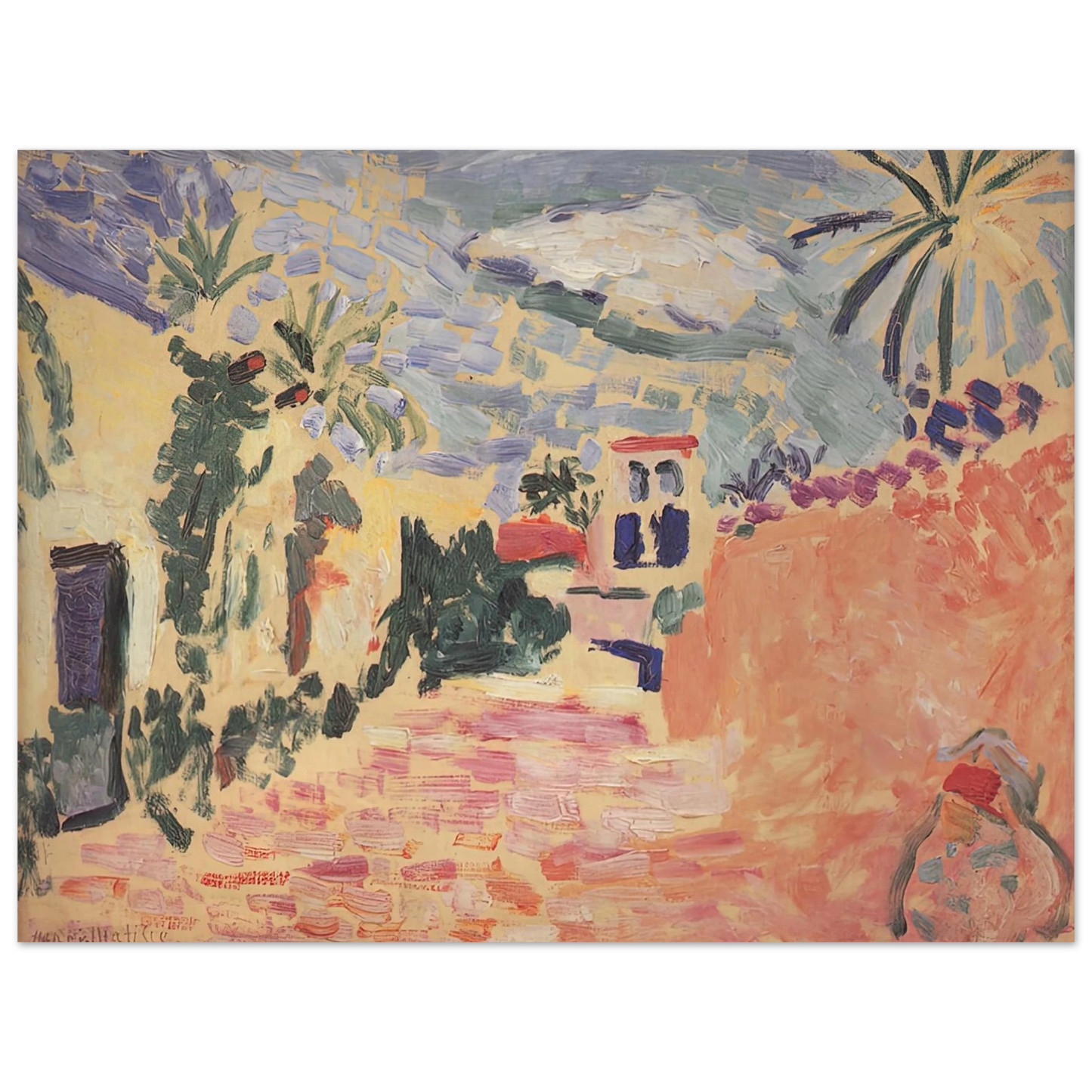
What is the historical significance of Henri Matisse's Street at Biskra 1906?
This painting is a key Fauvist work where Matisse used bold, non-naturalistic colors to capture the light and mood of Biskra, Algeria, revolutionizing early 20th-century art with emotional expression over realism.
How does the color palette in Street at Biskra reflect Matisse's style?
Matisse employed vibrant oranges, greens, and blues to evoke warmth and energy, showcasing his Fauvist technique of using color for emotional impact rather than accurate depiction.
What are the specifications of the paper used for this fine art print?
It's printed on Master's Edition archival paper with a matte, uncoated finish, natural white color, 250 gsm weight, 0.29 mm thickness, and acid-free properties for long-lasting quality.
Is this print archival and will it resist yellowing over time?
Yes, the acid-free paper (pH above 7) ensures this museum-quality reproduction maintains its vibrancy and prevents yellowing, making it a durable investment for art lovers.
How is the print shipped and are there minimum order requirements?
We print and ship on demand with no minimum orders, using careful packaging to protect your 75x100 cm fine art poster during transit for a seamless delivery experience.
What makes this reproduction a museum-quality piece?
Our premium archival paper and precise color matching replicate Matisse's original textures and hues, offering a high-end fine art print suitable for gallery display.
Is the paper environmentally sustainable?
Yes, the FSC-certified paper ensures responsible sourcing, aligning with RedKalion's commitment to eco-friendly practices in producing archival art reproductions.