
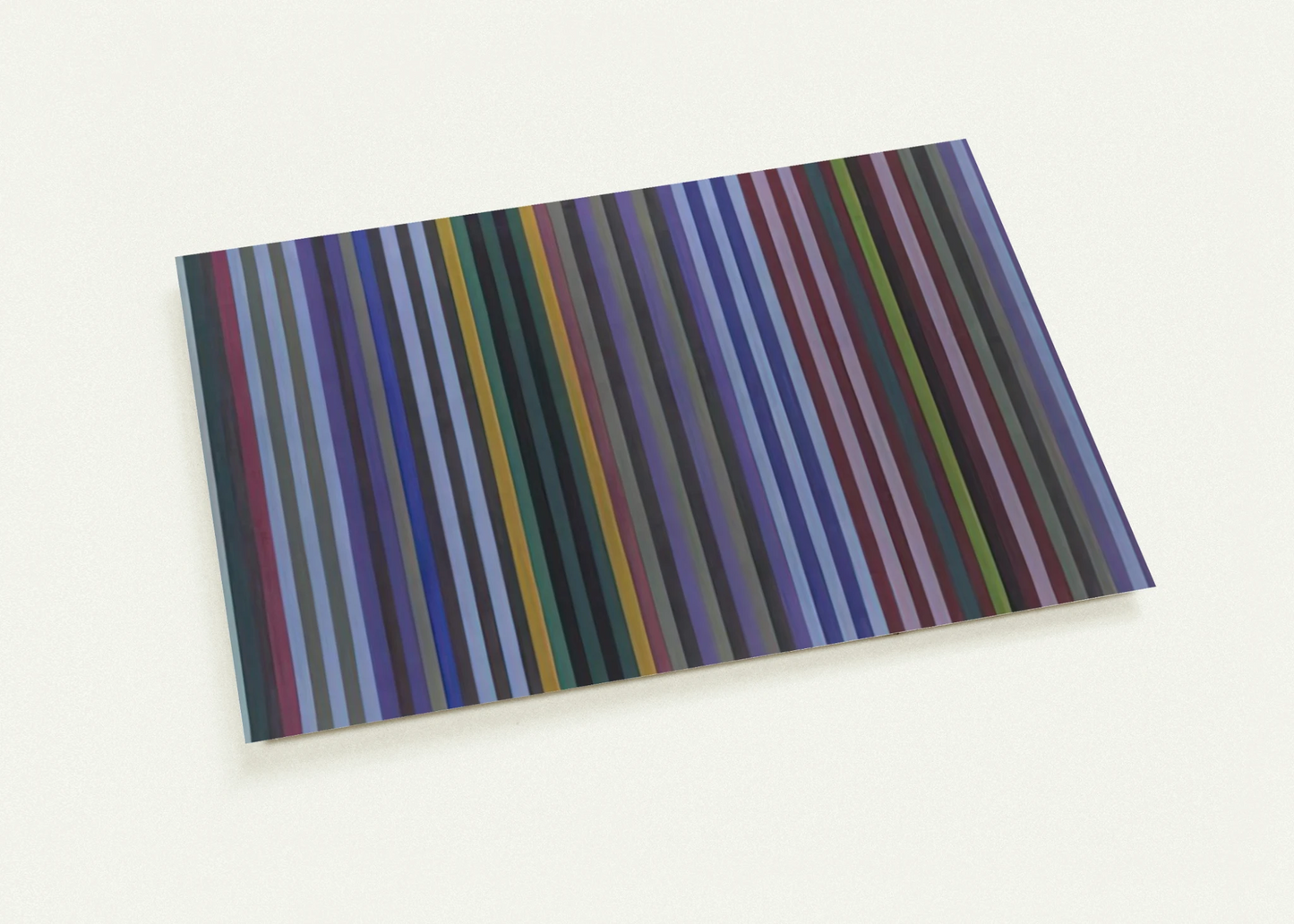
Discover Unlimited Art Possibilities
At RedKalion, you can find virtually any artwork from any artist, available in a wide range of sizes to perfectly match your space.
If you didn’t find what you’re looking for, contact us at support@redkalion.com . We will source any artwork and produce it in any size and format you need, including art prints, posters, canvas, framed pieces, framed canvas, and more.
For dedicated art enthusiasts, we also offer handcrafted replicas of any artwork, carefully painted by highly skilled artists using traditional techniques.
For custom requests, contact us at support@redkalion.com .
What is the significance of Gene Davis's Mohawk - 1970 in art history?
Mohawk - 1970 is a key work by Gene Davis, a pioneer of the Washington Color School, known for his vertical stripe paintings that explore color theory and visual rhythm in abstract art.
How does the color reproduction compare to the original artwork?
Our 12-color fine art printing technology delivers vivid, accurate colors with stunning depth, ensuring a museum-quality reproduction that faithfully captures Gene Davis's vibrant palette.
What are the specifications of the post cards in this pack?
Each post card measures A6 (10.5 x 14.8 cm / 4.1 x 5.8 inches), with a smooth matte finish, 200 gsm (80 lb) paper weight, and 0.26 mm (10.3 mils) thickness for durability.
Are these post cards environmentally friendly?
Yes, they are printed on eco-friendly, FSC-certified paper, reflecting RedKalion's commitment to sustainable fine art reproductions.
How are these post cards produced and shipped?
They are printed on demand with no minimum orders, ensuring fresh quality and efficient shipping for your Gene Davis post cards pack.
Can I use these post cards for framing or display?
Yes, their A6 size and premium paper make them ideal for framing or as standalone art pieces, perfect for enhancing any space with archival-grade quality.
What makes Gene Davis's stripe technique unique in Mohawk - 1970?
Davis used alternating vertical stripes to create a rhythmic, optical effect, experimenting with color interactions to evoke movement and emotion in this 1970 abstract work.