

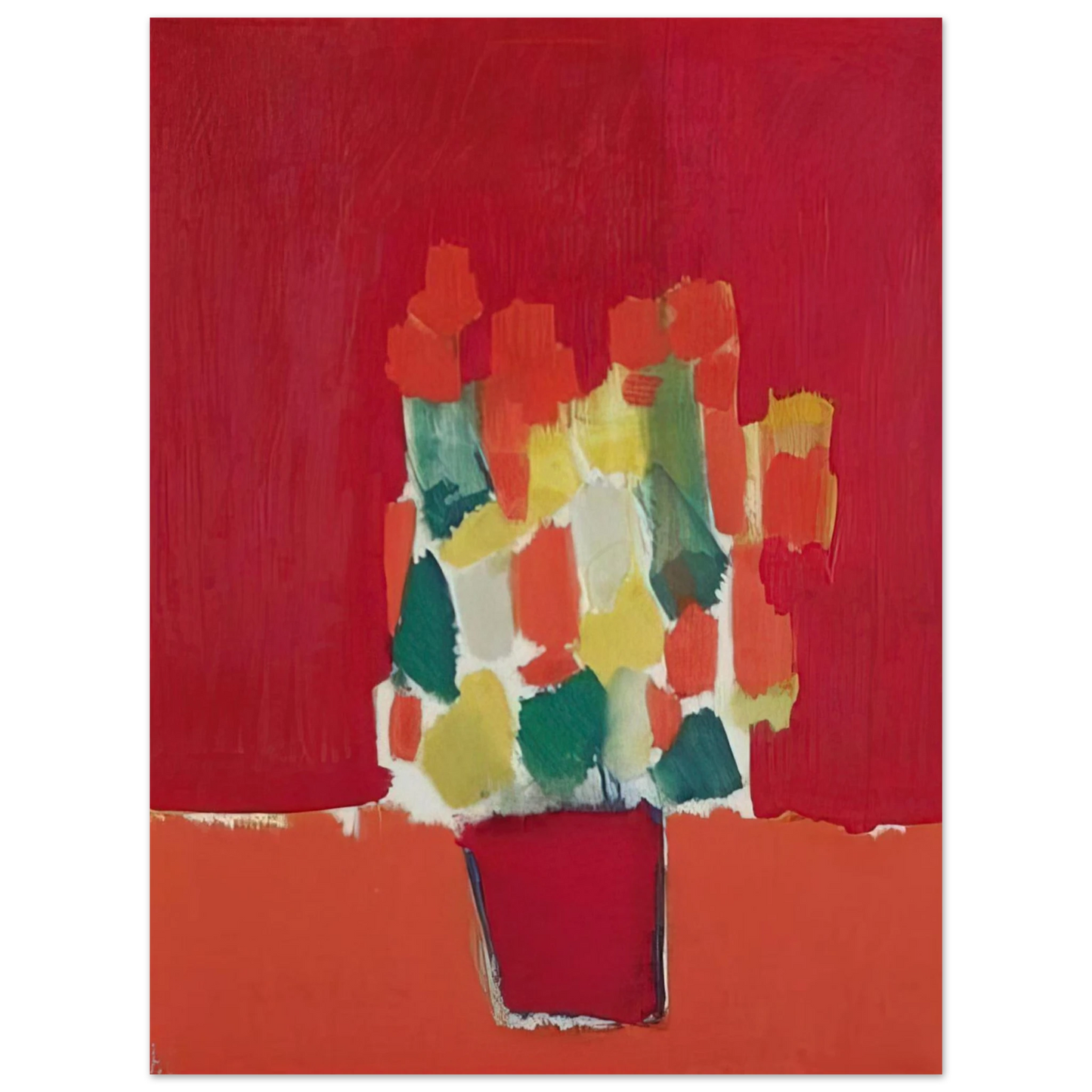
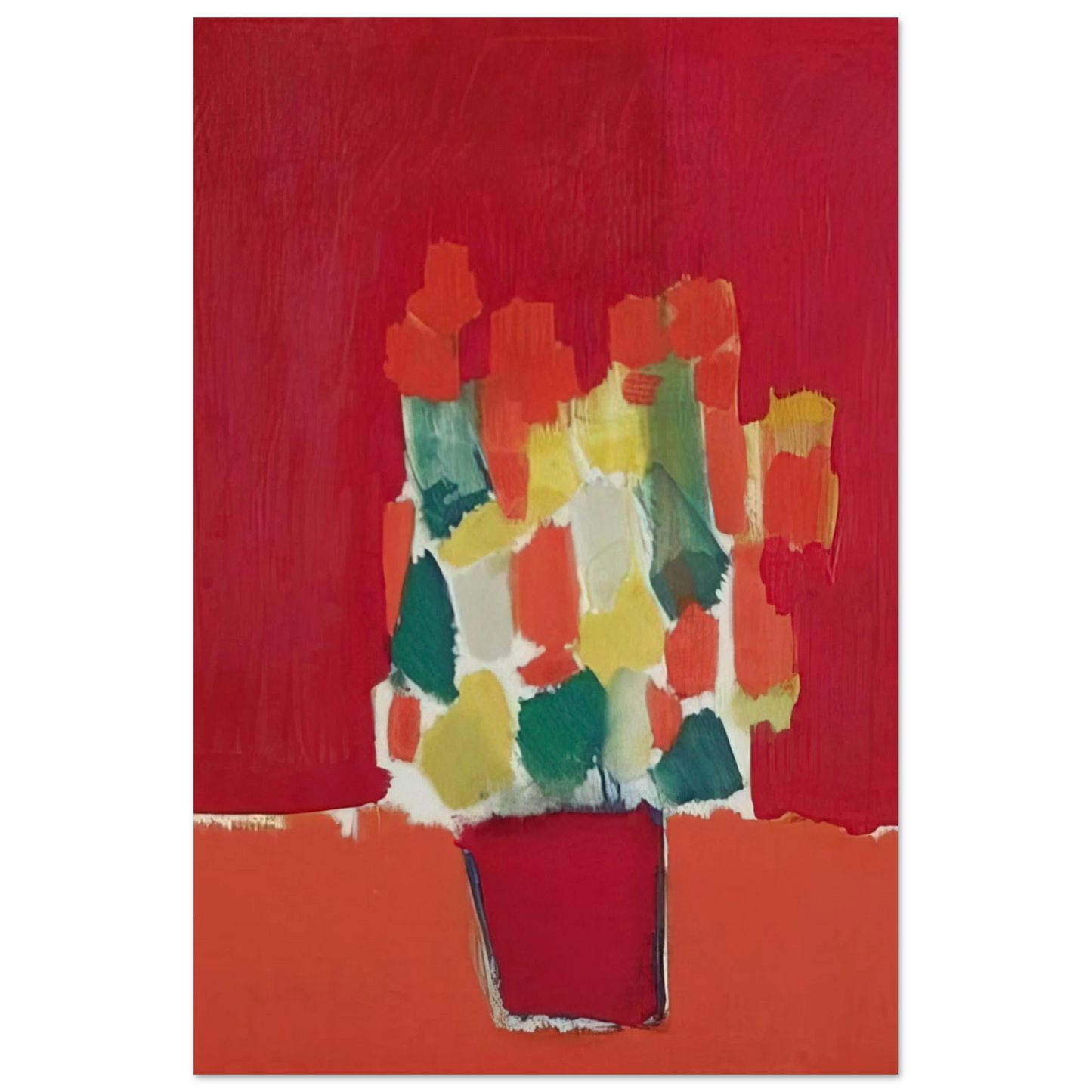
What is the significance of Nicolas de Staël's "Fleurs rouges" from 1952?
"Fleurs rouges" is a key work from de Staël's abstract period, showcasing his impasto technique and emotional use of color to bridge figurative and modernist styles in post-war art.
How does the Master's Edition archival paper enhance this fine art print?
Our museum-quality paper features a matte, uncoated finish and natural white hue, replicating the original texture while ensuring archival longevity with acid-free, FSC-certified materials.
What are the specifications for paper weight and thickness?
The print uses 250 gsm (110 lb) paper with a 0.29 mm (11.4 mils) thickness, providing a durable, premium feel suitable for framing and display.
How is this print shipped and are there minimum orders?
We offer on-demand printing and shipping with no minimum orders, ensuring fast fulfillment and reducing waste for a sustainable art purchase.
Will this archival print resist yellowing over time?
Yes, the acid-free paper (pH above 7) prevents yellowing, preserving the vibrant colors of this Nicolas de Staël reproduction for decades.
What artistic techniques did de Staël use in "Fleurs rouges"?
De Staël employed thick impasto layers and bold red hues to create a textured, abstract composition that conveys emotional depth and modernist innovation.
How does this print reflect de Staël's transition in style?
This 1952 work marks his shift from figurative to abstract expressionism, using floral motifs to explore form and color in a dynamic, post-war context.