
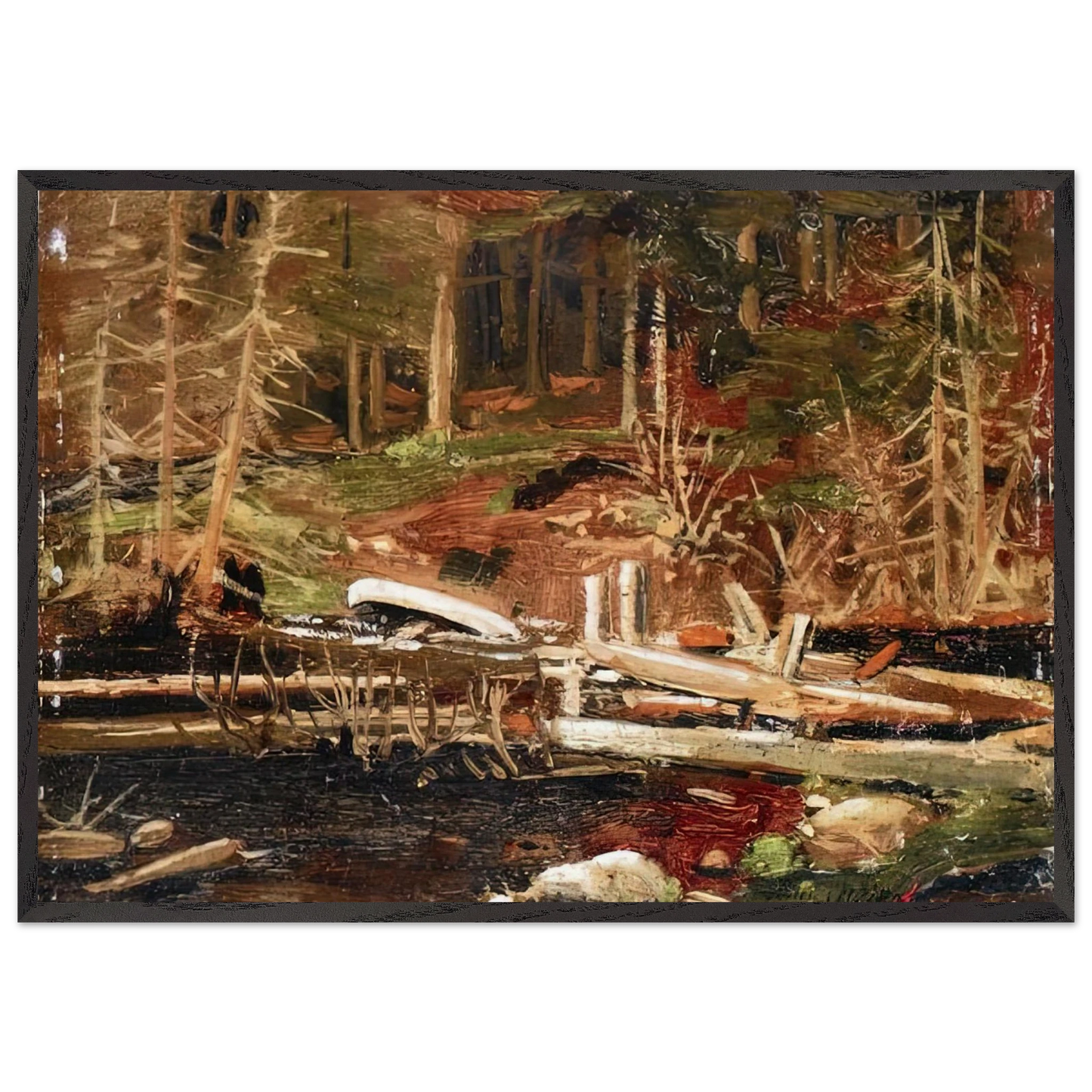
What is the historical significance of "Old Lumber Dam Algonquin Park 1912" by Tom Thomson?
This painting is a key work by Tom Thomson, a precursor to the Group of Seven, capturing the wild beauty of Algonquin Park and influencing Canadian landscape art with its bold colors and expressive technique.
What details make this Tom Thomson print a high-quality reproduction?
Our museum-quality print uses 250 gsm archival paper with a matte finish to accurately replicate Thomson's brushwork, framed in responsibly sourced wood for a premium fine art display.
What are the specifications of the frame and paper in this framed art print?
The frame is 20mm thick black wood from oak and ash, with shatterproof plexiglass, and the print is on 250 gsm FSC-certified matte paper, ensuring durability and an archival-grade reproduction.
How is this print shipped and is it ready to hang?
It includes a hanging kit and is shipped securely, ready to hang directly on your wall for immediate enjoyment of this Tom Thomson artwork.
Is this print archival and how long will it last?
Yes, it uses archival museum-quality paper and materials, designed to resist fading and last for generations as a lasting fine art investment.
What techniques did Tom Thomson use in this Algonquin Park painting?
Thomson employed impasto and vibrant color contrasts to depict the lumber dam's textures, reflecting his on-site sketching style that defined early 20th-century Canadian art.
Why is Algonquin Park important in Tom Thomson's artwork?
Algonquin Park was Thomson's primary inspiration, where he created many works like this one, highlighting its wilderness as a symbol of Canadian identity in art history.