
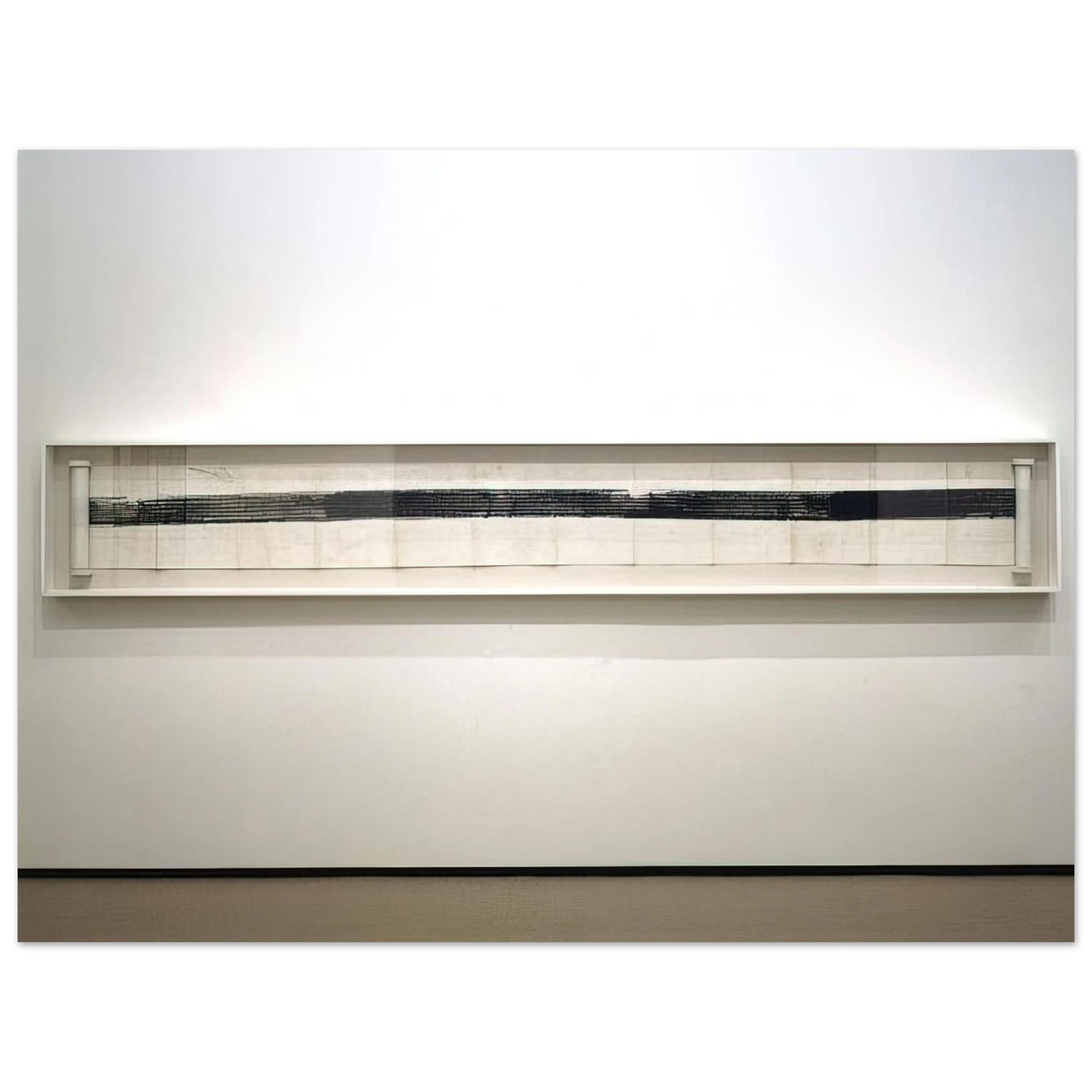
What is the historical significance of Robert Rauschenberg's AUTOMOBILE TIRE PRINT 1953?
This artwork is a key Neo-Dada piece from 1953, where Rauschenberg used an inked tire to create a print, challenging traditional art methods and blending everyday objects with fine art, reflecting post-war American innovation.
How does the paper quality ensure this is a museum-quality reproduction?
Our Master's Edition archival paper is acid-free (pH above 7), FSC-certified, and 250 gsm thick, providing a durable, matte finish that replicates gallery standards for a premium fine art poster.
What are the exact dimensions and finish of this fine art print?
This print measures 75x100 cm (30x40 inches) with a matte, uncoated, natural white finish, offering a luxurious texture ideal for displaying this archival masterpiece.
How is the print shipped and are there minimum order requirements?
We print and ship on demand with no minimum orders, ensuring each museum-quality reproduction is freshly crafted and delivered directly to you.
Will this archival print yellow or fade over time?
No, the acid-free paper (pH above 7) prevents yellowing, making this a long-lasting fine art poster that maintains its quality for years.
What technique did Rauschenberg use to create AUTOMOBILE TIRE PRINT 1953?
Rauschenberg inked an automobile tire and drove it over paper, creating a direct impression that merged industrial processes with artistic expression in this iconic work.
Why is the matte, uncoated finish chosen for this reproduction?
The matte, uncoated finish enhances the natural texture and off-white hue, providing an authentic, gallery-like appearance for this museum-quality print.