
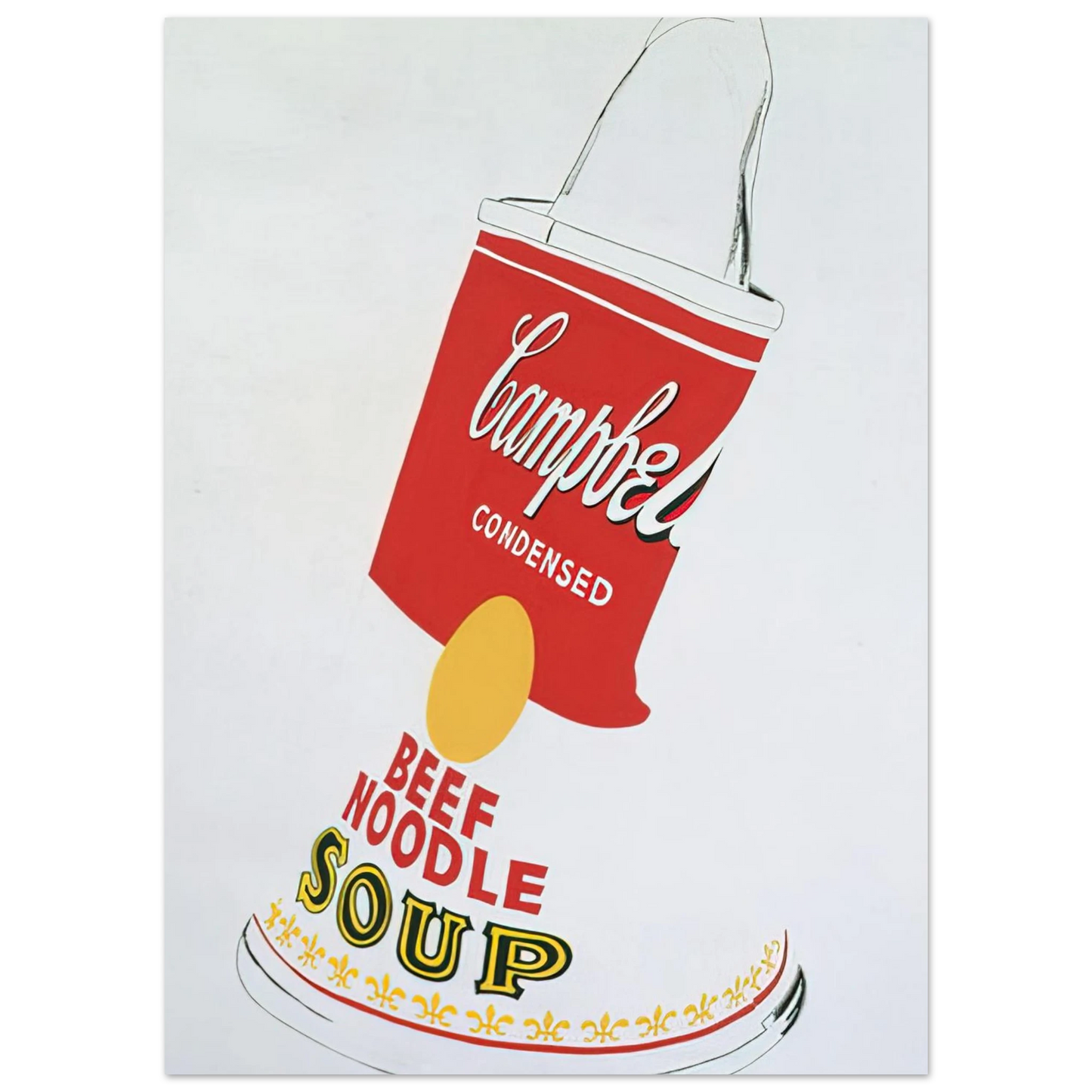

What paper quality is used for this Andy Warhol print?
We use our Master's Edition archival paper. It is a museum-quality, 250 gsm (110 lb) natural white paper with a luxurious matte, uncoated finish for an authentic fine art feel.
Will the colors of the Campbell's Soup Can fade over time?
No. Our prints are acid-free with a pH above 7, meaning they are chemically stable and resistant to yellowing or fading, ensuring archival-grade longevity for your collection.
Is the paper used for this poster sustainably sourced?
Yes, all our prints use FSC-certified paper or equivalent certifications, ensuring that your art acquisition supports responsible forest management and environmental sustainability.
How is the artwork shipped and are there minimum orders?
At RedKalion, there are no minimum orders. Each print is produced on demand and shipped in robust packaging to ensure it arrives in pristine, gallery-ready condition.
Does the print have a glossy or matte finish?
This print features a sophisticated matte finish. The uncoated surface prevents reflections, allowing the bold colors and details of Warhol's work to be viewed clearly from any angle.
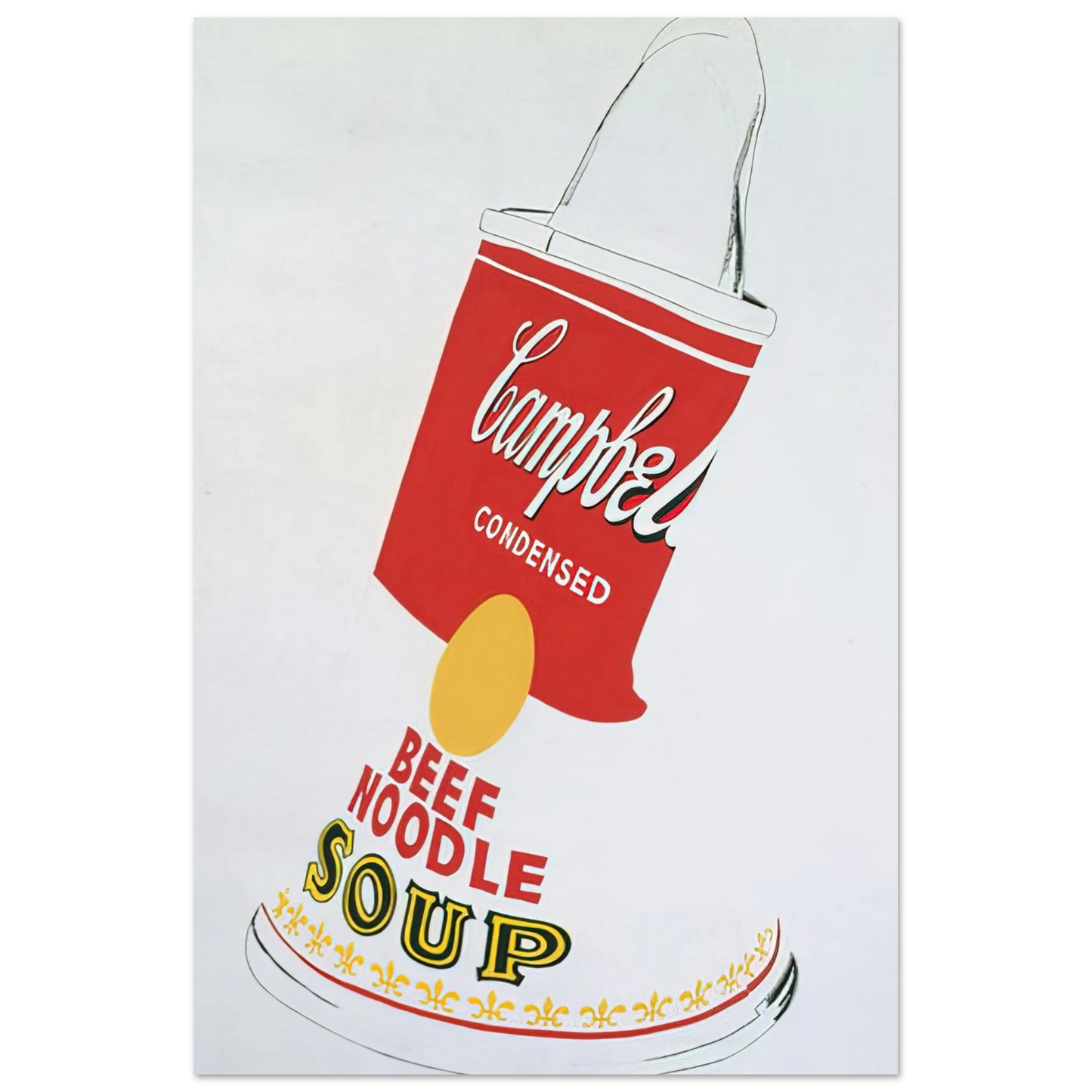
What is the significance of the 'crushed' can in Warhol's work?
The crushed can represents a shift from the commercial perfection of his early work to a more humanized, transient view of consumer objects, highlighting the lifecycle of mass-produced goods.
Why did Warhol choose 'Beef Noodle' as a specific subject?
Warhol famously claimed to eat Campbell's soup every day for twenty years; the specific flavors like Beef Noodle represent the ubiquitous, shared experience of the American middle class.