

Discover Unlimited Art Possibilities
At RedKalion, you can find virtually any artwork from any artist, available in a wide range of sizes to perfectly match your space.
If you didn’t find what you’re looking for, contact us at support@redkalion.com . We will source any artwork and produce it in any size and format you need, including art prints, posters, canvas, framed pieces, framed canvas, and more.
For dedicated art enthusiasts, we also offer handcrafted replicas of any artwork, carefully painted by highly skilled artists using traditional techniques.
For custom requests, contact us at support@redkalion.com .
What makes a brushed aluminum DIBOND® print unique?
Aluminum DIBOND® offers a sophisticated, 3mm thick rigid base with a horizontal silver grain. The metallic finish shines through white areas, providing a dynamic depth and modern texture that traditional paper cannot replicate.
How does the matte finish affect the artwork's appearance?
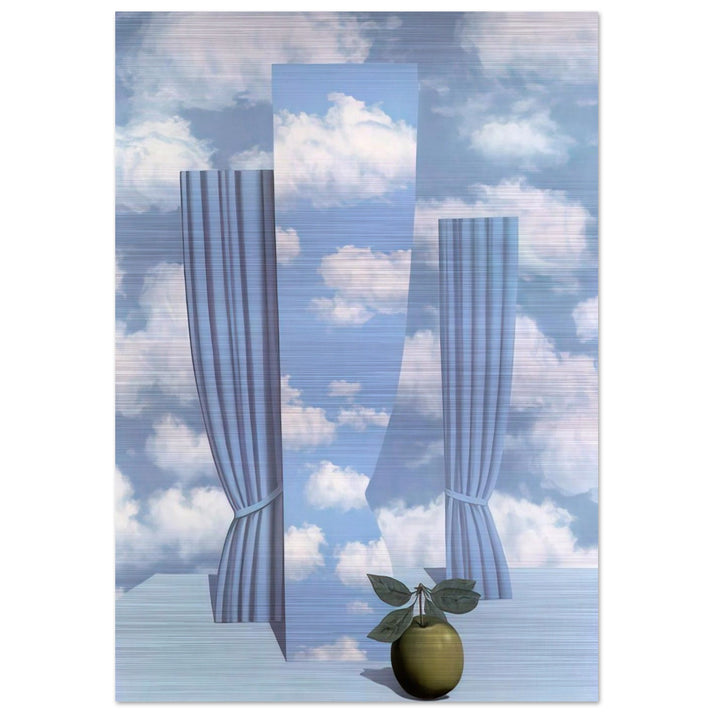
The matte finish eliminates glare and reflections, ensuring that the intricate details of Magritte's 'Beautiful World' remain visible from any angle, even in brightly lit rooms or galleries.
Is the hanging hardware included with the print?
Yes, every Rene Magritte print from RedKalion arrives with a professional hanging kit. The specific hardware provided is tailored to the fulfillment country to ensure a secure and seamless installation.
What are the archival qualities of this aluminum print?
Our direct-to-substrate printing process uses UV-resistant inks on a composite aluminum panel, ensuring exceptional longevity and resistance to fading, moisture, and temperature fluctuations for an archival-grade display.
How is the 70x100 cm print packaged for shipping?
RedKalion utilizes heavy-duty, protective packaging designed for large-format fine art. Each aluminum panel is secured against scratches and impact to ensure it arrives in pristine, museum-ready condition.
What is the significance of the drapery in Magritte's 'Beautiful World'?
In 'Le Beau Monde' (1962), the curtains represent the boundary between the known and the unknown. Magritte uses this motif to challenge our perception of reality and the mystery of the visible world.
Does this 1962 work reflect Magritte's mature Surrealist style?
Yes, by 1962 Magritte had refined his 'poetic realism.' This piece features his iconic cloud imagery and paradoxes, showcasing the technical precision and intellectual depth of his final decade of work.