
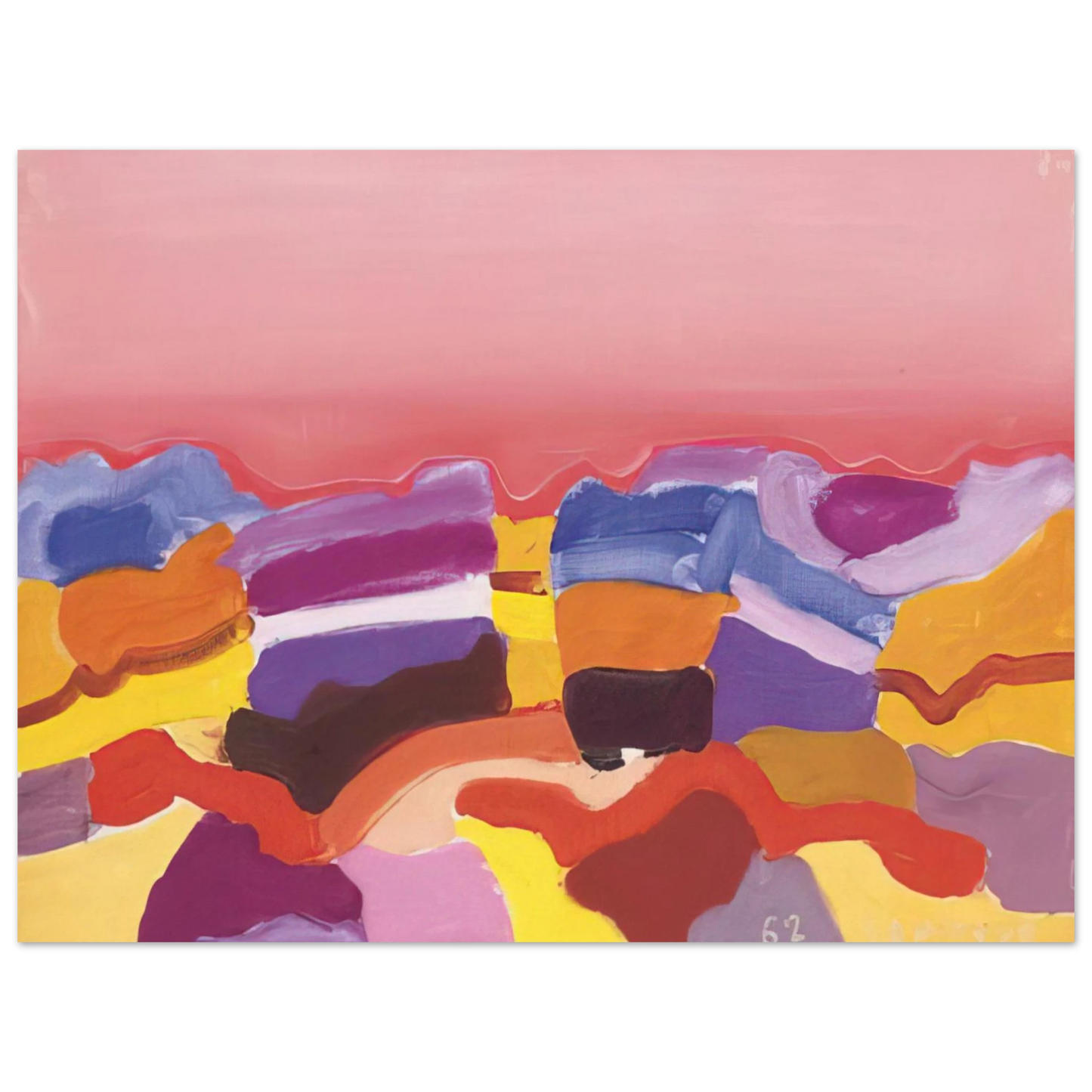
What defines the quality of this Charles Lapicque print?
This is a museum-quality reproduction printed on 250 gsm Master's Edition archival paper. It features a matte, uncoated finish and natural white tone, ensuring the artwork looks sophisticated and true to Charles Lapicque's original 1962 vision.
Is the paper used for "Désert" (1962) sustainable?
Yes. RedKalion uses FSC-certified paper, ensuring that your fine art print meets the highest environmental and social standards. We fulfill orders on-demand to reduce carbon footprint and eliminate overproduction.
How does the matte finish affect the viewing experience?
The matte, uncoated finish provides a luxurious, non-reflective surface. This prevents glare from indoor lighting, allowing the vibrant colors and rhythmic lines of Lapicque's work to be viewed clearly from any angle.
Will this archival reproduction fade over time?
No. We use acid-free paper with a pH above 7. This archival-grade material prevents the paper from yellowing or becoming brittle, ensuring your Charles Lapicque print retains its brilliance for decades.
How is shipping handled for RedKalion fine art posters?
We offer secure, global shipping with no minimum order requirements. Each 75x100 cm print is produced on demand and packaged in protective materials to ensure it arrives at your door in pristine condition.
What was Charles Lapicque's artistic philosophy in 1962?
In 1962, Lapicque was refining his "Blue-Red" color theory, where he reversed traditional perspective by using blue for foregrounds and red for distances, creating a unique sense of movement and energy found in "Désert".
Why is "Désert" considered a significant piece in Lapicque's body of work?
"Désert" represents Lapicque's transition into a more lyrical, fluid style. It showcases his ability to translate scientific optical principles into emotional, abstract landscapes, making it a cornerstone of 1960s French abstraction.