

Discover Unlimited Art Possibilities
At RedKalion, you can find virtually any artwork from any artist, available in a wide range of sizes to perfectly match your space.
If you didn’t find what you’re looking for, contact us at support@redkalion.com . We will source any artwork and produce it in any size and format you need, including art prints, posters, canvas, framed pieces, framed canvas, and more.
For dedicated art enthusiasts, we also offer handcrafted replicas of any artwork, carefully painted by highly skilled artists using traditional techniques.
For custom requests, contact us at support@redkalion.com .
What makes this Helen Frankenthaler print museum-quality?
RedKalion uses high-definition UV printing on 4mm acrylic, ensuring color accuracy and depth that mirrors the original work. Our archival-grade materials prevent fading, preserving the integrity of the Frankenthaler masterpiece for decades.
What are the technical specifications of the acrylic material?
The print is crafted from 4mm (0.15") high-grade acrylic with straight-cut corners. Transparent areas in the original art default to white to ensure the colors remain vibrant and the image remains crisp across the entire surface.
How is the artwork mounted and displayed?
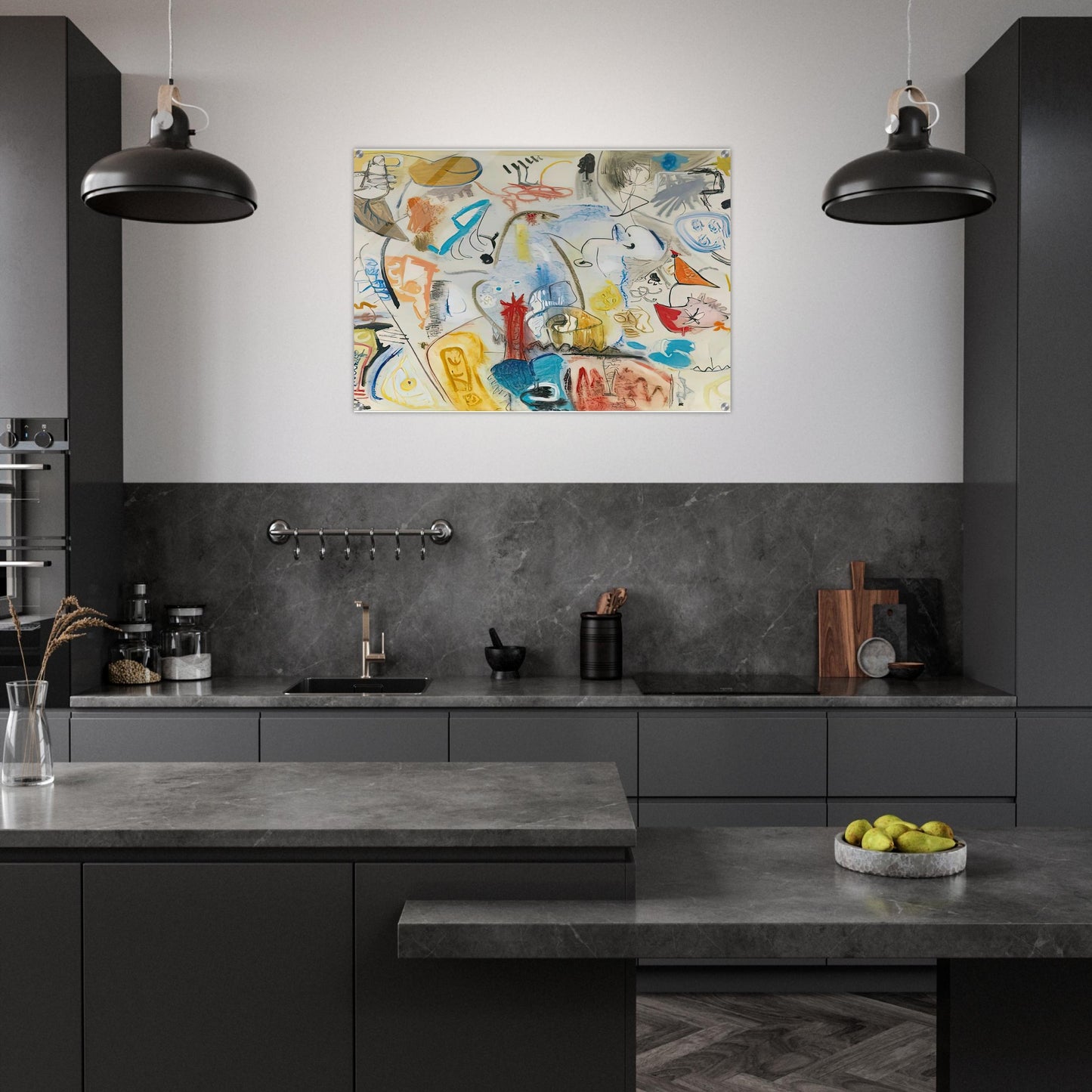
Each 70x100 cm print includes a mounting kit with four screws. The acrylic has pre-drilled holes (8mm diameter) located 14mm from each corner, designed to fit the 15mm screw heads for a secure, floating effect.
How does RedKalion ensure the archival longevity of the print?
We utilize UV-resistant inks and industrial-grade acrylic that protects the artwork from environmental stressors. This combination ensures the print remains vibrant without yellowing or color degradation over time, maintaining its value as a fine art piece.
What is the shipping process for large acrylic prints?
Each print is securely packaged in protective layers and reinforced crates to prevent scratches or cracks during transit. We provide tracked, insured shipping to ensure your Helen Frankenthaler reproduction arrives in pristine gallery condition.
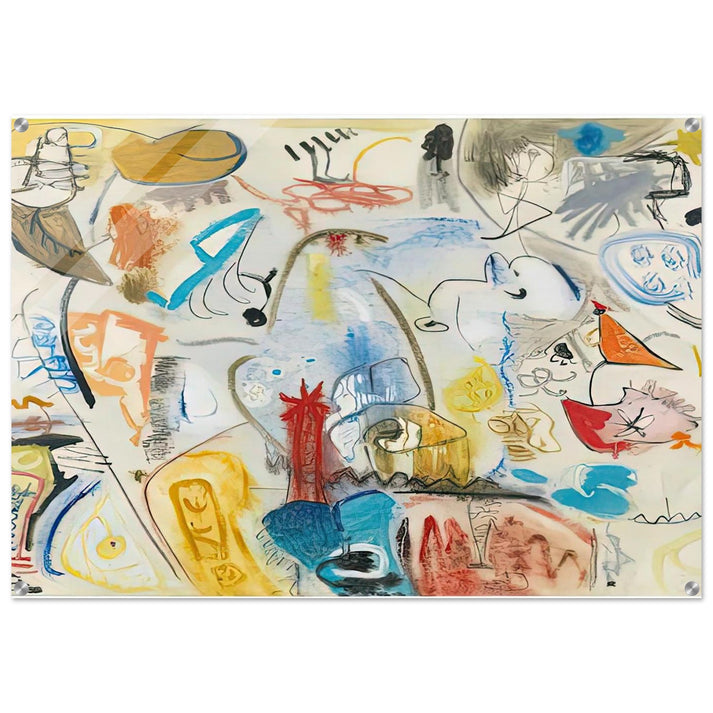
What influenced Helen Frankenthaler's Circus Landscape in 1951?
Created during her formative years, Circus Landscape reflects the influence of Joan Miró's surrealist biomorphism and Wassily Kandinsky's rhythmic abstraction, preceding her famous 'soak-stain' period while showcasing her unique lyrical sensibility.
How does the composition of this piece reflect the early Abstract Expressionist movement?
The piece emphasizes spontaneous gesture and the emotional resonance of color. It captures the movement’s shift from rigid geometry toward a more fluid, expressive interpretation of space and form characteristic of the early 1950s New York art scene.