
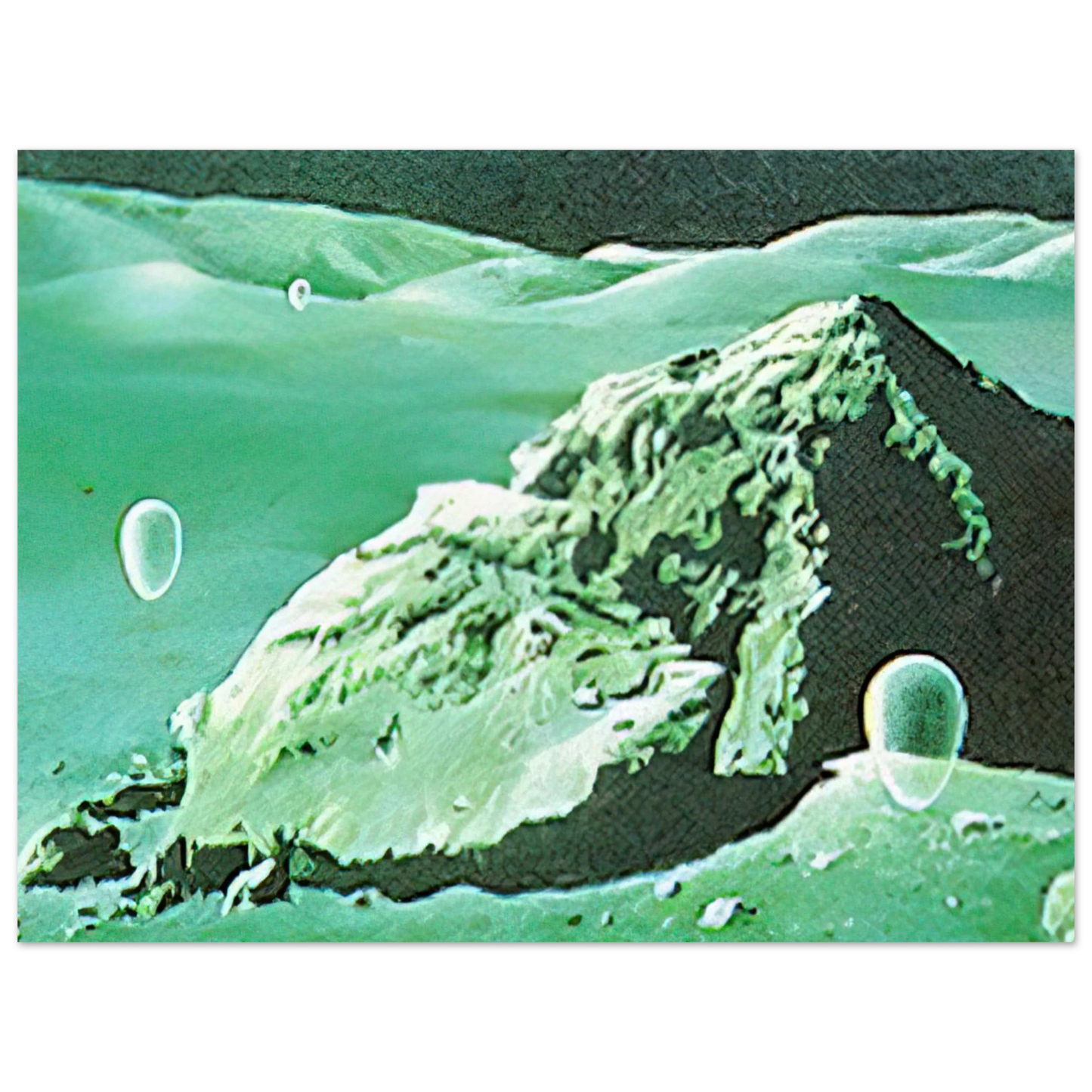
What is the significance of the ovoid shapes in Clarence Holbrook Carter's Eschantos #15?
In Carter's 'Eschantos' series, the egg or ovoid shape symbolizes the human soul, rebirth, and the continuity of life. Within the 1980 composition of #15, these forms create a meditative tension between the finite and the infinite.
What art movement does this 1980 work belong to?
Clarence Holbrook Carter is often associated with Magic Realism and Surrealism. Eschantos #15 represents his late-career shift toward Transcendentalism, focusing on metaphysical landscapes and the exploration of the afterlife or 'final things.'
What type of paper is used for this fine art print?
We use Master's Edition archival paper. It is a 250 gsm (110 lb) museum-quality paper with a natural white, matte finish, providing a luxurious texture and exceptional color depth for fine art reproductions.
How does RedKalion ensure the longevity of the print?
Our prints are acid-free with a pH above 7, which prevents the paper from yellowing or becoming brittle over time. This archival standard ensures the artwork remains in gallery condition for decades.
Is the paper used for this print environmentally friendly?
Yes, we exclusively use FSC-certified paper. This ensures that the materials for your Clarence Holbrook Carter reproduction are sourced from responsibly managed forests that provide environmental, social, and economic benefits.
How is my order fulfilled and shipped?
Each print is produced on-demand with no minimum order requirements. We use specialized protective packaging to ensure your 75x100 cm / 30x40 inch fine art poster arrives in perfect condition, ready for framing.
What is the texture and finish of the Eschantos #15 print?
The print features a matte, uncoated finish. This creates a sophisticated, non-reflective surface that emphasizes the subtle tonal shifts and architectural precision of Carter's 1980 metaphysical masterpiece.