
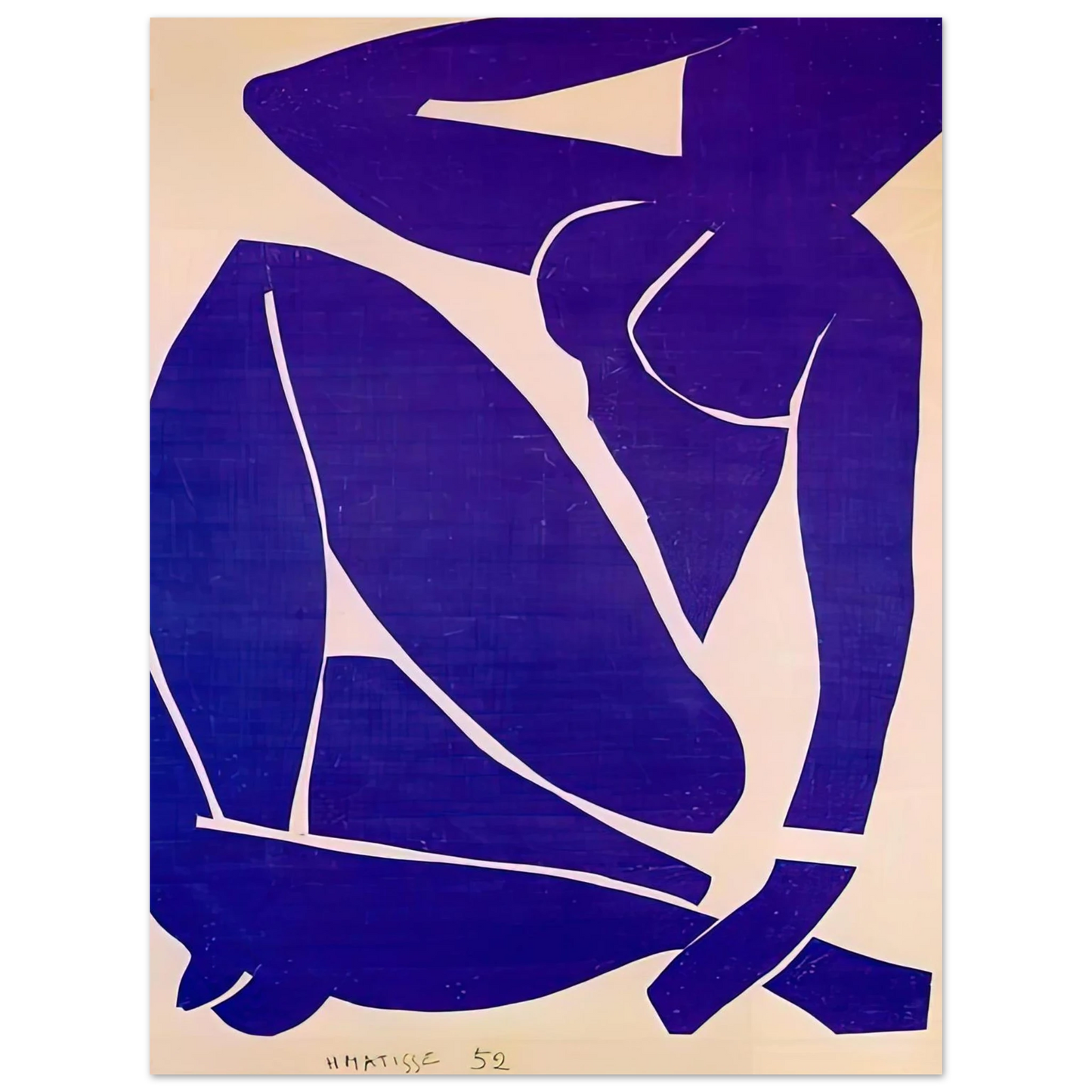
What is the historical significance of Henri Matisse's BLUE NUDE III?
BLUE NUDE III (1952) is a key work from Matisse's late "cut-out" period, showcasing his innovative use of painted paper cut-outs to create abstract, expressive forms that redefined modern art.
How does the print capture the details of Matisse's original artwork?
Our museum-quality reproduction uses high-resolution imaging to faithfully replicate the vibrant blue hues and dynamic shapes of Matisse's cut-out technique on archival paper.
What are the specifications of the Master's Edition archival paper?
The paper is 250 gsm (110 lb), 0.29 mm thick, with a matte, uncoated finish in natural white, made from FSC-certified, acid-free materials for long-lasting fine art prints.
How is the print shipped and is there a minimum order?
We offer on-demand printing with no minimum orders, and each fine art poster is carefully packaged and shipped directly to you for convenience.
Will this print yellow or fade over time?
No, the acid-free paper (pH above 7) ensures archival longevity, preventing yellowing and preserving the artwork's quality as a durable museum-quality reproduction.
Why did Matisse use the color blue in this nude?
Matisse chose blue to evoke emotion and abstraction, moving beyond realistic depiction to explore form and mood in his modernist cut-out artworks.
What makes the cut-out technique in BLUE NUDE III unique?
Matisse's "drawing with scissors" method involved cutting painted paper freehand, allowing for spontaneous, fluid compositions that broke from traditional painting techniques.