
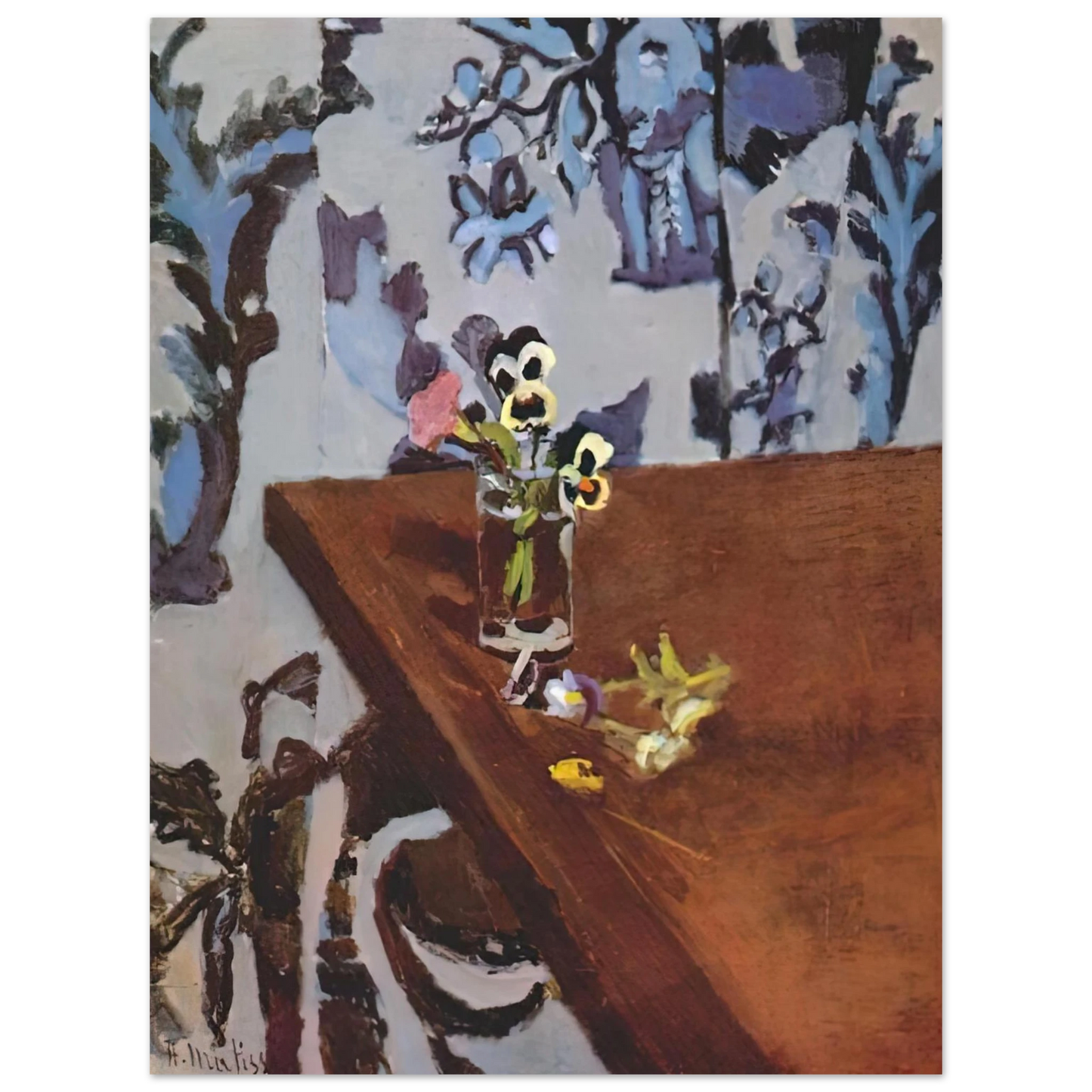
What is the historical significance of Henri Matisse's PANSIES ON A TABLE (1919)?
This artwork reflects Matisse's post-World War I focus on creating serene, colorful compositions, showcasing his innovative use of simplified forms and vibrant hues to evoke emotional resonance in still life painting.
How does the paper quality ensure a museum-grade reproduction?
Our Master's Edition archival paper is acid-free (pH above 7) and FSC-certified, preventing yellowing and offering a matte, uncoated finish that replicates the texture of original art for a premium fine art print experience.
What are the exact dimensions and specifications of this print?
The print measures 75x100 cm (30x40 inches), on 250 gsm (110 lb) paper with a thickness of 0.29 mm (11.4 mils), ensuring a durable and high-quality museum-quality reproduction.
How is this artwork shipped and is there a minimum order requirement?
We print and ship on demand with no minimum orders, using careful packaging to protect your archival fine art poster during transit.
Will this print maintain its color and quality over time?
Yes, the acid-free, archival paper resists fading and yellowing, making it a long-lasting investment for your art collection.
What inspired Matisse's use of pansies in this composition?
Matisse often chose flowers like pansies for their symbolic beauty and vibrant colors, using them to explore light, form, and emotional expression in his still life works.
Can I frame this print easily given its matte finish?
Absolutely, the matte, uncoated surface is ideal for framing without glare, enhancing the luxurious texture of this museum-quality reproduction.