
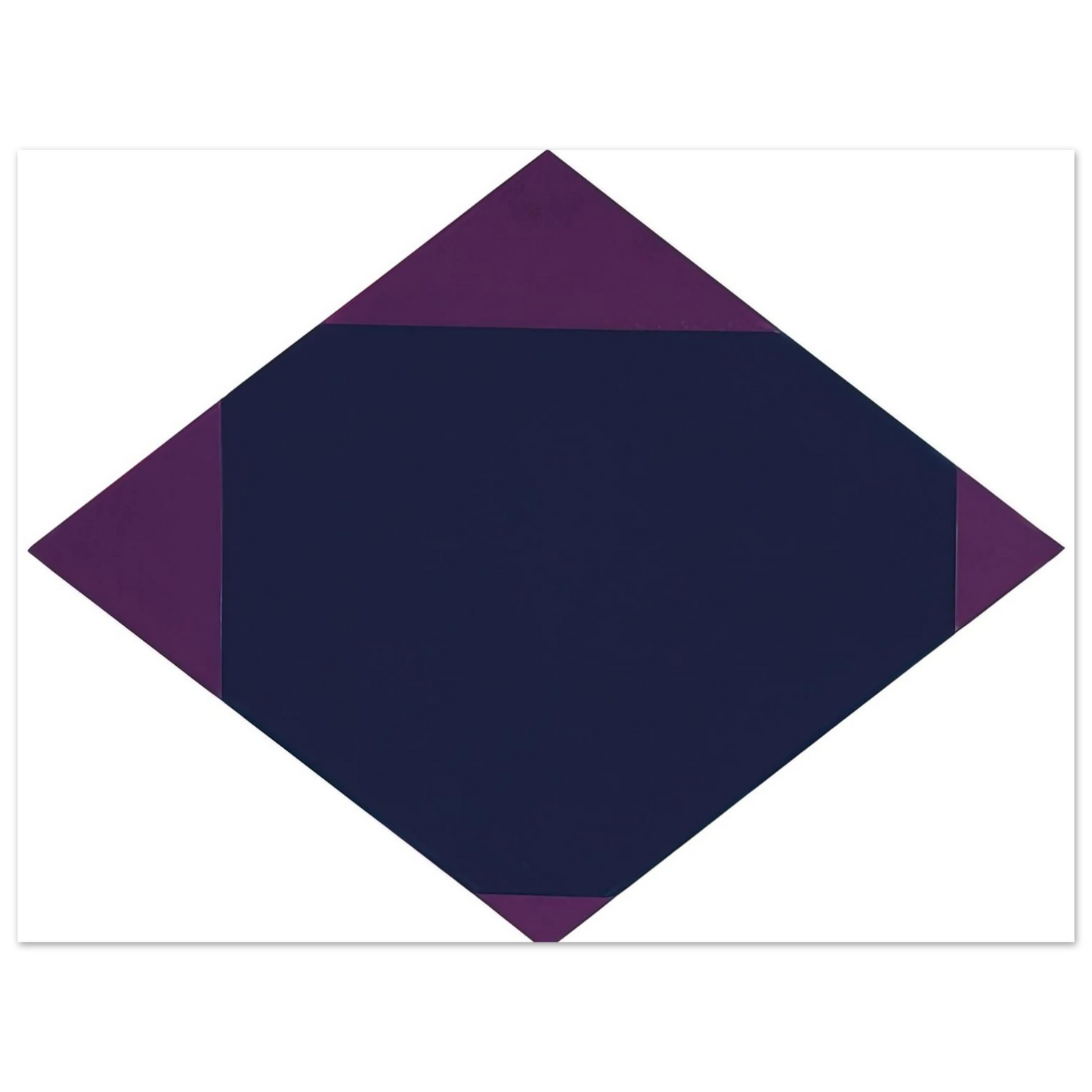
What is the historical significance of Max Bill's Blau-violettes horizontal-vertikal-quadrat?
Created in 1968, this work is a key example of Concrete Art, a movement founded by Max Bill that emphasizes pure geometric forms and colors without symbolic meaning, reflecting his influence on post-war European abstraction.
How does the color scheme in this artwork contribute to its effect?
The blue-violet hues in Blau-violettes horizontal-vertikal-quadrat create a calming yet dynamic visual rhythm, enhancing the geometric precision and evoking a sense of balance and harmony typical of Bill's Concrete Art style.
What are the specifications of the paper used for this fine art print?
This museum-quality reproduction uses Master's Edition archival paper: matte, uncoated, natural white finish, 250 gsm (110 lb) weight, 0.29 mm (11.4 mils) thickness, acid-free for longevity, and FSC-certified for sustainability.
How is this print shipped and what are the ordering options?
Printed and shipped on demand with no minimum orders, ensuring a fresh, high-quality fine art poster delivered directly to you with careful packaging to protect its archival integrity.
What makes this print archival and long-lasting?
Made from acid-free paper with a pH above 7, this print resists yellowing over time, offering archival longevity for a durable museum-quality reproduction that preserves Max Bill's artwork for decades.
Can you describe the texture and finish of this art print?
The matte, uncoated finish on natural white paper provides a luxurious texture that enhances the artwork's depth without glare, ideal for a premium fine art poster display.
Is the paper environmentally sustainable?
Yes, the FSC-certified paper ensures responsible sourcing, making this a sustainable choice for an archival art print that aligns with eco-conscious values.