
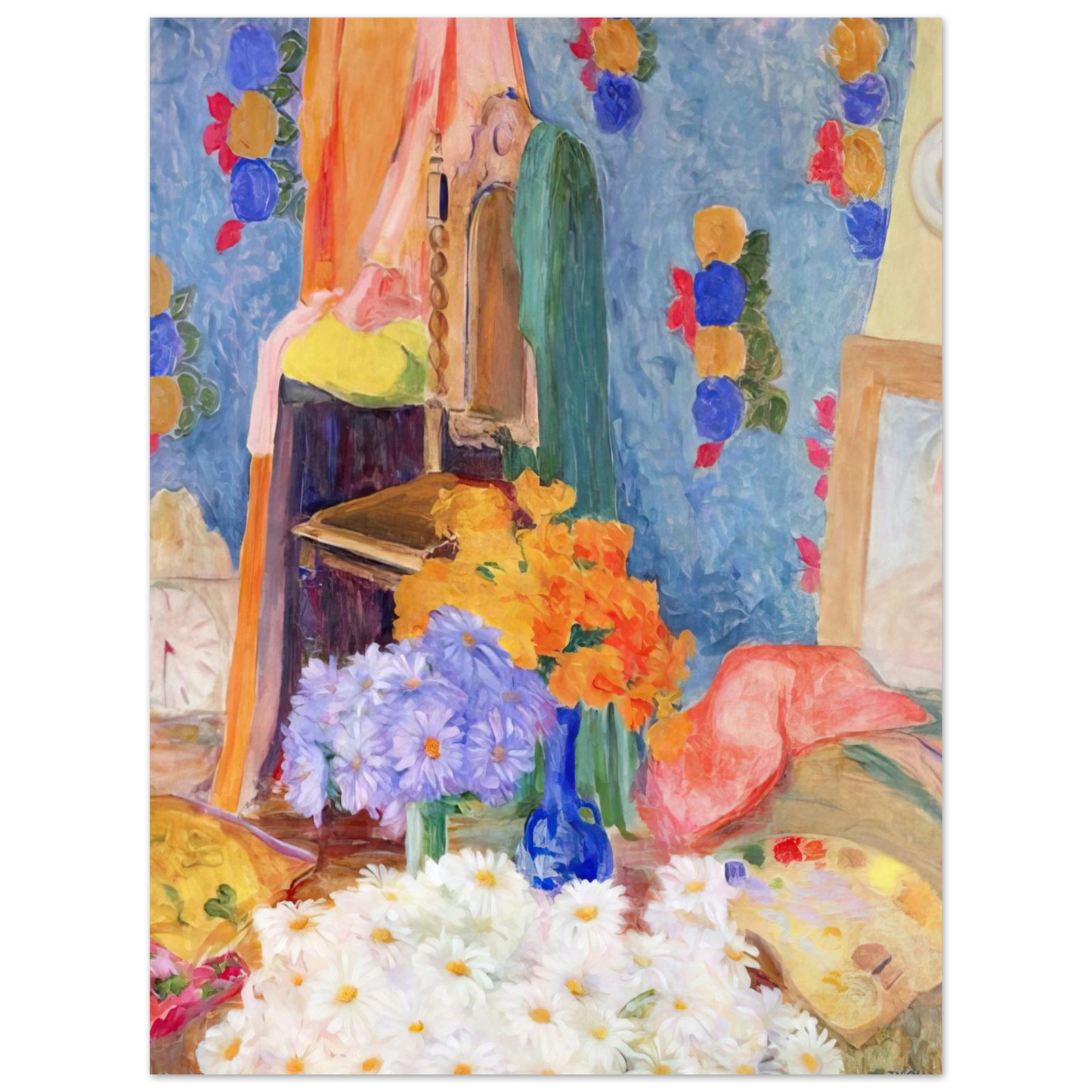
What is the significance of Tarsila do Amaral's "Mario De Andrade's Daisies" in art history?
This artwork is a key example of Brazilian Modernism and the Antropofagia movement, blending indigenous themes with avant-garde styles to redefine Latin American art in the 1920s.
What materials are used for this fine art print?
It's printed on Master's Edition archival paper with a matte, uncoated finish, using acid-free, FSC-certified materials for museum-quality durability and sustainability.
How does the paper quality ensure longevity?
The acid-free paper (pH above 7) prevents yellowing, and the 250 gsm weight with 0.29 mm thickness offers robust protection, making it an archival-grade reproduction.
What are the dimensions of this poster?
This fine art poster measures 75x100 cm or 30x40 inches, ideal for large wall displays to showcase Tarsila do Amaral's vibrant design.
How is shipping handled for this on-demand print?
RedKalion prints and ships each order individually with no minimums, ensuring careful fulfillment for your museum-quality art print.
Why is the matte finish recommended for this artwork?
The matte, uncoated finish reduces glare and enhances texture, complementing Amaral's bold colors and geometric forms for an authentic viewing experience.
Can you explain the Antropofagia movement's influence on this piece?
Antropofagia, led by Amaral and Mario de Andrade, used cultural cannibalism to merge Brazilian folklore with modernism, seen in the daisies' simplified, symbolic shapes.