
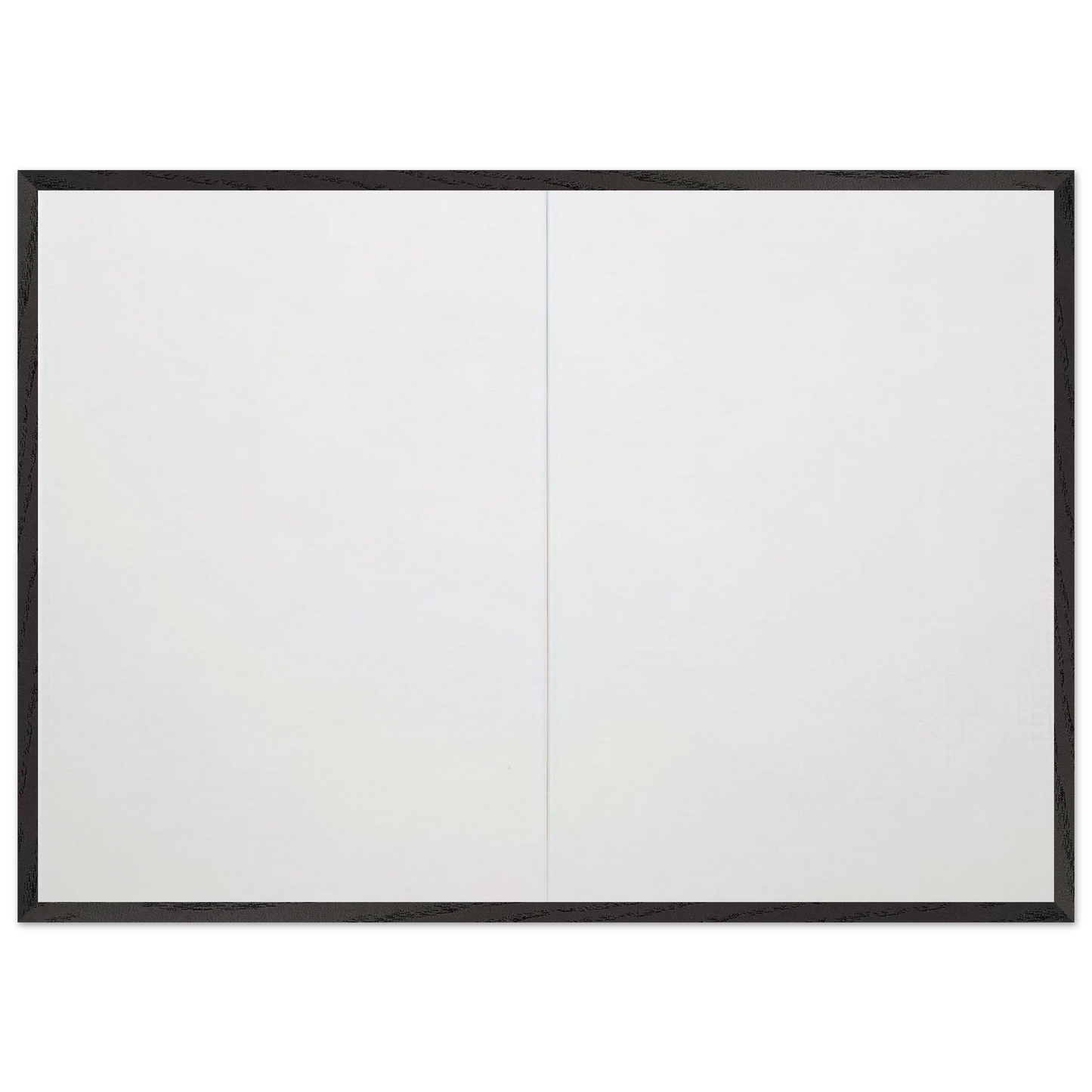
What is the historical significance of White Painting Two Panel 1951 by Robert Rauschenberg?
This artwork is a key Neo-Dada piece from 1951, challenging traditional art by using monochrome to emphasize texture and viewer interaction, influencing Conceptual Art movements.
What materials are used in this framed art print?
It features 250 gsm archival museum-quality paper with a matte finish, a black wooden frame from oak and ash wood, and shatterproof plexiglass for durable protection.
Yes, it includes a hanging kit and is ready-to-hang directly on your wall for easy installation in any room.
How does the frame enhance this museum-quality reproduction?
The 20mm thick black wooden frame provides a bold, contemporary border that complements the minimalist aesthetic, wider than standard frames for added impact.
What are the archival qualities of the paper used?
The paper is 250 gsm, FSC-certified for sustainability, and archival-grade to ensure longevity and resistance to fading over time.
How did Rauschenberg's technique in this piece influence modern art?
His use of industrial materials and focus on chance in White Painting Two Panel pioneered approaches that inspired later artists in Minimalism and beyond.
What protection does the shatterproof plexiglass offer?
It safeguards the print from dust, scratches, and damage while maintaining optical clarity, ensuring your artwork remains pristine for years.