
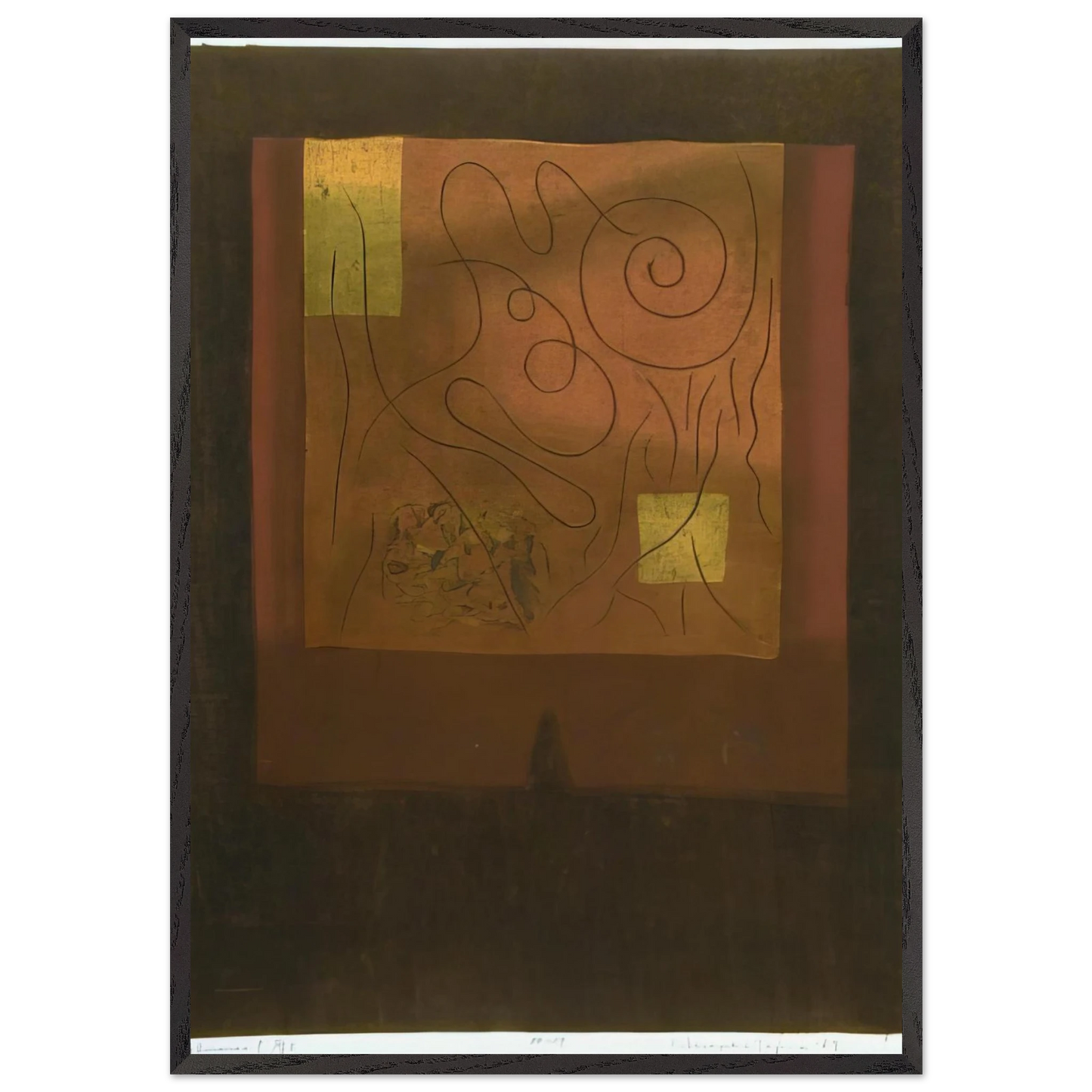
What makes RedKalion's archival paper special?
We use 250 gsm (110 lb) museum-quality paper that is archival and acid-free. This natural white, uncoated paper ensures your fine art print maintains its color integrity and structural flatness without the glare typical of inferior glossy finishes.
Is the frame sustainably sourced and built to last?
Yes, our frames are crafted from FSC-certified oak and ash wood. At 20mm thick, they offer superior durability and a premium aesthetic compared to standard frames, providing a secure and elegant housing for your Tajima reproduction.
How is the artwork protected during shipping and display?
Each print is protected by shatterproof, transparent plexiglass. This provides the clarity of glass with enhanced safety and UV protection. We ship in specialized, high-durability packaging to ensure your framed art arrives in pristine condition.
Does the print come ready to hang?
Absolutely. Your 70x100 cm framed print arrives fully assembled with a professional hanging kit included. The integrated hardware allows you to elevate your space immediately upon delivery with no additional tools required.
What is the archival longevity of this print?
Designed for longevity, our prints utilize lightfast inks on archival-grade paper. When kept in a standard indoor environment, this museum-quality reproduction is engineered to remain vibrant and resist yellowing for generations.
Who was Hiroyuki Tajima and why is his work significant?
Hiroyuki Tajima was a pivotal figure in the Sōsaku-hanga movement, emphasizing the artist as the sole creator. His work is significant for blending traditional Japanese woodblock techniques with mid-century abstract expressionism and innovative chemical textures.
What inspired the 'Almanac' series in 1967?
The 'Almanac' series reflects Tajima's fascination with the passage of time and the structural patterns of the natural world. It uses abstract geometry and deep, layered pigments to evoke a sense of cosmic or geological history.