Discover Unlimited Art Possibilities
At RedKalion, you can find virtually any artwork from any artist, available in a wide range of sizes to perfectly match your space.
If you didn’t find what you’re looking for, contact us at support@redkalion.com . We will source any artwork and produce it in any size and format you need, including art prints, posters, canvas, framed pieces, framed canvas, and more.
For dedicated art enthusiasts, we also offer handcrafted replicas of any artwork, carefully painted by highly skilled artists using traditional techniques.
For custom requests, contact us at support@redkalion.com .
What defines the print quality of this Alfred Jensen reproduction?
We use 250 gsm (110 lb) natural white archival paper with a matte finishing. This museum-quality, uncoated paper is designed to prevent yellowing and ensure the fine art print retains its vibrancy for decades.
What are the specifications of the black wooden frame?
The frame is crafted from responsibly sourced oak and ash, measuring 20mm thick and wide. This substantial profile provides a premium feel compared to standard 14mm frames, finished in a sleek black matte.
Is the artwork ready to hang upon arrival?
Yes. Each framed art print comes with a pre-installed hanging kit. The 70x100 cm piece is designed for immediate mounting, allowing you to elevate your interior space without additional hardware.
How is the print protected from damage?
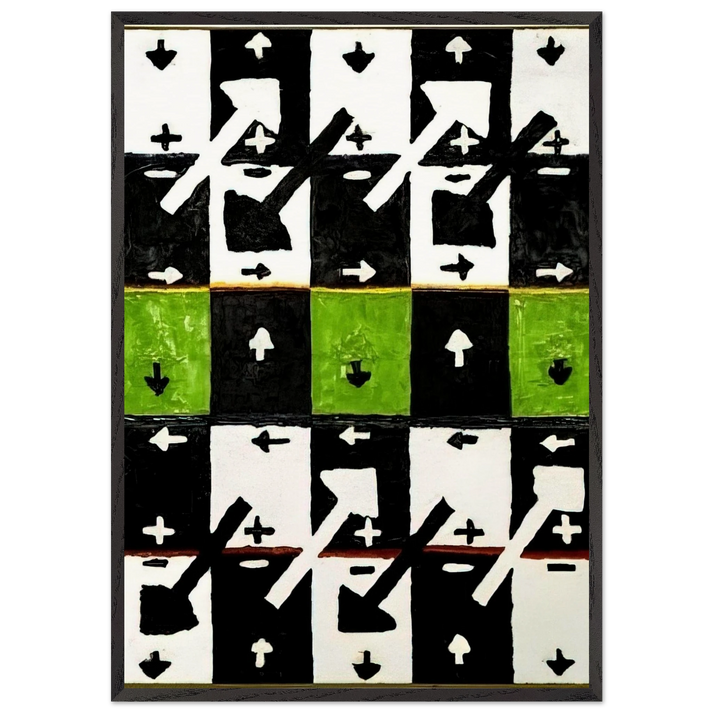
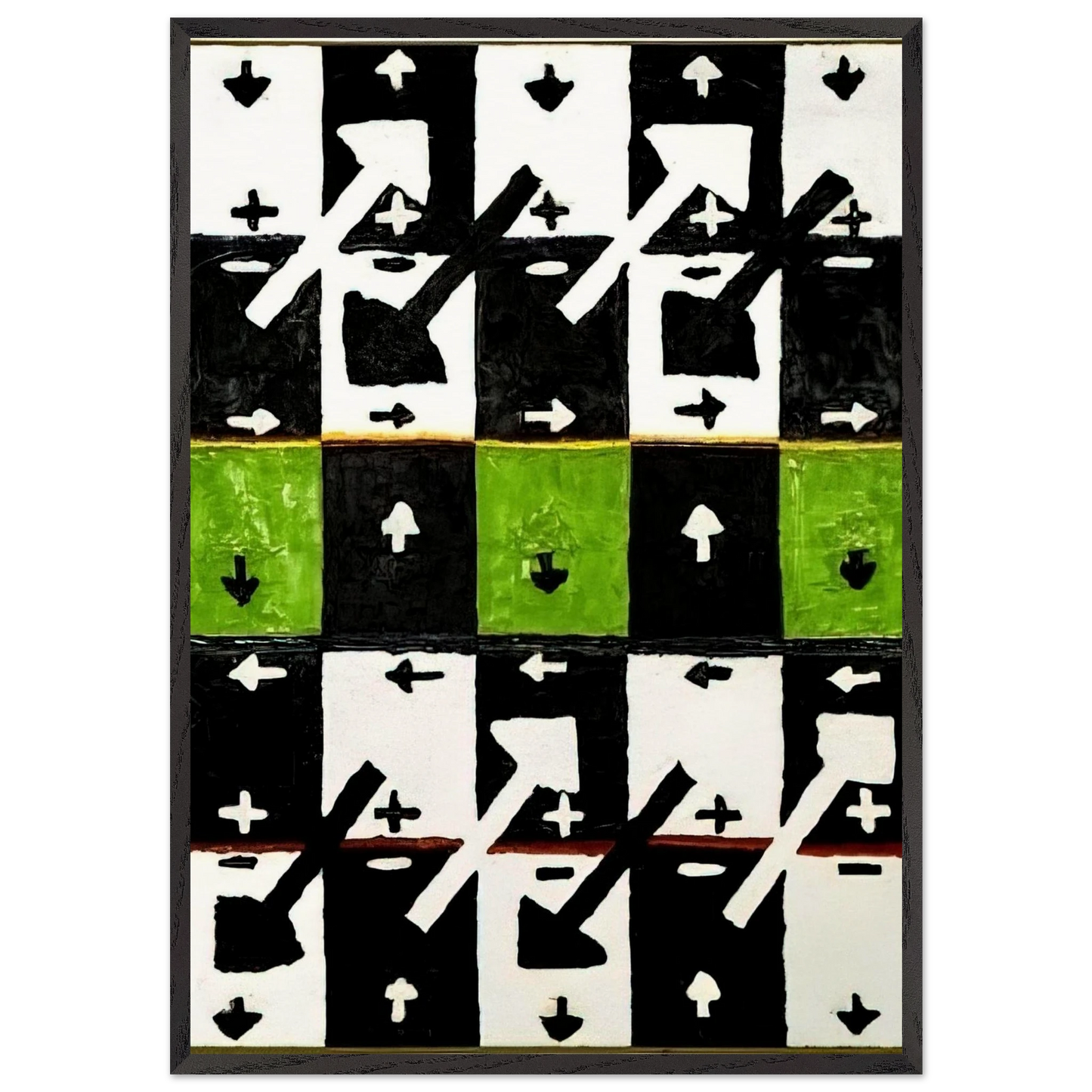
The artwork is shielded by shatterproof, transparent plexiglass. This ensures the print remains safe from accidental impact while providing museum-standard clarity for Alfred Jensen’s intricate optical details.
How long will this archival print last?
By using FSC-certified archival paper and acid-free materials, our prints are engineered for longevity. These museum-quality standards ensure the colors remain stable and the paper remains intact for generations.
What is the meaning behind Jensen's scientific title?
Alfred Jensen was fascinated by physics and optics. The title refers to the historical scientific experiments regarding light and motion, which Jensen translated into a visual grid-based system of color and geometry.
Why did Alfred Jensen use grid structures in 1961?
Jensen used grids to map out mathematical sequences and color theories. In 1961, his work became a bridge between Abstract Expressionism and Minimalism, focusing on scientific systems as a source of artistic truth.