


RedKalion
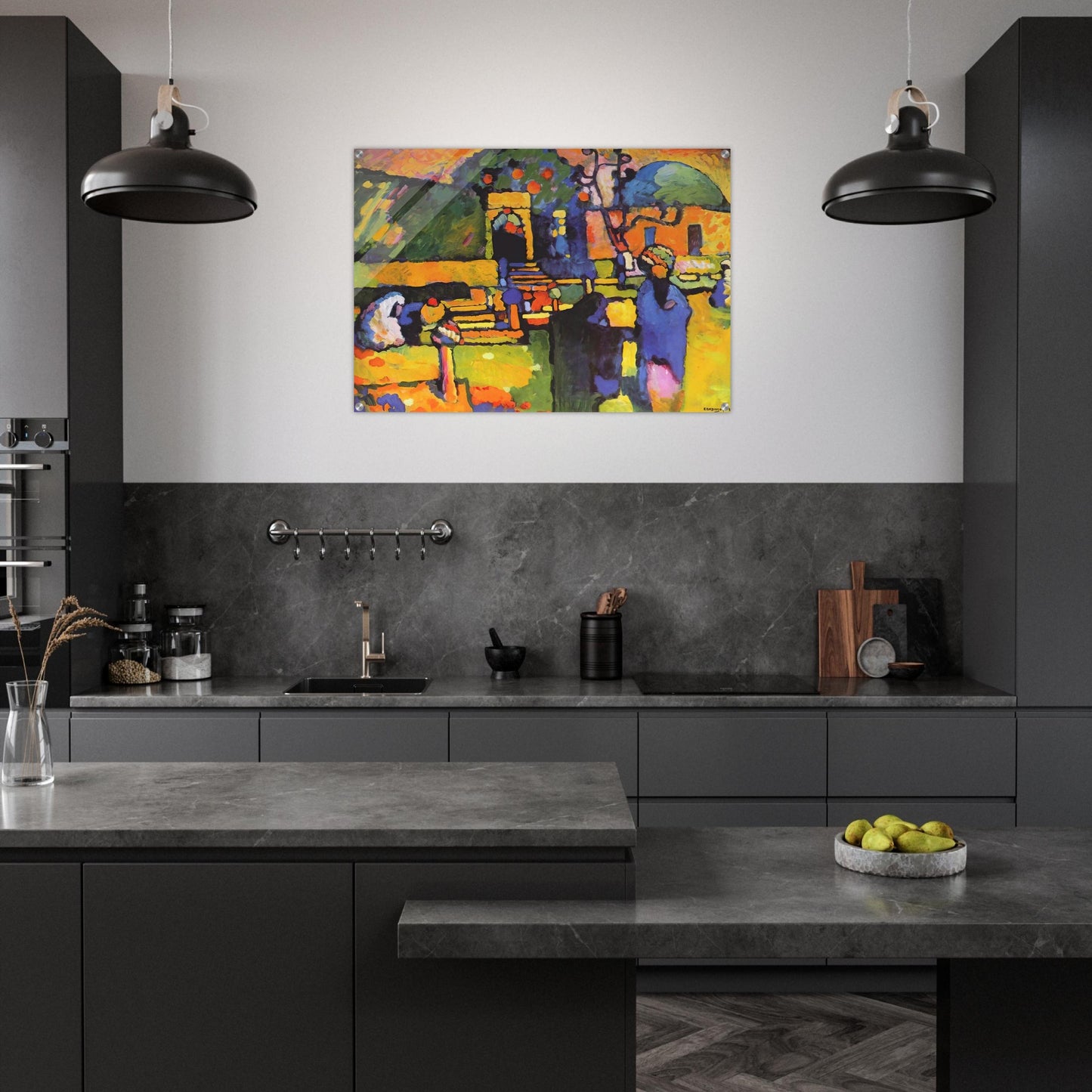
ARABS I CEMETERY 1909 - Wassily Kandinsky Acrylic Print - 70x100 cm / 28x40″ inches | Wassily Kandinsky Wall Art | Wassily Kandinsky Prints
ARABS I CEMETERY 1909 - Wassily Kandinsky Acrylic Print - 70x100 cm / 28x40″ inches | Wassily Kandinsky Wall Art | Wassily Kandinsky Prints
Učitavanje dostupnosti preuzimanje nije moguće
Elevate Your Space with Wassily Kandinsky’s ‘Arabs I (Cemetery) 1909’
Experience the dawn of abstraction with this museum-quality reproduction of Wassily Kandinsky’s Arabs I (Cemetery) 1909. This pivotal work captures a transformative era in art history, where the legendary artist began to prioritize emotional resonance and spiritual depth over purely representational forms. Influenced by his travels to North Africa, this 1909 masterpiece utilizes a vibrant, Fauvist-inspired palette to depict a cemetery scene with a unique sense of rhythmic movement and luminous intensity.
Superior Acrylic Craftsmanship by RedKalion
At RedKalion, we believe fine art deserves a medium that matches its brilliance. This Wassily Kandinsky acrylic print is meticulously rendered on 4mm (0.15") high-grade acrylic, offering a sleek, glass-like finish that enhances color saturation and creates a stunning sense of depth. Unlike traditional framed prints, our acrylic wall art provides a contemporary, frameless look that allows the colors of Kandinsky’s vision to truly radiate within your interior.
Exquisite Detail and Modern Presentation
The 70x100 cm (28x40″) format is designed for maximum visual impact. Every piece features precision straight-cut corners and is shipped with a professional-grade hanging kit to ensure a seamless installation. We utilize advanced printing techniques where transparent backgrounds are defaulted to white, ensuring the structural integrity and visual clarity of the fine art print remain uncompromised over time.
Technical Specifications & Installation
- Material: 4mm (0.15") thick acrylic for archival-grade durability and vibrancy.
- Mounting Hardware: Included screw kit with 4 pre-drilled holes (one at each corner).
- Hole Placement: Positions are 14mm (0.55") from the edge with an 8mm (0.31") diameter hole.
- Finishing: 15mm (0.6") screw heads provide a polished, secure fit to your wall.
- Archival Quality: Designed to resist fading, ensuring your Wassily Kandinsky wall art remains an heirloom-quality focal point.


Discover Unlimited Art Possibilities
At RedKalion, you can find virtually any artwork from any artist, available in a wide range of sizes to perfectly match your space.
If you didn’t find what you’re looking for, contact us at support@redkalion.com . We will source any artwork and produce it in any size and format you need, including art prints, posters, canvas, framed pieces, framed canvas, and more.
For dedicated art enthusiasts, we also offer handcrafted replicas of any artwork, carefully painted by highly skilled artists using traditional techniques.
For custom requests, contact us at support@redkalion.com .
Why choose an acrylic print for Kandinsky’s ‘Arabs I (Cemetery)’?
Acrylic prints offer superior depth and color vibrancy compared to canvas. The 4mm acrylic surface enhances the bold color palette of this 1909 Kandinsky masterpiece, creating a modern, luminous finish that elevates any room's aesthetic.
What are the specific dimensions and hardware for this piece?
The print is 70x100 cm (28x40″). It includes 4mm acrylic, pre-drilled holes 14mm from the edges, and a complete hanging kit with 15mm screw heads for a secure and professional installation.
How does RedKalion ensure the archival longevity of this reproduction?
We use archival-grade inks and high-quality 4mm acrylic that protects the artwork from UV rays and moisture. This ensures your Wassily Kandinsky reproduction maintains its museum-quality brilliance for decades.
What is the estimated shipping logistics for these museum-quality prints?
RedKalion prints are carefully crated in protective packaging to prevent damage. Each order includes tracked shipping, ensuring your premium fine art print arrives safely and ready for immediate installation.
How should I clean and maintain my acrylic wall art?
Simply use a soft, damp microfiber cloth to wipe the surface. Avoid harsh chemicals or ammonia-based cleaners, as these can damage the acrylic finish. The durable material is naturally moisture-resistant.
What inspired Kandinsky to paint ‘Arabs I (Cemetery)’ in 1909?
Kandinsky was deeply moved by his travels to North Africa. He sought to capture the spiritual atmosphere and the vibrant light of the region, using cemetery motifs to explore the boundary between the physical and spiritual worlds.
Is this work considered abstract or representational?
‘Arabs I (Cemetery)’ is a transitionary work. While it contains recognizable figures and landscapes, it moves toward Expressionism by using color and form to evoke emotion rather than strictly documenting a physical location.