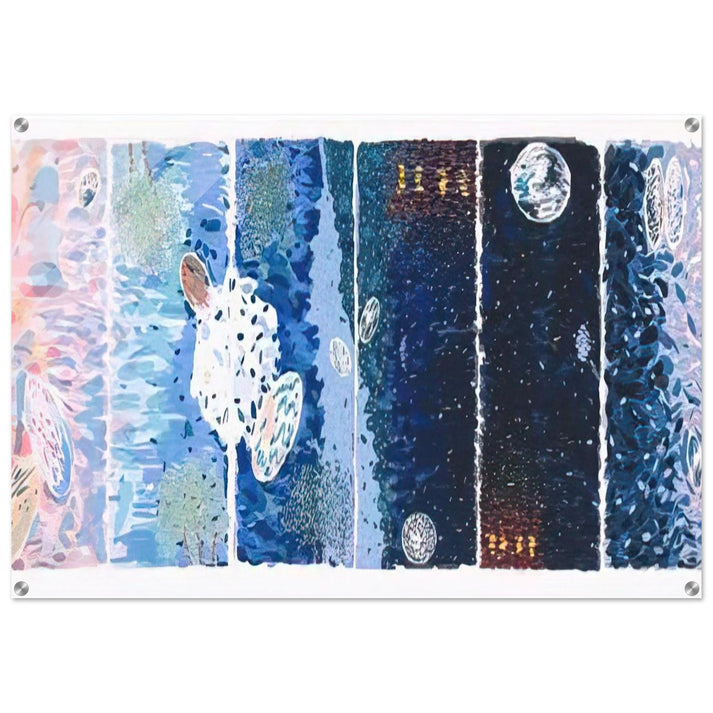


Discover Unlimited Art Possibilities
At RedKalion, you can find virtually any artwork from any artist, available in a wide range of sizes to perfectly match your space.
If you didn’t find what you’re looking for, contact us at support@redkalion.com . We will source any artwork and produce it in any size and format you need, including art prints, posters, canvas, framed pieces, framed canvas, and more.
For dedicated art enthusiasts, we also offer handcrafted replicas of any artwork, carefully painted by highly skilled artists using traditional techniques.
For custom requests, contact us at support@redkalion.com .
What materials are used for the Jennifer Bartlett At Sea Japan print?
This print is crafted on 4mm (0.15") high-grade acrylic, providing a vibrant, durable, and sleek finish that enhances the visual depth of the artwork.
How do I install this acrylic artwork?
Each print includes a professional hanging kit with screws. The piece features pre-drilled holes (8mm diameter) at each corner, 14mm from the edge, for a secure, modern mount.
How is the artwork protected during shipping?
RedKalion uses specialized, high-durability packaging to ensure your museum-quality acrylic print arrives in pristine condition, fully insured against transit damage.
Is the acrylic print archival and fade-resistant?
Yes, we use archival-grade inks and UV-resistant acrylic. This ensures the colors of At Sea Japan remain vibrant for decades, even in well-lit environments.
How should I clean and maintain my acrylic print?
To maintain the surface, use a soft, damp microfiber cloth. Avoid harsh chemicals or abrasive materials to keep the 4mm acrylic surface scratch-free and clear.
What inspired Jennifer Bartlett to create 'At Sea Japan' in 1980?
The piece was inspired by Bartlett's residency in Japan, where she meticulously studied the ocean's patterns, blending Western abstraction with Eastern perspectives on nature.
What is the significance of the 1980 period in Bartlett's career?
1980 marked Bartlett's transition toward more fluid, painterly styles, moving away from her earlier strict modular grids while retaining her signature intellectual structure.