Preskoči do informacija o proizvodu
1 od 1

RedKalion

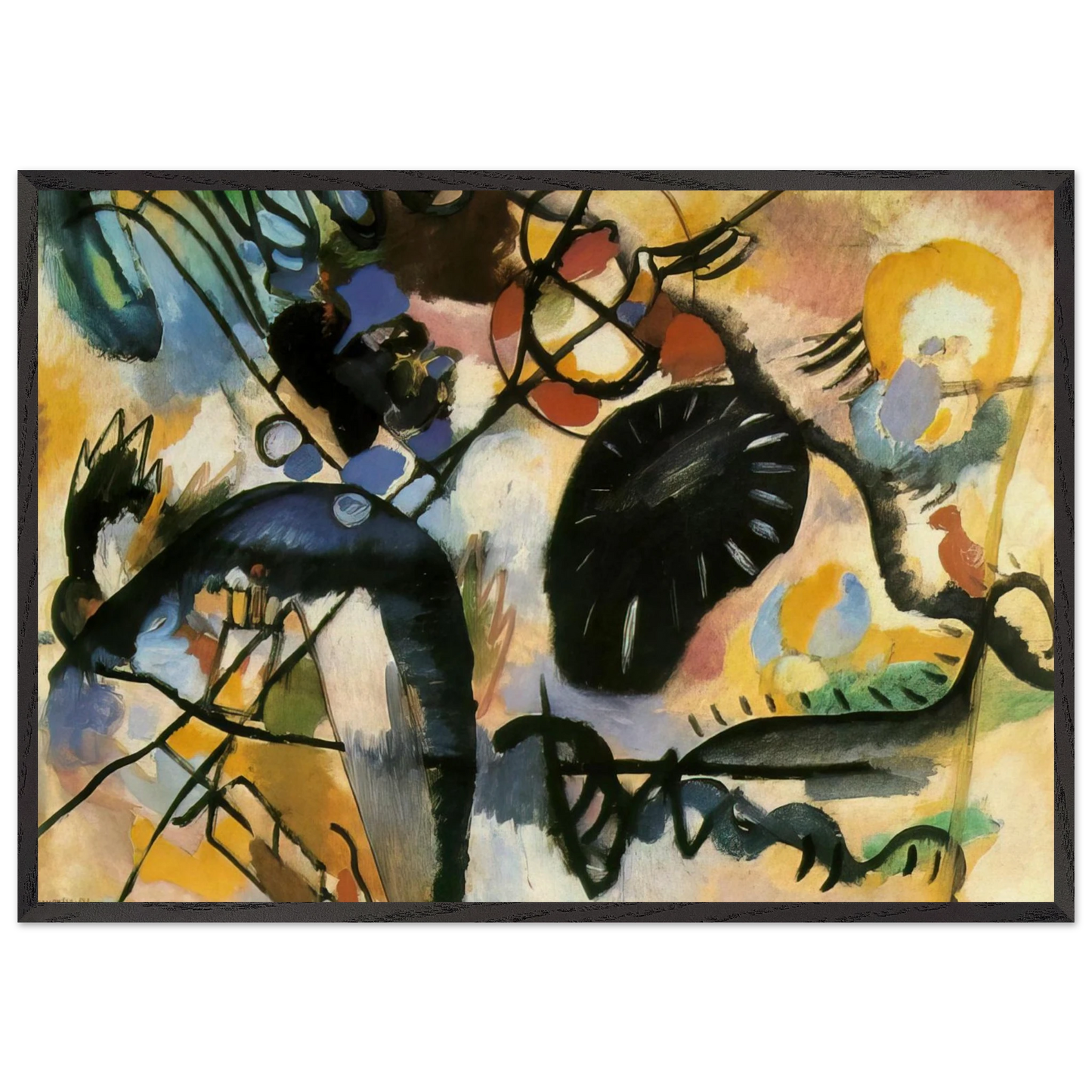
BLACK SPOT 1912 - Wassily Kandinsky 70x100 cm / 28x40 inches Framed Art Print – Black Wooden Frame

BLACK SPOT 1912 - Wassily Kandinsky 70x100 cm / 28x40 inches Framed Art Print – Black Wooden Frame

Redovna cijena $449.99 USD
Redovna cijena $999.99 USD Prodajna cijena $449.99 USD
Rasprodaja Rasprodano
Količina

The Spiritual Resonance of Wassily Kandinsky’s Black Spot (1912)

In the seminal year of 1912, Wassily Kandinsky was at the height of his 'Blue Rider' period, fundamentally redefining the relationship between form and emotion. This Black Spot 1912 framed art print captures a pivotal moment in the history of abstraction. Kandinsky, often credited with painting the first purely abstract works, utilized the 'black spot' not as a void, but as a gravitational center—a point of 'inner necessity' around which vibrant, lyrical colors dance in a state of spiritual equilibrium.

As an elite curator of fine art, RedKalion presents this museum-quality reproduction with meticulous attention to detail. Every brushstroke and color transition of the original masterpiece is preserved through advanced archival printing techniques. This isn't merely a decorative item; it is an enduring piece of art history designed to transform your living or office space into a sanctuary of high culture and intellectual depth.

Uncompromising Material Excellence

At RedKalion, we believe that a masterpiece deserves nothing less than archival perfection. This fine art print is rendered on 250 gsm (110 lb) natural white paper. Unlike standard commercial prints, our paper is uncoated and matte, providing a sophisticated texture that eliminates glare and enhances the depth of Kandinsky’s palette. Each print is protected by shatterproof plexiglass, ensuring the artwork remains pristine for generations.

  • Artist: Wassily Kandinsky
  • Title: Black Spot (Schwarzer Fleck), 1912
  • Frame: Responsibly sourced, 20mm (0.79") thick oak and ash wood in an elegant black finish.
  • Paper: 250 gsm archival-grade, FSC-certified museum-quality paper.
  • Ready-to-Hang: Includes a professional hanging kit for immediate installation.
  • Sustainability: Printed with environmental consciousness using sustainably sourced materials.

Elevate your interior with a piece that bridges the gap between early 20th-century avant-garde and contemporary luxury. RedKalion’s commitment to quality ensures that your Kandinsky framed print arrives ready to hang, serving as a timeless testament to the power of abstract expressionism.

Prikaži sve pojedinosti
What makes the RedKalion reproduction of Kandinsky’s Black Spot unique?

RedKalion utilizes archival-grade, 250 gsm natural white paper and high-fidelity printing to replicate the original colors and textures of Kandinsky’s 1912 masterpiece, ensuring a museum-quality experience for your home.

What are the specifications of the museum-quality paper used?

We use 250 gsm (110 lb) archival museum-quality paper. It is 0.29 mm thick, matte, and uncoated, offering a natural white finish that prevents glare and preserves the artwork's integrity over time.

Is the frame sustainably sourced and what are its dimensions?

Yes, our frames are crafted from FSC-certified oak and ash wood. They measure 20mm (0.79") in width and thickness, providing a more substantial and premium aesthetic than standard 14mm frames.

How is the artwork protected during shipping and on the wall?

Each framed print is protected by shatterproof plexiglass, which is clearer and safer than standard glass. We use robust packaging to ensure your Kandinsky print arrives in flawless condition.

Does the framed art print arrive ready for immediate installation?

Absolutely. Your 70x100 cm framed print includes a pre-installed hanging kit, allowing you to elevate your space immediately upon delivery without the need for additional hardware.

What is the significance of the Black Spot in Kandinsky’s 1912 transition?

The 'Black Spot' represents Kandinsky's move toward pure abstraction, where the central dark form acts as a focal point for 'inner necessity,' balancing chaotic colors through spiritual harmony and compositional tension.

How does Kandinsky's use of color in this period influence modern abstract art?

In 1912, Kandinsky’s theory of synesthesia—where colors correspond to musical sounds—pioneered the idea that art should evoke emotional responses through non-representational form, a cornerstone of all modern abstract expressionism.