
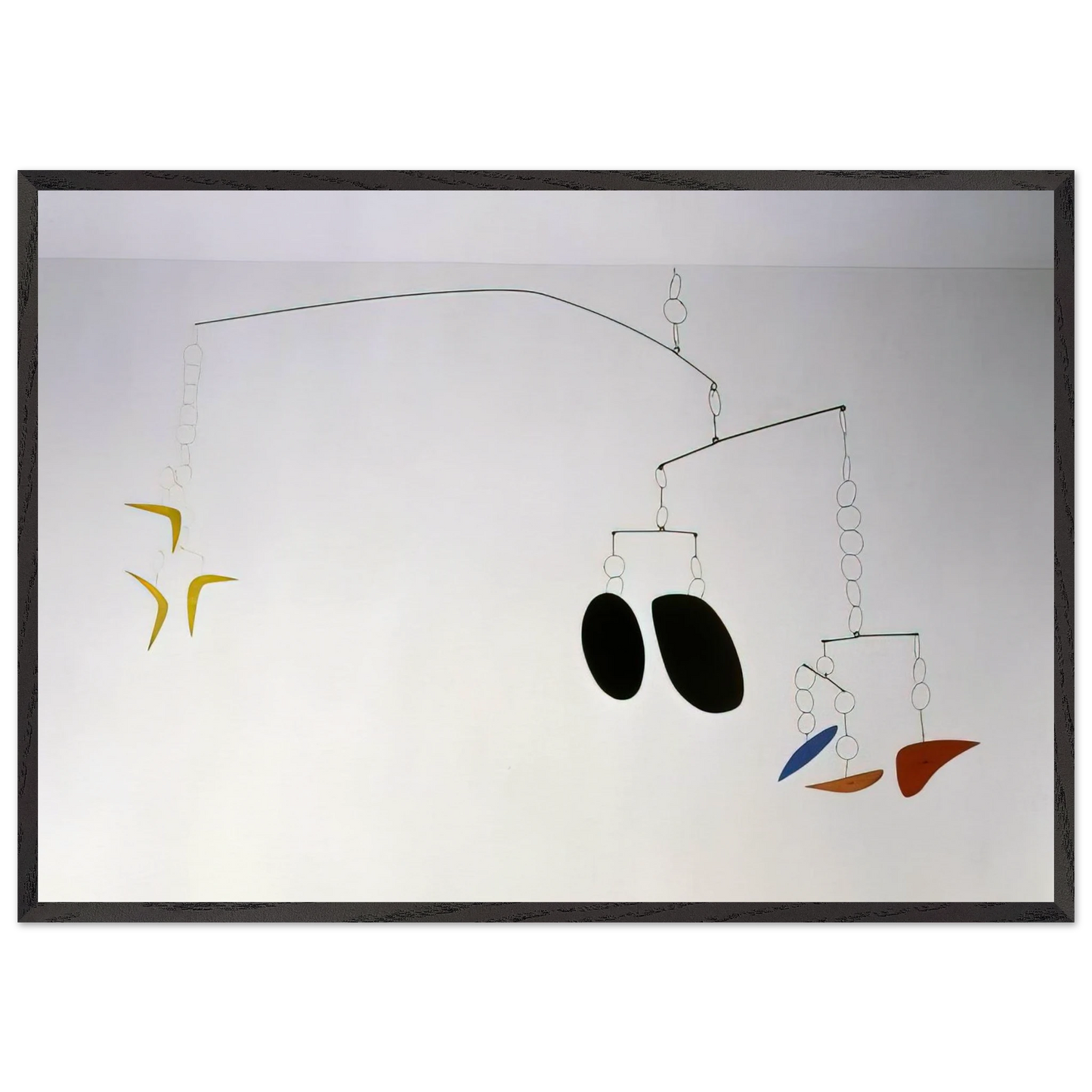
What is the paper quality of this Alexander Calder print?
This print uses 250 gsm (110 lb) archival museum-quality paper. It is natural white, matte, and uncoated with a thickness of 0.29 mm, ensuring long-lasting color fidelity and a premium, glare-free aesthetic.
How is the Boomerangs 1941 print framed?
The artwork is professionally framed in responsibly sourced black oak or ash wood. The frame measures 20mm thick and wide, providing a sturdier and more luxurious profile than standard thin gallery frames.
What does "ready-to-hang" mean for this artwork?
Every RedKalion framed print comes with a pre-installed hanging kit. This means your 70x100 cm Calder reproduction is ready to be mounted on your wall immediately upon unboxing with no additional hardware required.
Are the materials used in this print sustainable?
Yes, we prioritize sustainability. All wood used for our frames and the archival paper used for the print are FSC-certified or equivalent, ensuring the protection of global forest resources.
How is the print protected during shipping?
We use shatterproof plexiglass to protect the print from damage. Each framed piece is meticulously packaged in reinforced materials to ensure it arrives at your door in pristine, gallery-ready condition.
What inspired Alexander Calder's "Boomerangs" in 1941?
Calder was deeply influenced by the concepts of physics and biomorphic abstraction. "Boomerangs" reflects his interest in capturing the potential energy and equilibrium found in his kinetic mobiles through static, two-dimensional forms.
Is this a museum-quality reproduction?
Absolutely. RedKalion specializes in archival-grade prints. By combining 250 gsm acid-free paper with precision ink application, we offer a reproduction that meets the high standards of art collectors and historians.