
Discover Unlimited Art Possibilities
At RedKalion, you can find virtually any artwork from any artist, available in a wide range of sizes to perfectly match your space.
If you didn’t find what you’re looking for, contact us at support@redkalion.com . We will source any artwork and produce it in any size and format you need, including art prints, posters, canvas, framed pieces, framed canvas, and more.
For dedicated art enthusiasts, we also offer handcrafted replicas of any artwork, carefully painted by highly skilled artists using traditional techniques.
For custom requests, contact us at support@redkalion.com .
What makes the paper quality of this M.C. Escher print superior?
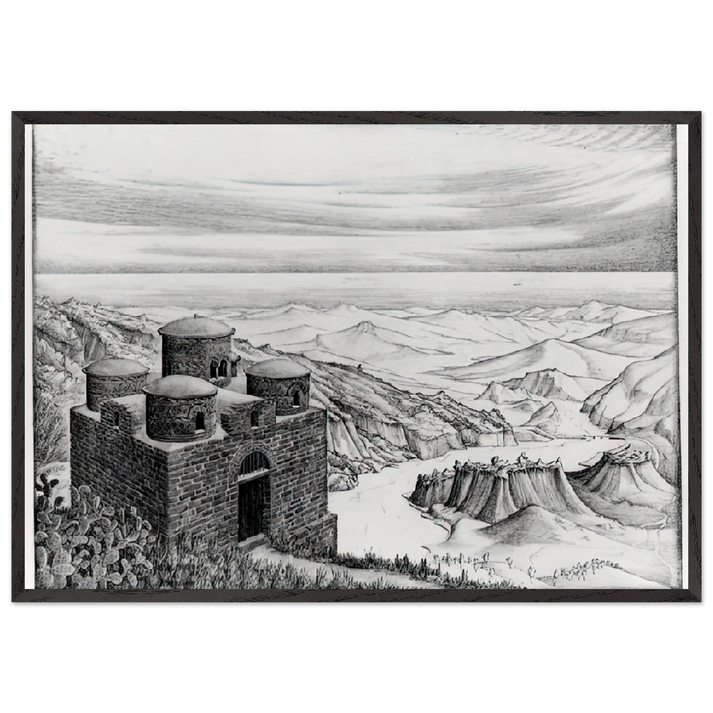
We use 250 gsm (110 lb) archival museum-quality paper. This heavy-weight, acid-free material prevents yellowing and ensures the fine details of the Cattolica of Stilo reproduction remain sharp for decades.
Is the frame made from genuine wood?
Yes, our frames are crafted from responsibly sourced, FSC-certified oak and ash wood. They feature a sophisticated 20mm profile, providing a premium, durable border for your fine art print.
How is the artwork protected during shipping and on the wall?
Each print is protected by high-quality, shatterproof plexiglass. This ensures the artwork arrives safely and remains protected from dust and damage while displayed in your home.
Is this Escher print ready to hang upon arrival?
Absolutely. Your framed art print arrives ready to hang, complete with an included hanging kit. No additional hardware is required to begin enjoying your new masterpiece immediately.
Are the materials used in this print environmentally sustainable?
RedKalion prioritizes sustainability. We use FSC-certified wood for our frames and natural, museum-quality paper, ensuring that your art collection supports responsible forestry practices.
When did M.C. Escher create the original Cattolica of Stilo?
Escher created the original work in 1930 during his extensive travels through Calabria, Italy. It marks a pivotal moment in his career focused on landscape and architectural rhythm.
What is the significance of the Cattolica of Stilo in Escher’s work?
The Cattolica is a 9th-century Byzantine church. Escher was fascinated by its geometric dome structure and its stark, solitary position against the mountain, themes that eventually led to his exploration of mathematical art.