
RedKalion
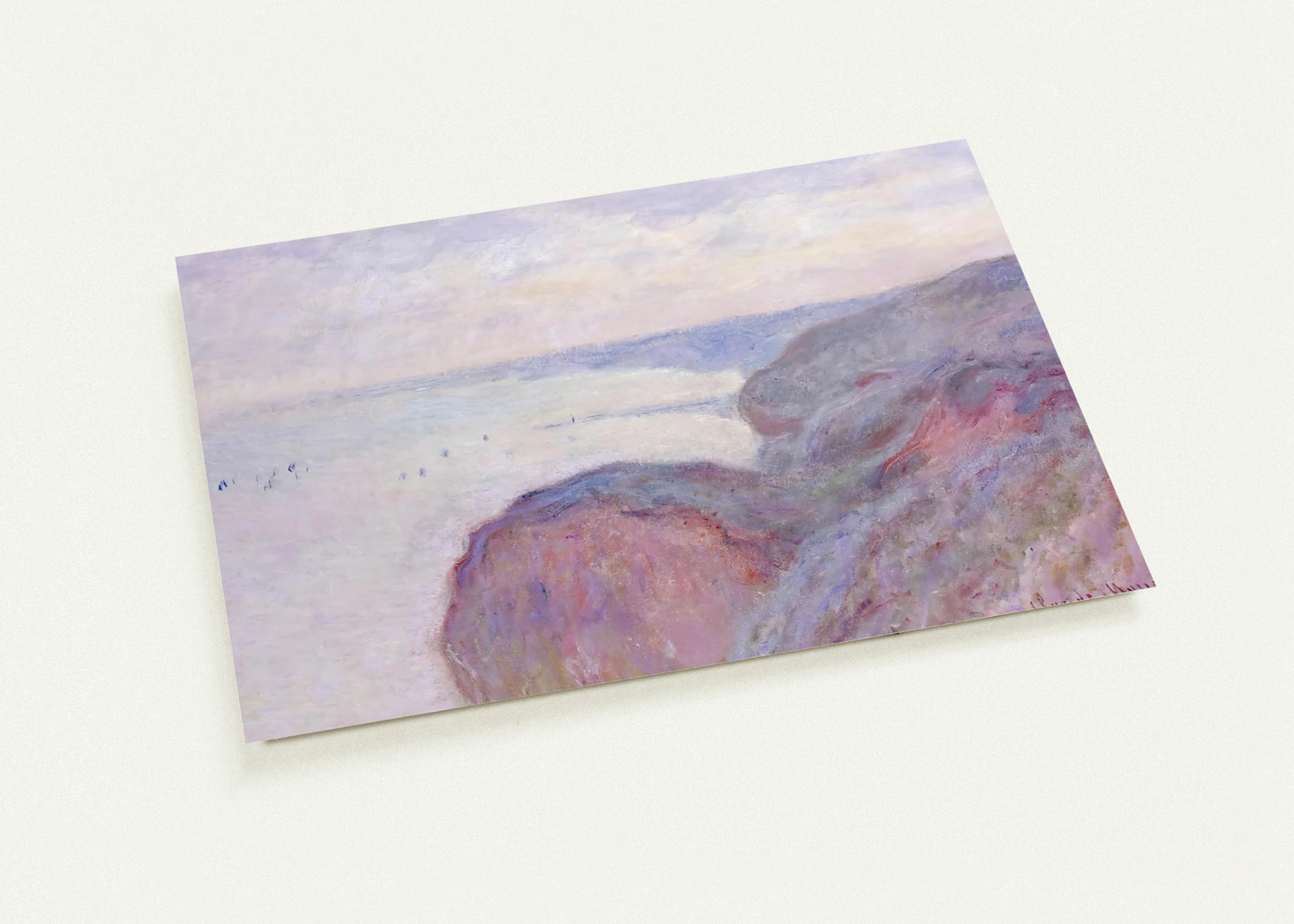
Cliff near Dieppe, Overcast Skies By claude monet Pack of 10 Post Cards | claude monet Post Cards | A6 (10.5 x 14.8 cm) - 4.1 x 5.8 inches
Cliff near Dieppe, Overcast Skies By claude monet Pack of 10 Post Cards | claude monet Post Cards | A6 (10.5 x 14.8 cm) - 4.1 x 5.8 inches
Učitavanje dostupnosti preuzimanje nije moguće
Capturing the Atmospheric Essence of the Normandy Coast
Claude Monet’s 1882 masterpiece, Cliff near Dieppe, Overcast Skies, is a profound exploration of light and air. During his residency in the Normandy region, Monet became obsessed with the dramatic chalk cliffs and the ever-shifting weather patterns of the English Channel. This particular piece departs from his sun-drenched scenes to capture the subtle, silvery tonalities of a clouded day, showcasing his peerless ability to render 'en plein air' atmosphere with delicate brushwork and a nuanced palette.
Museum-Grade Quality for Your Personal Correspondence
At RedKalion, we believe fine art should be a tactile experience. This pack of 10 postcards is produced using our advanced 12-color fine art printing technology. Unlike standard 4-color commercial prints, our process ensures every muted grey and soft blue from Monet’s original canvas is reproduced with stunning depth and chromatic accuracy. These are not merely postcards; they are archival-grade reproductions designed for those who appreciate the legacy of Impressionism.
Superior Materials and Sustainability
Each postcard is printed on premium 200 gsm (80 lb) paper with a thickness of 0.26 mm (10.3 mils). The smooth matte finish eliminates glare, allowing the intricate textures of Monet's technique to shine through. To honor the natural landscapes that inspired the Impressionist movement, all our postcards are printed on FSC-certified paper, ensuring that your appreciation for art aligns with environmental responsibility.
- Artist: Claude Monet (1840–1926)
- Title: Cliff near Dieppe, Overcast Skies
- Pack Size: 10 flat postcards
- Dimensions: A6 (10.5 x 14.8 cm / 4.1 x 5.8 inches)
- Finish: Glare-free smooth matte
- Sustainability: Environmentally conscious, FSC-certified paper
Discover Unlimited Art Possibilities
At RedKalion, you can find virtually any artwork from any artist, available in a wide range of sizes to perfectly match your space.
If you didn’t find what you’re looking for, contact us at support@redkalion.com . We will source any artwork and produce it in any size and format you need, including art prints, posters, canvas, framed pieces, framed canvas, and more.
For dedicated art enthusiasts, we also offer handcrafted replicas of any artwork, carefully painted by highly skilled artists using traditional techniques.
For custom requests, contact us at support@redkalion.com .
What makes RedKalion's printing process superior to standard postcards?
We utilize 12-color fine art printing technology, which offers a broader color gamut and greater depth than the standard 4-color inkjet process used for mass-market stationery, ensuring museum-quality results.
What is the weight and feel of the postcard paper?
Each card is printed on 200 gsm (80 lb) paper with a 0.26 mm thickness, providing a sturdy, premium feel and a smooth matte finish that is perfect for writing.
Are these postcards environmentally sustainable?
Yes, all our Claude Monet postcards are printed on FSC-certified paper, sourced from responsibly managed forests that provide environmental, social, and economic benefits.
How long will the colors last on these fine art prints?
Our archival-grade inks and acid-free paper are designed for longevity, resisting fading over time so that your correspondence or displays remain vibrant for years to come.
Do I need to order a large quantity of these cards?
No, these are printed on demand with no minimum order requirements beyond the initial pack of 10 postcards, allowing for flexible and curated art collections.
Where was Cliff near Dieppe, Overcast Skies originally painted?
Monet painted this work in the Normandy region of France in 1882, focusing on the dramatic verticality of the cliffs at Pourville, just west of Dieppe.
Why did Monet prefer painting overcast skies in this series?
Monet was fascinated by the 'envelope' of light. Overcast skies allowed him to study diffused light, which softened shadows and unified the landscape in a way that bright sunlight could not.