Preskoči do informacija o proizvodu
1 od 1

RedKalion

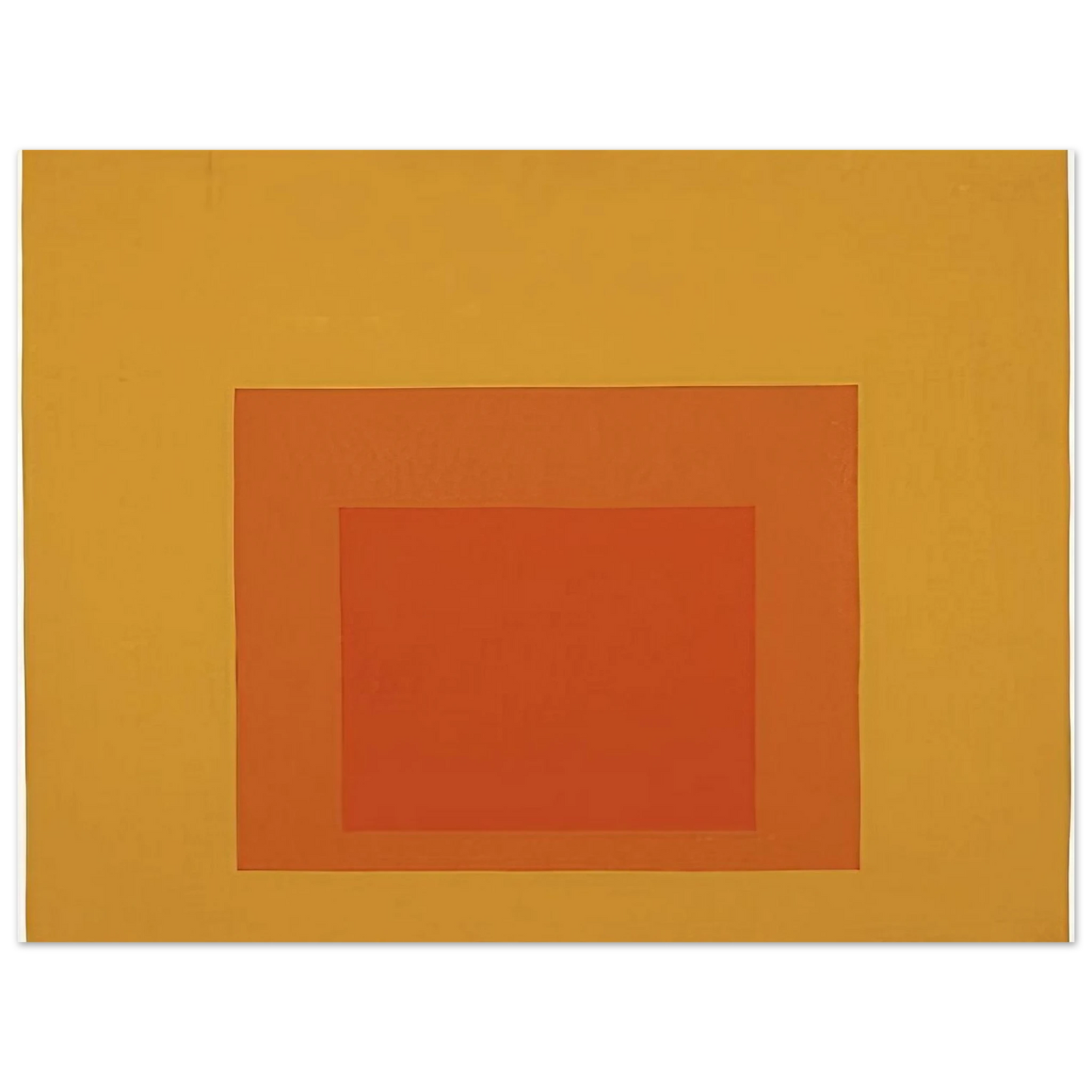
Josef Albers - HOMAGE TO THE SQUARE 1967 75x100 cm / 30x40inches Fine Art Poster

Josef Albers - HOMAGE TO THE SQUARE 1967 75x100 cm / 30x40inches Fine Art Poster

Redovna cijena $207.99 USD
Redovna cijena $311.00 USD Prodajna cijena $207.99 USD
Rasprodaja Rasprodano
Količina

Josef Albers - HOMAGE TO THE SQUARE 1967: A Masterpiece of Color Theory

Immerse yourself in the iconic geometric abstraction of Josef Albers' HOMAGE TO THE SQUARE 1967. This museum-quality fine art print captures the artist's profound exploration of color interaction and optical perception, making it a timeless addition to any modern interior. Measuring 75x100 cm (30x40 inches), this archival reproduction is meticulously crafted to honor Albers' legacy of precision and chromatic harmony.

Art Historical Significance & Expertise

Josef Albers (1888-1976), a pioneering figure of the Bauhaus movement, dedicated his career to studying how colors influence one another. The Homage to the Square series, begun in 1950, represents his lifelong investigation into this phenomenon. In this 1967 work, Albers masterfully layers nested squares to create a dynamic visual experience where colors appear to shift and vibrate, demonstrating his theory that color is relative and context-dependent. This print offers a rare opportunity to own a piece of 20th-century art history that continues to inspire designers and artists today.

Premium Physical Specifications

RedKalion's commitment to excellence is evident in every detail of this fine art poster. Printed on our exclusive Master's Edition archival paper, this reproduction features a matte, uncoated finish with a natural white (off-white) hue that enhances the artwork's subtle color gradations. The paper is acid-free (pH above 7) to ensure it resists yellowing over decades, and its substantial 250 gsm (110 lb) weight and 0.29 mm (11.4 mils) thickness provide a luxurious, durable feel. As part of our sustainable practices, we use FSC-certified paper, aligning with Albers' own appreciation for craftsmanship and integrity.

Elevate your space with an archival masterpiece that endures, printed and shipped on demand with no minimum orders required. This piece is perfect for collectors, educators, or anyone seeking to infuse their environment with the intellectual rigor and aesthetic beauty of mid-century modern art.

Prikaži sve pojedinosti
What are the dimensions of this Josef Albers fine art print?

This museum-quality reproduction measures 75x100 cm (30x40 inches), making it an ideal size for prominent display in homes or offices while capturing the visual impact of Albers' original work.

What type of paper is used for this archival print?

It's printed on Master's Edition archival paper, which is acid-free (pH above 7) to prevent yellowing, ensuring your fine art poster remains vibrant for generations as a durable art investment.

How is this print shipped and what is the fulfillment process?

We print and ship on demand with no minimum orders, using careful packaging to protect your geometric abstraction artwork during transit for a seamless delivery experience.

What is the finish and weight of the paper?

The paper has a matte, uncoated finish with a natural white hue and weighs 250 gsm (110 lb) with a thickness of 0.29 mm (11.4 mils), offering a luxurious texture for this homage to the square reproduction.

Is this print environmentally sustainable?

Yes, we use FSC-certified paper, supporting responsible forestry practices for this color theory art print, aligning with RedKalion's commitment to premium and eco-friendly products.

What is the historical context of Josef Albers' Homage to the Square series?

Josef Albers, a Bauhaus artist, created this series starting in 1950 to explore color interaction. The 1967 work uses nested squares to show how colors shift visually, reflecting his influential theories on optical perception in modern art.

Why did Albers focus on squares in this artwork?

Albers used the square shape to eliminate distractions, allowing viewers to concentrate solely on color relationships and their psychological effects, making it a key study in mid-century abstract art and design principles.