
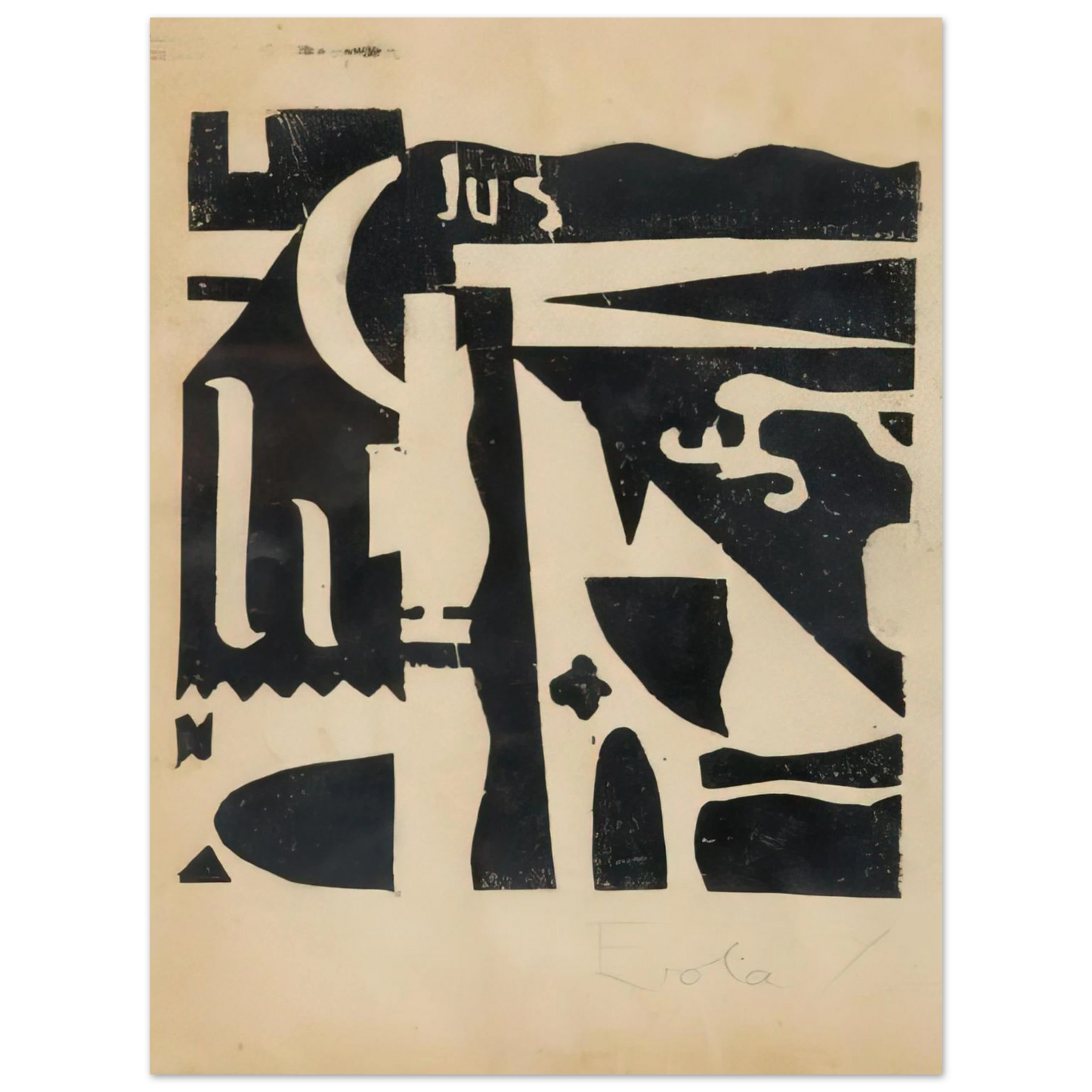
What is the historical significance of this Julius Evola woodcut from 1919?
This 1919 woodcut by Julius Evola represents his involvement in the Dada movement, showcasing avant-garde techniques that challenge traditional art forms with symbolic and philosophical themes, making it a rare piece of early 20th-century printmaking art.
What are the dimensions and details of this fine art print?
The print measures 75x100 cm (30x40 inches), reproducing Evola's original woodcut with high accuracy, ideal for display as a museum-quality poster or archival art piece in home or office settings.
What type of paper is used for this museum-quality reproduction?
It's printed on Master's Edition archival paper, featuring a matte, uncoated finish in natural white, with 250 gsm weight and 0.29 mm thickness for a luxurious texture and durable fine art print quality.
How does the acid-free paper ensure longevity for this art print?
The acid-free paper has a pH above 7, preventing yellowing over time and ensuring this archival-grade reproduction remains vibrant as a long-lasting woodcut art piece for years to come.
Is this FSC-certified paper sustainable for eco-conscious buyers?
Yes, the FSC-certified paper supports sustainable forestry, making this Evola woodcut poster an environmentally responsible choice for premium art reproductions and fine art collections.
How is shipping handled for this on-demand print?
We print and ship on demand with no minimum orders, ensuring careful fulfillment and delivery of your Julius Evola fine art poster directly to your location.
Can you describe the artistic technique behind this woodcut?
Evola used woodcut printmaking, carving designs into wood blocks to create bold, linear compositions that reflect Dadaist ideals, emphasizing raw expression and symbolic depth in this 1919 artwork.