
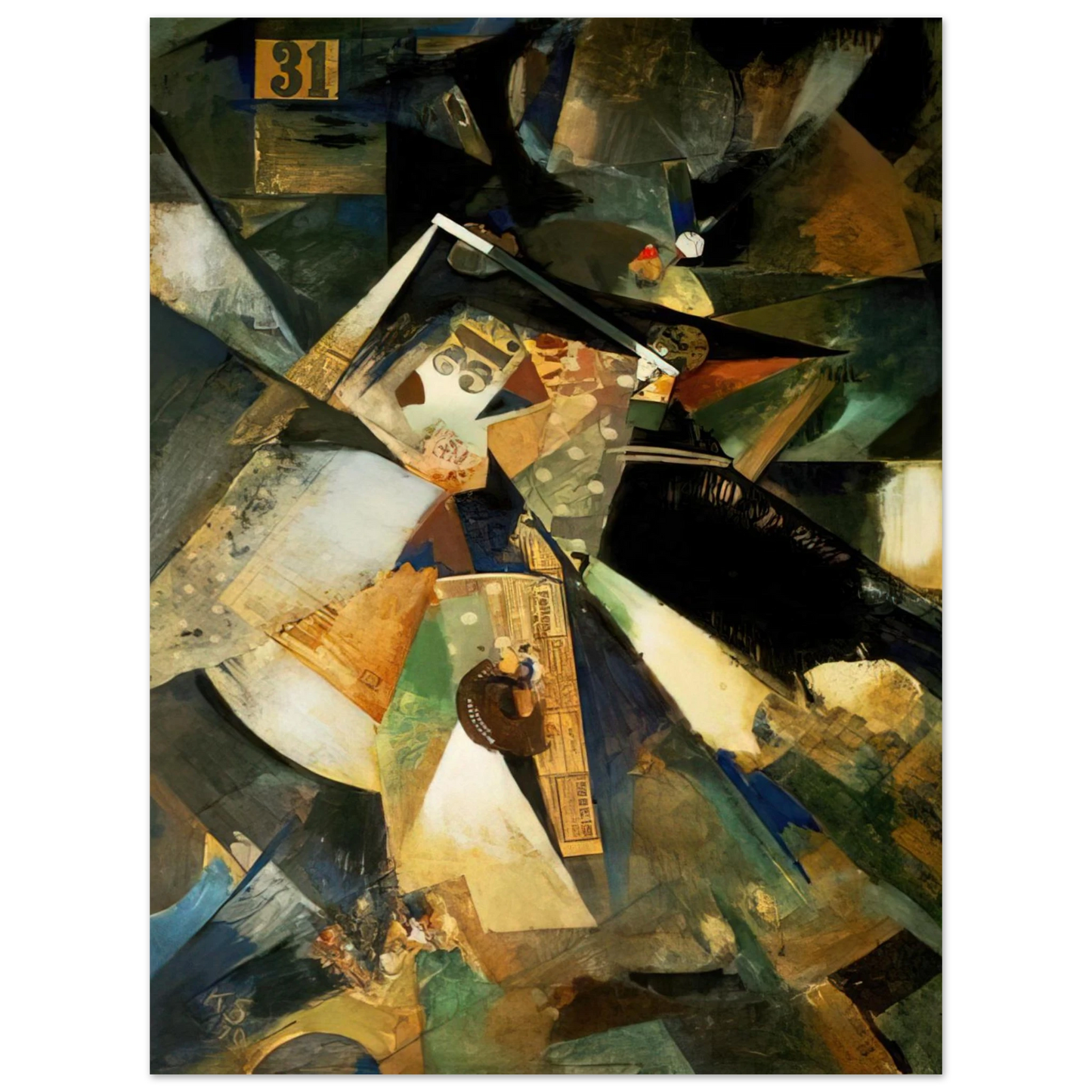
What is the historical significance of Kurt Schwitters' MERZPICTURE THIRTY ONE?
Created in 1920, this Dadaist collage is a key example of Schwitters' Merz technique, using found objects to critique post-WWI consumerism and redefine modern art through abstract composition.
How does the print capture the details of the original artwork?
Our museum-quality reproduction utilizes high-resolution imaging to preserve every texture and element of Schwitters' collage, ensuring an authentic fine art print experience.
What are the specifications of the archival paper used?
This fine art poster is printed on Master's Edition archival paper: matte, uncoated, natural white (off-white), 250 gsm (110 lb) weight, 0.29 mm thickness, acid-free (pH above 7), and FSC-certified for longevity.
How is the print shipped and are there order minimums?
We offer on-demand printing and fulfillment with no minimum orders, shipped securely to ensure your premium archival print arrives in pristine condition.
Will this print resist yellowing over time?
Yes, the acid-free paper (pH above 7) prevents yellowing, making this a durable museum-quality reproduction for long-term display.
What inspired Schwitters' use of collage in this piece?
Schwitters drew from urban debris and commercial materials to create his Merz artworks, reflecting Dadaist themes of fragmentation and societal critique in 1920s Germany.
Is the paper sustainably sourced?
Yes, the FSC-certified paper ensures responsible forestry practices, aligning with eco-conscious values for your fine art print collection.