


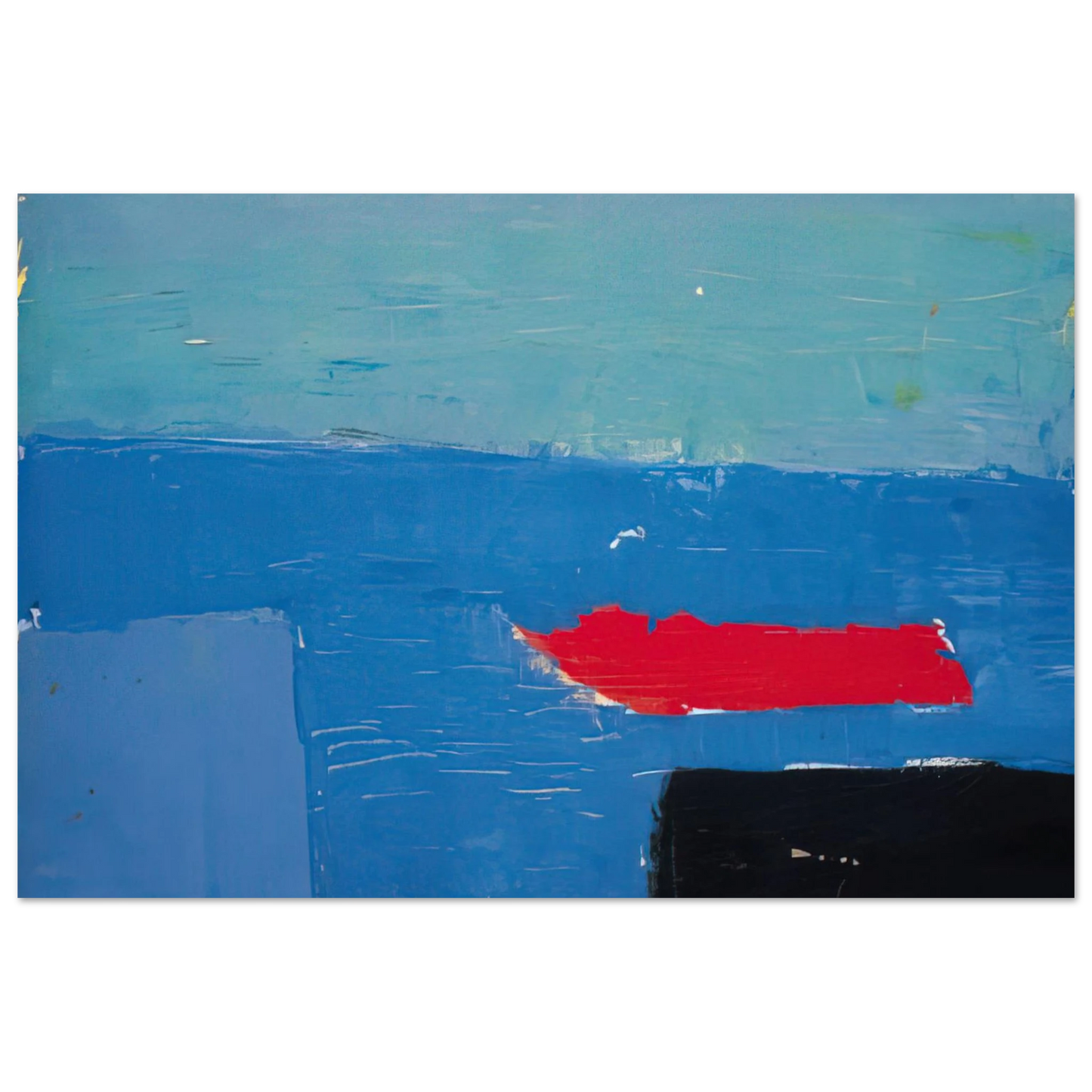
What is the artistic significance of Nicolas de Staël's Bâteau?
Bâteau (1952) is a key work in Nicolas de Staël's Lyrical Abstraction period, blending thick impasto brushwork with semi-figurative elements to evoke maritime themes, showcasing his post-war innovation in modern art prints.
What are the specifications of the paper used for this fine art print?
This museum-quality reproduction uses Master's Edition archival paper: matte, uncoated, natural white, 250 gsm (0.29 mm thick), acid-free for longevity, and FSC-certified for sustainability in premium art posters.
How is this print shipped and are there minimum order requirements?
We offer no minimum orders; each Bâteau print is produced on demand and shipped securely to ensure your lyrical abstraction artwork arrives in pristine condition.
Will this archival print resist yellowing over time?
Yes, the acid-free paper (pH above 7) in our Master's Edition ensures this Nicolas de Staël reproduction maintains its color integrity, preventing yellowing for long-lasting display.
What makes this a museum-quality reproduction?
It captures de Staël's impasto texture and Lyrical Abstraction style on luxurious 250 gsm archival paper, meeting curatorial standards for fine art prints in home galleries.
How did Nicolas de Staël's technique influence Lyrical Abstraction?
De Staël pioneered using thick, expressive paint layers to blend abstraction with suggestive forms, as seen in Bâteau, defining the emotional depth of mid-century lyrical abstraction art.
What is the historical context of Bâteau from 1952?
Created during de Staël's peak in post-war Paris, Bâteau reflects his transition towards more structured compositions while retaining the spontaneous energy of abstract expressionism in European art.