
RedKalion
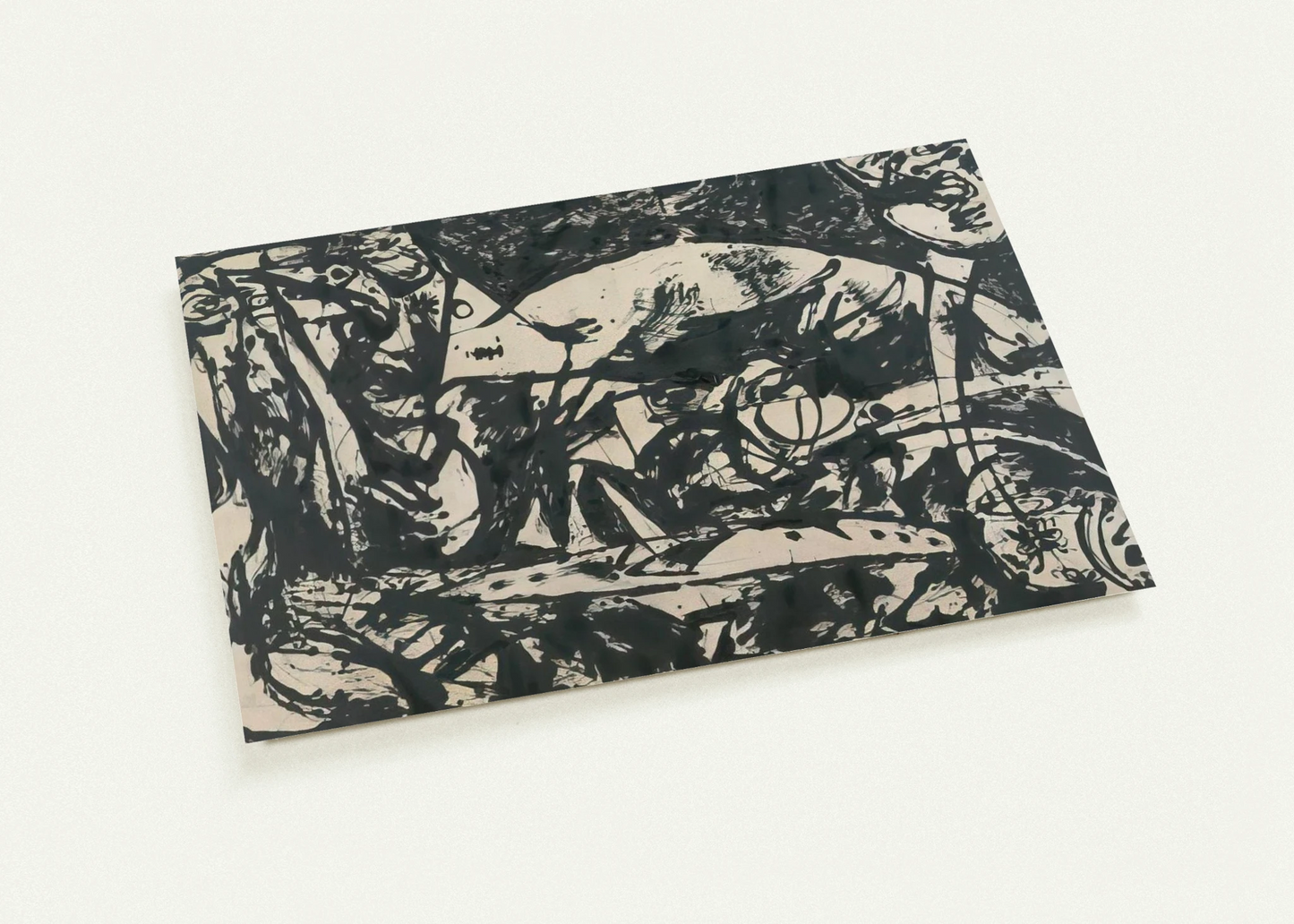
NUMBER 14 By Jackson Pollock Pack of 10 Post Cards | Jackson Pollock Post Cards | A6 (10.5 x 14.8 cm) - 4.1 x 5.8 inches
NUMBER 14 By Jackson Pollock Pack of 10 Post Cards | Jackson Pollock Post Cards | A6 (10.5 x 14.8 cm) - 4.1 x 5.8 inches
Učitavanje dostupnosti preuzimanje nije moguće
Jackson Pollock Number 14 Post Cards: A Pack of 10 Abstract Expressionist Masterpieces
Capture the raw energy of mid-century modern art with this pack of 10 post cards featuring Jackson Pollock's iconic Number 14. Each card in this collection showcases Pollock's revolutionary drip-painting technique, where rhythmic splatters and dynamic lines create a mesmerizing visual symphony. As a leading figure of the Abstract Expressionist movement, Pollock challenged traditional composition by pouring and flinging paint onto canvases laid on the floor—a method that emphasized spontaneity and physical gesture over representational form. This pack allows you to share a piece of art history, perfect for personal correspondence, creative projects, or as miniature collectibles.
RedKalion's museum-quality reproductions ensure that every detail of Pollock's chaotic brilliance is preserved. Our 12-color fine art printing technology delivers vivid, accurate colors with stunning depth, far surpassing standard 4-color inkjet prints, so the vibrant hues and intricate layers of Number 14 pop with lifelike intensity. Each post card measures A6 (10.5 x 14.8 cm or 4.1 x 5.8 inches), printed on 200 gsm (80 lb) FSC-certified paper with a smooth matte finish for a clean, glare-free display that feels substantial in hand. The 0.26 mm (10.3 mils) thickness ensures durability, making these flat post cards ideal for mailing, framing, or crafting. As an eco-conscious choice, our materials support sustainable forestry practices, and with printed-on-demand production, there's no waste from excess inventory.
Elevate your everyday moments with these archival-grade post cards, each a testament to Pollock's enduring influence on contemporary art. Whether you're an art enthusiast, a collector, or someone seeking unique stationery, this pack offers versatility and sophistication. Trust RedKalion for premium reproductions that blend historical authenticity with modern craftsmanship, bringing a touch of abstract elegance to any occasion.
Discover Unlimited Art Possibilities
At RedKalion, you can find virtually any artwork from any artist, available in a wide range of sizes to perfectly match your space.
If you didn’t find what you’re looking for, contact us at support@redkalion.com . We will source any artwork and produce it in any size and format you need, including art prints, posters, canvas, framed pieces, framed canvas, and more.
For dedicated art enthusiasts, we also offer handcrafted replicas of any artwork, carefully painted by highly skilled artists using traditional techniques.
For custom requests, contact us at support@redkalion.com .
What is Jackson Pollock's Number 14, and why is it significant in art history?
Number 14 is a key work by Jackson Pollock, exemplifying his drip-painting technique that defined Abstract Expressionism in the 1940s-50s, using spontaneous gestures to create dynamic, non-representational art.
What are the specifications of these post cards, including size and paper quality?
Each post card is A6 (10.5 x 14.8 cm or 4.1 x 5.8 inches), made from 200 gsm FSC-certified paper with a 0.26 mm thickness and smooth matte finish for a durable, glare-free display.
How does the printing technology ensure color accuracy and vibrancy for these fine art reproductions?
Our 12-color fine art printing delivers vivid, accurate colors with stunning depth, surpassing standard 4-color inkjet to capture Pollock's intricate layers in museum-quality reproductions.
Are these post cards eco-friendly and produced sustainably?
Yes, they are printed on demand with no minimum orders, using FSC-certified paper from responsible sources, making them an environmentally conscious choice for art lovers.
What is the best way to use or display these Jackson Pollock post cards?
Perfect for mailing as unique correspondence, framing as miniature art pieces, or creative projects, offering versatile ways to enjoy abstract expressionist masterpieces daily.
How did Jackson Pollock's drip-painting technique influence modern art?
Pollock's method of pouring paint onto canvases on the floor revolutionized art by emphasizing process and emotion, paving the way for action painting and later movements.
What details in Number 14 highlight Pollock's artistic style and composition?
The work features rhythmic splatters, overlapping lines, and a balanced chaos that reflects Pollock's focus on movement and energy, rather than traditional subject matter.