
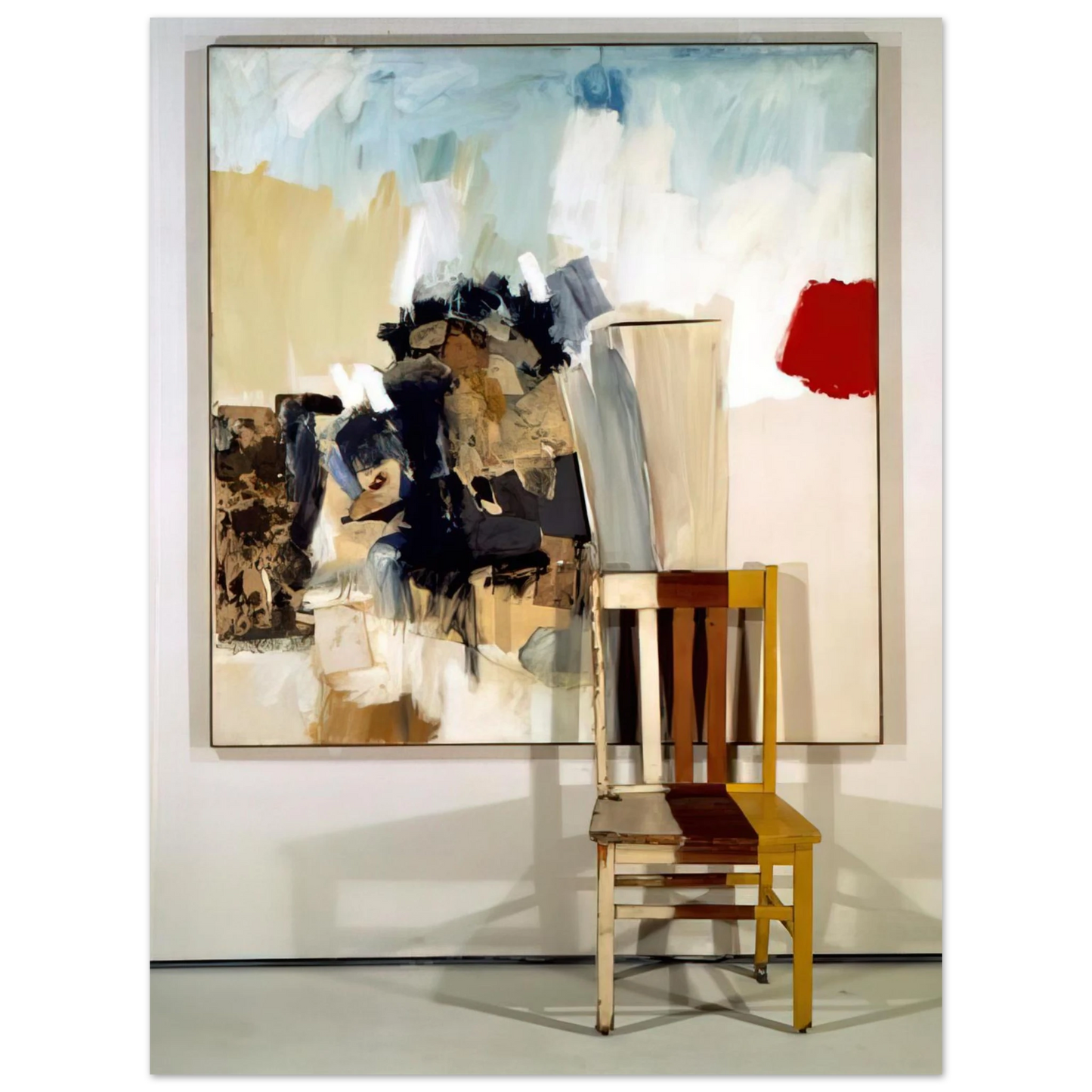
What is the historical significance of Robert Rauschenberg's PILGRIM (1960)?
PILGRIM is a key work from Rauschenberg's Combine era, blending painting, collage, and found objects to challenge art norms in the 1960s, reflecting post-war American innovation and abstract expressionism influences.
How does this fine art print capture the texture of the original artwork?
Our museum-quality reproduction uses a matte, uncoated finish on natural white archival paper to mimic the tactile depth and raw energy of Rauschenberg's original mixed-media techniques in PILGRIM.
What are the specifications of the Master's Edition archival paper?
The paper is acid-free (pH above 7), 250 gsm (110 lb) weight, 0.29 mm (11.4 mils) thick, with a matte finish and FSC-certified for sustainability, ensuring long-lasting fine art prints.
How is shipping handled for this on-demand print?
We print and ship each 75x100 cm fine art poster on demand with no minimum orders, using secure packaging to ensure your museum-quality reproduction arrives safely.
Will this archival print yellow over time?
No, the acid-free properties (pH above 7) of our Master's Edition paper prevent yellowing, preserving the vibrant details of this Rauschenberg reproduction for decades.
What techniques did Rauschenberg use in PILGRIM?
Rauschenberg employed Combine techniques, integrating painting, collage, and assemblage with everyday objects to create layered, textured compositions that redefine art boundaries.
Why choose RedKalion for this fine art poster?
RedKalion offers trusted, archival-grade reproductions like this PILGRIM print, with expert curation, sustainable materials, and on-demand fulfillment for a premium art experience.