

RedKalion
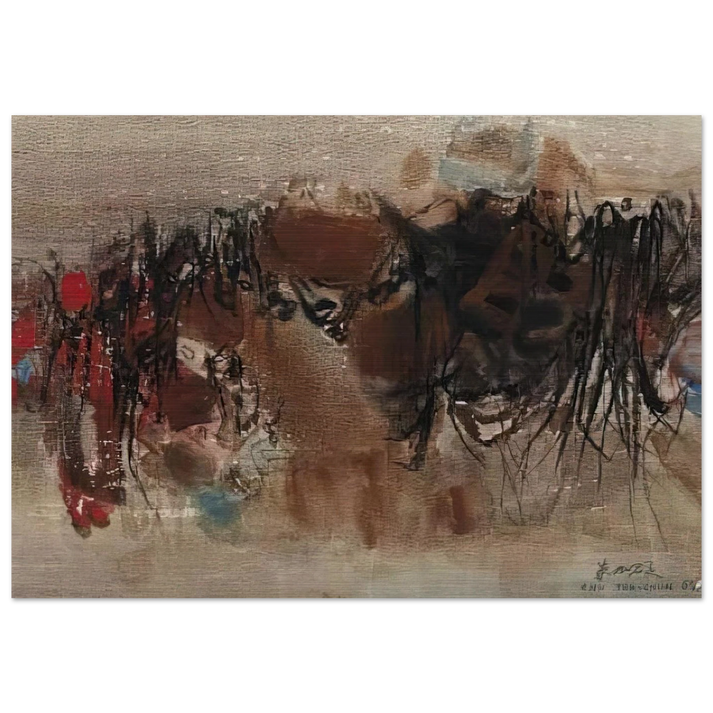
UNTITLED 1964 1 - Chu teh Chun Brushed Aluminum Print - 70x100 cm / 28x40 inches | Chu teh Chun Aluminum Print | Chu teh Chun Prints
UNTITLED 1964 1 - Chu teh Chun Brushed Aluminum Print - 70x100 cm / 28x40 inches | Chu teh Chun Aluminum Print | Chu teh Chun Prints
Učitavanje dostupnosti preuzimanje nije moguće
Chu Teh-Chun: Untitled 1964 1 - A Modernist Masterpiece on Brushed Aluminum
Experience the dynamic fusion of Eastern calligraphy and Western abstraction with Chu Teh-Chun's "Untitled 1964 1", now available as an exclusive museum-quality aluminum print from RedKalion. This 1964 work captures the artist's pivotal transition, blending ink-wash techniques with bold, gestural abstraction to evoke the sublime forces of nature—wind, water, and light—in a mesmerizing dance of form and void.
RedKalion's premium reproduction honors Chu's visionary artistry on brushed silver Aluminum DIBOND®, a 3mm (0.12") rigid base with a horizontal grain that enhances the artwork's dynamic energy. Printed directly onto the aluminum, it delivers vivid, archival-grade colors with a matte, glare-free finish, while unprinted areas reveal a striking metallic silver effect for added depth. Each print includes a complete hanging kit for seamless display.
Elevate your space with this archival masterpiece, a testament to Chu Teh-Chun's legacy as a bridge between cultural traditions and modern expression.


Discover Unlimited Art Possibilities
At RedKalion, you can find virtually any artwork from any artist, available in a wide range of sizes to perfectly match your space.
If you didn’t find what you’re looking for, contact us at support@redkalion.com . We will source any artwork and produce it in any size and format you need, including art prints, posters, canvas, framed pieces, framed canvas, and more.
For dedicated art enthusiasts, we also offer handcrafted replicas of any artwork, carefully painted by highly skilled artists using traditional techniques.
For custom requests, contact us at support@redkalion.com .
What are the dimensions and material of this Chu Teh-Chun aluminum print?
This fine art print measures 70x100 cm (28x40 inches) and is crafted on brushed silver Aluminum DIBOND® with a 3mm thickness for durability and a dynamic metallic finish.
How is the print applied to the aluminum surface?
It features direct printing on AluDibond, ensuring vivid colors and a matte finish, with unprinted areas showcasing a metallic silver effect for enhanced visual impact.
Is a hanging kit included with the aluminum print?
Yes, a complete hanging kit is included; specific components may vary by fulfillment country to ensure secure installation.
What makes this a museum-quality reproduction?
RedKalion uses archival-grade printing on premium Aluminum DIBOND® for fade-resistant colors and a matte, glare-free finish, mirroring gallery standards.
How does the brushed finish affect the artwork's appearance?
The horizontal grain on the brushed silver aluminum adds texture and movement, complementing Chu Teh-Chun's abstract, gestural style for a dynamic look.
What artistic significance does "Untitled 1964 1" hold?
Created in 1964, this work marks Chu Teh-Chun's fusion of Chinese ink-wash techniques with Western abstraction, reflecting his innovative approach to modern art.
Why choose an aluminum print for this artwork?
Aluminum offers durability and a contemporary metallic sheen, ideal for highlighting the contrast and depth in Chu Teh-Chun's black-and-white and color elements.