
100 Lattine - Andy Warhol 70x100 cm / 28x40 pollici Stampa d'Arte Incorniciata – Cornice in Legno Nero
100 Lattine - Andy Warhol 70x100 cm / 28x40 pollici Stampa d'Arte Incorniciata – Cornice in Legno Nero
Impossibile caricare la disponibilità di ritiro
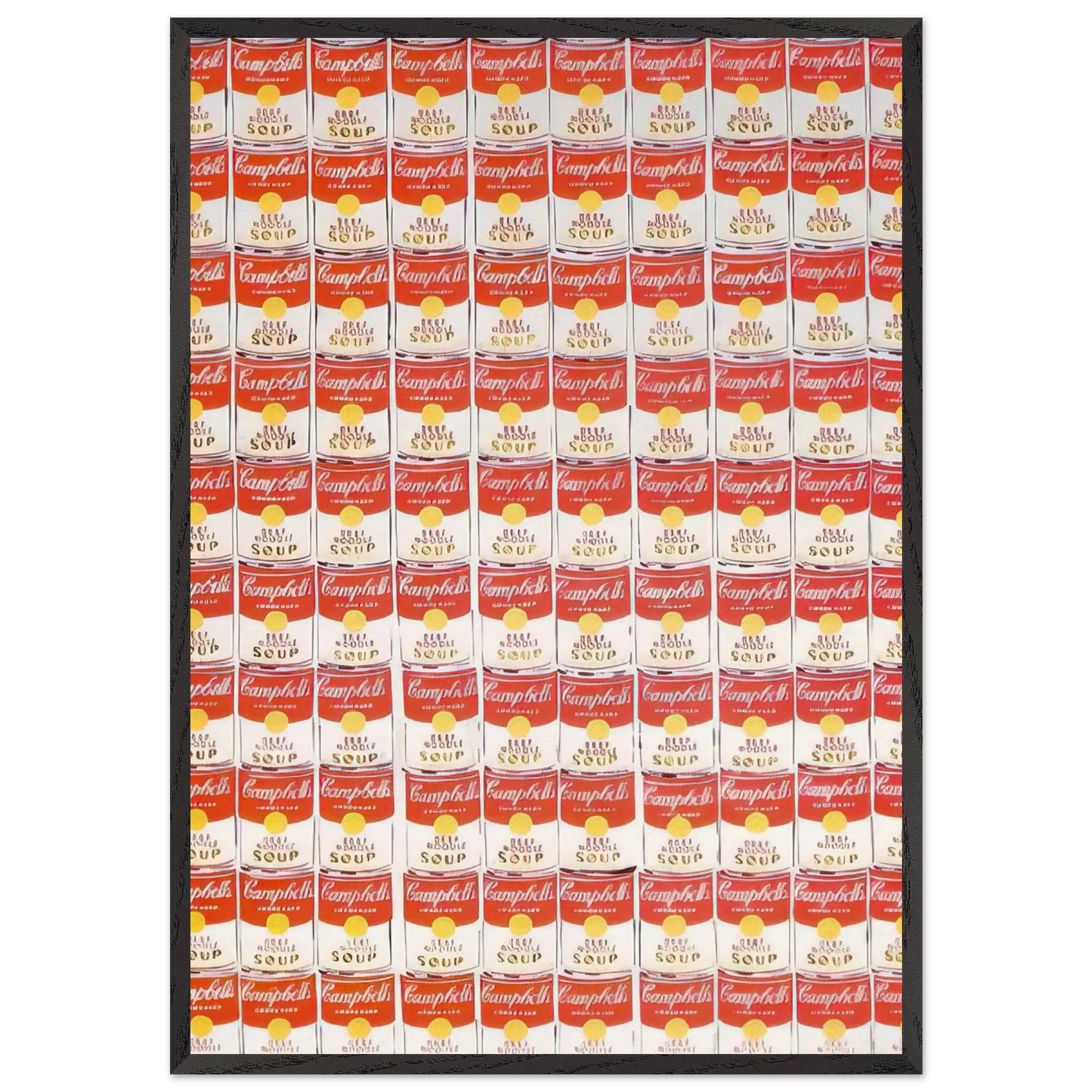
Andy Warhol’s 100 Cans: Un'icona della Pop Art per lo spazio moderno
Il capolavoro del 1962 di Andy Warhol, 100 Cans, rimane una delle opere più definitive del XX secolo. Elevando un prodotto di consumo banale — la lattina di zuppa Campbell's — allo status di arte elevata, Warhol ha sfidato in modo fondamentale i confini tradizionali dell'espressione creativa. RedKalion è orgogliosa di offrire questa riproduzione di qualità museale, realizzata con meticolosa attenzione per preservare la ripetizione audace e l'estetica clinica che hanno definito il movimento della Pop Art.
Contesto storico artistico: La meccanizzazione dell'arte
Sebbene spesso associato alle sue tecniche serigrafiche successive, Warhol’s 100 Cans fu originariamente dipinto a mano, anche se eseguito con una precisione deliberata che imita la produzione di massa. Quest'opera funge da profondo commento al boom dei consumi post-bellico e alla democratizzazione dell'arte. Possedere questa stampa di 70x100 cm ti permette di portare un pezzo di storia dell'arte nella tua casa, riflettendo l'intersezione tra cultura commerciale e arte raffinata.
Eccellenza archivistica e artigianato premium
In RedKalion, crediamo che un capolavoro meriti una presentazione di pari livello. Questa stampa d'arte incorniciata è prodotta su carta di qualità museale archivistica da 250 gsm (110 lb). La finitura opaca naturale bianca garantisce una profondità di colore vibrante senza il fastidio dei riflessi, preservando l'integrità della tavolozza di Warhol per decenni.
- Cornici superiori: Ogni stampa è alloggiata in una solida cornice spessa 20 mm (0,79"), realizzata con legno di quercia e frassino di provenienza responsabile. Questo profilo più ampio offre una presenza più sofisticata e pronta per la galleria rispetto alle cornici commerciali standard.
- Protezione senza compromessi: Utilizziamo plexiglass infrangibile per proteggere il tuo investimento, garantendo chiarezza e sicurezza mantenendo un profilo leggero.
- Lusso sostenibile: Il nostro impegno per l'ambiente si riflette nell'uso di materiali certificati FSC, assicurando che la tua arte sia tanto etica quanto bella.
- Pronto per l'installazione: La tua opera d'arte arriva con un kit di montaggio professionale, pronta per elevare il tuo interno immediatamente dopo la consegna.
Investi in un capolavoro archivistico che dura nel tempo. La riproduzione di RedKalion di 100 Cans non è semplicemente una stampa; è un'esperienza curata pensata per il collezionista esigente.
Discover Unlimited Art Possibilities
At RedKalion, you can find virtually any artwork from any artist, available in a wide range of sizes to perfectly match your space.
If you didn’t find what you’re looking for, contact us at support@redkalion.com . We will source any artwork and produce it in any size and format you need, including art prints, posters, canvas, framed pieces, framed canvas, and more.
For dedicated art enthusiasts, we also offer handcrafted replicas of any artwork, carefully painted by highly skilled artists using traditional techniques.
For custom requests, contact us at support@redkalion.com .
Qual è il significato di "100 Cans" di Andy Warhol?
100 Cans esplora l'intersezione tra consumismo e arte attraverso la ripetizione. Sfidò il mondo dell'arte degli anni '60 trasformando oggetti commerciali di massa in icone dell'arte raffinata, segnando la nascita del movimento Pop Art.
Quali sono le dimensioni specifiche della cornice?
La cornice è spessa e larga 20 mm (0,79"), offrendo un'estetica premium da galleria, più sostanziale rispetto alle cornici standard da 14 mm, che si adatta perfettamente alla stampa 70x100 cm.
Che tipo di carta viene utilizzata per questa stampa di Warhol?
Utilizziamo carta da museo di qualità naturale bianca da 250 gsm (110 lb). Presenta una finitura opaca non patinata per garantire la longevità e prevenire i riflessi in diverse condizioni di illuminazione.
Il materiale della cornice è sostenibile?
Sì, RedKalion utilizza legno di quercia e frassino certificato FSC, provenienti da fonti responsabili, per le nostre cornici, garantendo che la tua opera d'arte soddisfi elevati standard ambientali e sociali.
Come viene protetta l'opera dai danni?
Ogni stampa è protetta da plexiglass infrangibile, che offre la chiarezza del vetro senza il rischio di rottura, e viene spedita in imballaggi protettivi specializzati.
La stampa arriva pronta per essere appesa?
Assolutamente. La tua stampa incorniciata di Andy Warhol include un kit di montaggio preinstallato, permettendoti di appenderla direttamente al muro non appena arriva.
100 Cans era originariamente una serigrafia o una pittura?
Curiosamente, sebbene Warhol sia famoso per le serigrafie, "100 Cans" (1962) è stato realizzato principalmente a mano per sembrare un oggetto prodotto industrialmente, segnando una transizione fondamentale nella sua tecnica artistica.