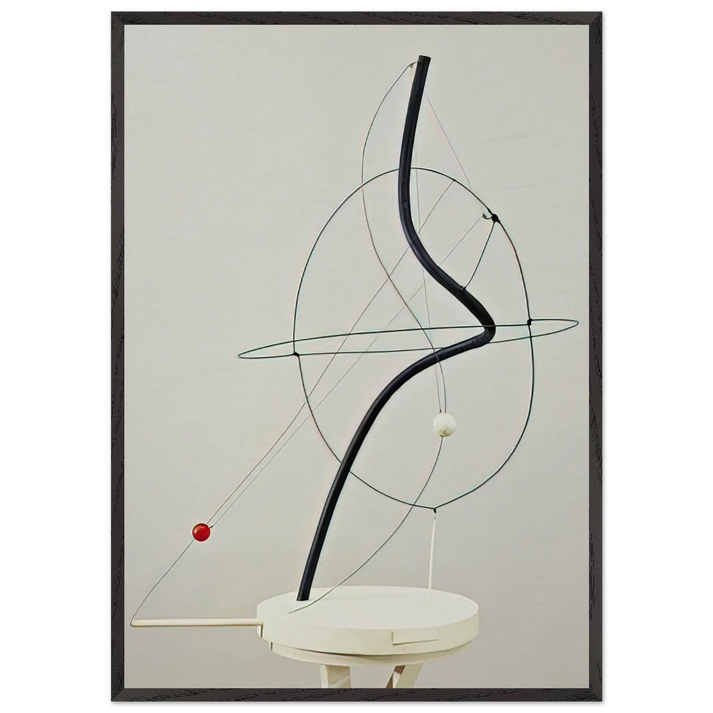
UNIVERSO 1934 - Alexander Calder 70x100 cm / 28x40 pollici – Stampa d'Arte Incorniciata – Cornice in Legno Nero
UNIVERSO 1934 - Alexander Calder 70x100 cm / 28x40 pollici – Stampa d'Arte Incorniciata – Cornice in Legno Nero
Impossibile caricare la disponibilità di ritiro
Vivi l'Infinito: Capolavoro del 1934 di Alexander Calder
Entra nella coreografia celeste di Alexander Calder, "A Universe" (1934). Quest'opera fondamentale rappresenta un momento cruciale nella storia dell'arte cinetica, in cui Calder passò da forme statiche all'esplorazione del movimento cosmico. Il nostro riproduzione di qualità museale cattura l'equilibrio delicato e la precisione ritmica dell'originale, permettendoti di portare un pezzo della storia dell'arte moderna nella tua casa.
"A Universe" di Calder non è semplicemente una composizione astratta; è una traduzione meccanica del cosmo. All'inizio degli anni '30, Calder iniziò a sperimentare sculture motorizzate e a manovella, mirando a imitare le orbite dei pianeti e l'immensità dello spazio. Questa stampa d'arte preserva i colori primari vivaci e le linee strutturali minimaliste che hanno definito la sua estetica biomorfica.
Lavoro di Eccellenza per un'Eredità Duratura
Presso RedKalion, crediamo che i capolavori d'archivio meritino solo la perfezione. Questa stampa d'arte incorniciata da 70x100 cm (28x40 pollici) viene prodotta con meticolosa attenzione per soddisfare i più alti standard delle gallerie:
- Carta da Museo Archiviabile: Stampata su carta naturale bianca opaca da 250 gsm (110 lb) con finitura non riflettente e priva di acidi.
- Cornici Sostenibili: Incorniciata in una cornice nera premium da 20 mm (0,79") di spessore, realizzata in legno di quercia e frassino provenienti da fonti responsabili.
- Protezione Antiframmentazione: Plexiglass ad alta trasparenza garantisce che la stampa rimanga immacolata offrendo sicurezza e durata.
- Pronto da Appendere: Ogni pezzo arriva con un kit di montaggio preinstallato per un'installazione senza sforzo.
Dai eleganza al tuo spazio con una stampa d'arte di Alexander Calder che incarna l'intersezione tra fisica e poesia. Non è solo una decorazione; è un capolavoro d'archivio curato da RedKalion per durare generazioni.
Discover Unlimited Art Possibilities
At RedKalion, you can find virtually any artwork from any artist, available in a wide range of sizes to perfectly match your space.
If you didn’t find what you’re looking for, contact us at support@redkalion.com . We will source any artwork and produce it in any size and format you need, including art prints, posters, canvas, framed pieces, framed canvas, and more.
For dedicated art enthusiasts, we also offer handcrafted replicas of any artwork, carefully painted by highly skilled artists using traditional techniques.
For custom requests, contact us at support@redkalion.com .
Cosa rende la carta "di qualità museo"?
Utilizziamo carta naturale bianca di grado archivistico da 250 gsm. È non patinata e priva di acidi, garantendo che i colori del capolavoro di Calder rimangano vivaci senza ingiallire o sbiadire nel tempo.
Come viene costruito il telaio?
I nostri telai sono spessi e larghi 20 mm, realizzati in legno di quercia e frassino di alta qualità, certificato FSC. Questo conferisce un aspetto più robusto e premium rispetto ai comuni telai da galleria sottili.
Il stampa è protetto dai danni?
Sì, utilizziamo plexiglass infrangibile. Questo offre la chiarezza del vetro con una durabilità superiore, proteggendo la tua stampa di Alexander Calder da polvere, umidità e usura ambientale.
Come posso appendere la mia nuova stampa d'arte di Calder?
La tua stampa arriva pronta per essere appesa. Includiamo un kit di montaggio professionale con ogni ordine, permettendoti di installare questa opera di 70x100 cm immediatamente all'arrivo.
Quanto durerà questa stampa archivistica?
Realizzata con materiali di grado archivistico e carta certificata FSC, questa stampa è progettata per durare nel tempo. Se tenuta lontano dalla luce solare diretta, manterrà la sua integrità per decenni.
Qual era l'ispirazione per "A Universe" (1934)?
Creato nel 1934, quest'opera riflette la fascinazione di Calder per l'astronomia e il movimento ritmico dei corpi celesti. Fu uno dei suoi primi esperimenti complessi di arte cinetica motorizzata.
Perché Calder ha usato i colori primari in quest'opera?
Calder ha utilizzato i colori primari—rosso, giallo e blu—per enfatizzare la natura astratta e elementare delle sue forme, una tecnica fortemente influenzata dai suoi incontri con il pittore Piet Mondrian.