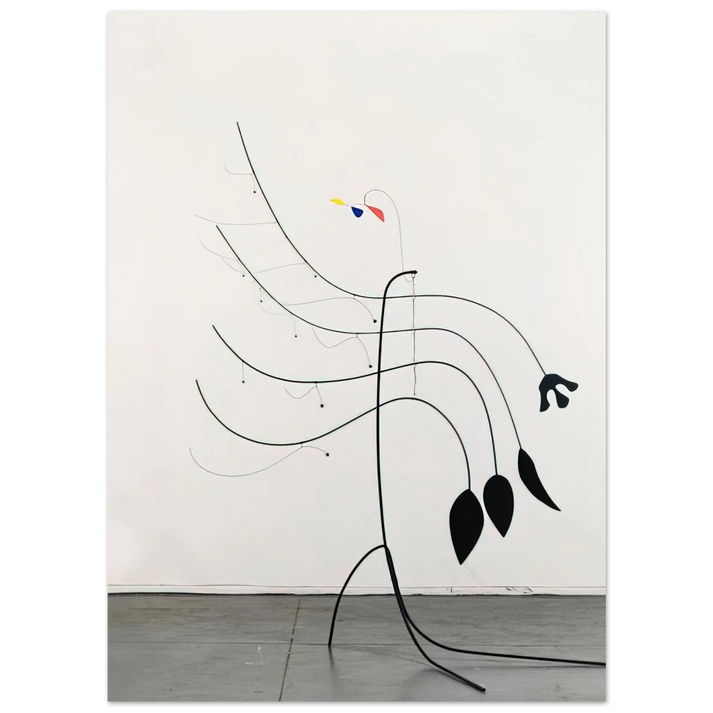
Alexander Calder - QUATTRO FOGLIE E TRE PETALI 1939 Manifesto d'Arte
Alexander Calder - QUATTRO FOGLIE E TRE PETALI 1939 Manifesto d'Arte
Impossibile caricare la disponibilità di ritiro
Eleva il tuo spazio con Four Leaves and Three Petals di Alexander Calder Four Leaves and Three Petals (1939)
Esplora l'equilibrio ritmico e l'eleganza biomorfica di Alexander Calder’s 1939 capolavoro, Four Leaves and Three Petals. Questa stampa d'arte raffinata cattura un momento cruciale nella carriera di Calder, in cui la sua maestria nella scultura cinetica iniziò a tradursi in astrazioni iconiche a colori piatti. Conosciuto per aver rivoluzionato il concetto di arte in movimento, Calder utilizzava forme primarie e sagome organiche per esplorare l'armonia spaziale—a una qualità magnificamente preservata in questa riproduzione di qualità museale.
L'Arte Dietro il Capolavoro
Nel 1939, Calder era al culmine del suo potere creativo, perfezionando il rapporto tra peso, aria e forma. Four Leaves and Three Petals è una testimonianza della sua capacità unica di evocare il mondo naturale attraverso la precisione industriale. Scegliendo questa Alexander Calder fine art poster, stai portando un pezzo di astrazione influenzata dal Surrealismo nella tua casa, riflettendo lo stesso spirito d'avanguardia che si trova nelle gallerie più prestigiose al mondo.
Gli Standard Materiali Intransigenti di RedKalion
In RedKalion, crediamo che l'arte di livello mondiale meriti materiali di livello mondiale. Questa stampa è prodotta su carta Master's Edition archivistica, selezionata specificamente per la sua texture lussuosa e la sua durata. Il nostro processo garantisce che i neri profondi e le forme vibranti della visione di Calder rimangano tanto sorprendenti quanto le composizioni originali a gouache e metallo.
- Texture Premium: Carta opaca non patinata, bianco naturale (avorio) che elimina i riflessi.
- Peso Sostanziale: Stampata su carta da 250 gsm (110 lb) con uno spessore di 0,29 mm (11,4 mils).
- Eccellenza Archivistica: Carta senza acidi (pH superiore a 7) previene l'ingiallimento e preserva l'integrità dei colori per generazioni.
- Sostenibilità: Ogni stampa utilizza carta certificata FSC, garantendo un'aggiunta eticamente sourcing alla tua collezione.
Trasforma il tuo interno con un capolavoro di livello archivistico che dura nel tempo. RedKalion offre la scelta definitiva per collezionisti che richiedono il più alto standard di artigianato e fedeltà storica.


Discover Unlimited Art Possibilities
At RedKalion, you can find virtually any artwork from any artist, available in a wide range of sizes to perfectly match your space.
If you didn’t find what you’re looking for, contact us at support@redkalion.com . We will source any artwork and produce it in any size and format you need, including art prints, posters, canvas, framed pieces, framed canvas, and more.
For dedicated art enthusiasts, we also offer handcrafted replicas of any artwork, carefully painted by highly skilled artists using traditional techniques.
For custom requests, contact us at support@redkalion.com .
Cosa rende questa stampa di Alexander Calder "di qualità museale"?
RedKalion utilizza carta di archiviazione Master's Edition e tecniche di stampa ad alta fedeltà. Questo garantisce una precisione cromatica e un'integrità strutturale che risponde agli standard presenti nelle gallerie d'arte e nei musei di tutto il mondo.
Quali sono le specifiche della carta Master's Edition?
Le nostre stampe utilizzano carta naturale bianca opaca da 250 gsm (110 lb). Ha uno spessore di 0,29 mm, offrendo una sensazione premium e sostanziale che evita la fragilità dei poster standard.
Come viene garantita la durata della stampa?
Utilizziamo carta senza acidi con un livello di pH superiore a 7. Questo previene la degradazione chimica e l'ingiallimento che di solito colpisce le stampe standard nel tempo, garantendo che la tua opera d'arte rimanga immacolata.
La carta utilizzata per questo poster di Calder è sostenibile?
Sì, utilizziamo carta certificata FSC. Questo garantisce che i materiali per la tua stampa d'arte siano provenienti da foreste gestite in modo responsabile, che offrono benefici ambientali e sociali.
Come viene evaso e spedito l'ordine?
Ogni ordine viene stampato e spedito su richiesta senza requisiti minimi. Questo riduce gli sprechi e garantisce che il tuo pezzo specifico venga gestito con cura individuale dalla produzione alla consegna.
Qual è il significato storico delle opere di Calder del 1939?
Il 1939 fu un anno di intensa produzione per Calder, che segnò il passaggio dai suoi primi esperimenti con i 'mobiles' cinetici alle sue 'stabiles' statiche. Questo periodo definì il suo stile astratto biomorfico caratteristico.
Cosa rappresenta la composizione 'Four Leaves and Three Petals'?
La composizione esplora la crescita naturale attraverso l'astrazione geometrica. Riflette l'interesse di Calder per la biologia e la fisica, creando un equilibrio visivo tra le 'foglie' organiche e i 'petali' strutturati.