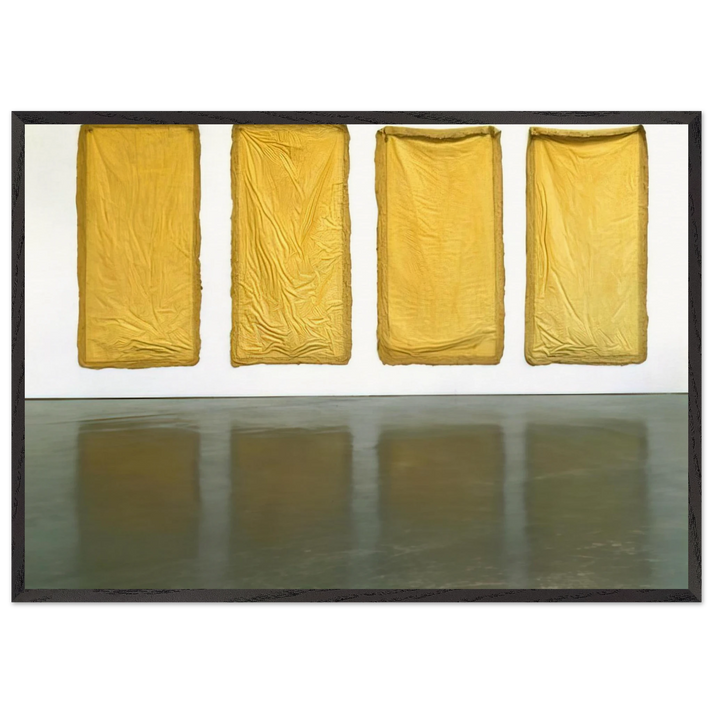
AUGHT 1968 - Eva Hesse 70x100 cm / 28x40 inches Stampa d'arte incorniciata – Cornice in legno nero
AUGHT 1968 - Eva Hesse 70x100 cm / 28x40 inches Stampa d'arte incorniciata – Cornice in legno nero
Impossibile caricare la disponibilità di ritiro
Eleva il tuo spazio con l'opera maestra post-minimalista di Eva Hesse: Aught (1968)
Vivi la profonda materialità dell'avanguardia degli anni '60 con la nostra riproduzione di qualità museale di Eva Hesse’s Aught (1968). Questa stampa d'arte incorniciata cattura l'essenza dell'approccio rivoluzionario di Hesse alla forma e alla sostanza, in cui ha superato le strutture rigide del Minimalismo per esplorare temi di vulnerabilità, ripetizione e condizione umana. Come pioniera dell'Arte Processuale, l'installazione originale di Hesse utilizzava lattice e tela per creare un senso di presenza organica; la nostra stampa d'arte di qualità museale preserva meticolosamente questi sottili cambiamenti tonali e le sfumature testurali su carta bianca naturale di grado archivistico.
Qualità e artigianato impeccabili
In RedKalion, non curiamo solo immagini; offriamo artefatti duraturi della storia dell'arte. Questa stampa di 70x100 cm (28x40 pollici) è realizzata su carta di qualità museale da 250 gsm (110 lb) con uno spessore di 0,29 mm (11,4 mil). La finitura opaca e non rivestita garantisce un'esperienza di visione senza riflessi, permettendo alla natura contemplativa dell'opera di Hesse di risuonare in qualsiasi condizione di luce. La stampa è incorniciata in una cornice nera in legno pregiato realizzata con legno di frassino proveniente da fonti responsabili, con un profilo sofisticato di 20 mm (0,79") — che conferisce una presenza più audace e sostanziale rispetto alle cornici standard delle gallerie.
Conservazione autentica
- Longevità di grado museale: La carta priva di acidi e certificata FSC garantisce che la stampa rimanga perfetta per generazioni.
- Protezione sofisticata: Un plexiglass trasparente infrangibile protegge i dettagli delicati dell'opera dall'umidità e dai danni.
- Arriva pronto da appendere: Ogni cornice include un kit di montaggio professionale, permettendoti di trasformare immediatamente la tua parete-gallery.
Scegliendo questa riproduzione di Eva Hesse Aught 1968, stai investendo in un pezzo di storia dell'arte che onora l'eredità dell'artista. Questo capolavoro archivistico è progettato per durare, portando un tocco di profondità intellettuale ed eleganza post-minimalista nella tua collezione privata o nello spazio del tuo ufficio professionale.
Discover Unlimited Art Possibilities
At RedKalion, you can find virtually any artwork from any artist, available in a wide range of sizes to perfectly match your space.
If you didn’t find what you’re looking for, contact us at support@redkalion.com . We will source any artwork and produce it in any size and format you need, including art prints, posters, canvas, framed pieces, framed canvas, and more.
For dedicated art enthusiasts, we also offer handcrafted replicas of any artwork, carefully painted by highly skilled artists using traditional techniques.
For custom requests, contact us at support@redkalion.com .
Cosa rende questa stampa di Eva Hesse di qualità museale?
Utilizziamo carta di grado archivistico da 250 gsm, naturale bianca, priva di acidi e certificata FSC. Questo garantisce che la stampa d'arte mantenga l'integrità dei colori e la durata strutturale per decenni, rispettando gli standard delle gallerie di alto livello.
Quali sono le specifiche della cornice in legno nero?
La cornice è realizzata in legno di frassino proveniente da fonti responsabili, con una larghezza e uno spessore di 20 mm (0,79"). Questo offre un'estetica robusta e premium rispetto alle cornici più sottili da 14 mm comunemente reperibili altrove.
Come viene protetta l'opera durante la spedizione e l'esposizione?
Ogni stampa incorniciata è protetta da un vetro acrilico infrangibile, che garantisce la sicurezza durante il trasporto e una visione chiara e protetta una volta appesa. Utilizziamo imballaggi sicuri e rinforzati per assicurarci che arrivi in condizioni perfette.
La stampa Aught (1968) è pronta per essere appesa?
Sì, la tua stampa d'arte incorniciata arriva completamente assemblata con un kit di montaggio specializzato incluso. È progettata per essere montata direttamente sulla parete con facilità, migliorando immediatamente il design del tuo spazio interno.
La carta ha una finitura lucida o opaca?
Questa stampa presenta una finitura opaca e non rivestita. Questa specifica texture è ideale per le riproduzioni d'arte poiché elimina i riflessi e mette in risalto i dettagli sofisticati e organici dell'opera di Eva Hesse.
Qual è il significato di "Aught" di Eva Hesse nella storia dell'arte?
Realizzato nel 1968, "Aught" è un'opera fondamentale del Post-Minimalismo. Ha sfidato il freddo industrialismo dell'epoca introducendo l'"astrazione eccentrica", utilizzando materiali che evocano pelle, corpo e il trascorrere del tempo.
La carta utilizzata in questa stampa è sostenibile?
Assolutamente. RedKalion utilizza carta certificata FSC o materiali sostenibili equivalenti, garantendo che il tuo apprezzamento per la storia dell'arte sostenga anche una gestione forestale responsabile e la conservazione ambientale.