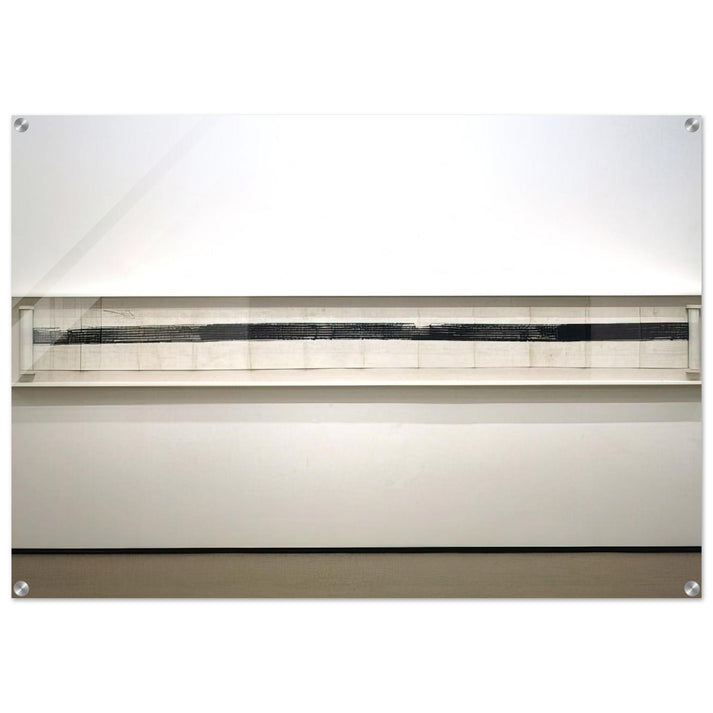


STAMPINO DI GOMMA PER AUTOMOBILE 1953 - Robert Rauschenberg Stampa acrilica - 70x100 cm / 28x40″ pollici
STAMPINO DI GOMMA PER AUTOMOBILE 1953 - Robert Rauschenberg Stampa acrilica - 70x100 cm / 28x40″ pollici
Impossibile caricare la disponibilità di ritiro
Un capolavoro d'avanguardia: "Automobile Tire Print" (1953) di Robert Rauschenberg
Nel 1953, Robert Rauschenberg ridefinì i confini dell’arte contemporanea con la sua opera fondamentale, Automobile Tire Print. Questo lavoro rappresenta un momento cruciale nel movimento Neo-Dada, creato grazie a una collaborazione unica con il compositore John Cage. Cage guidò la sua Ford Model A su una lunga striscia di carta mentre Rauschenberg applicava la vernice nera sul pneumatico, ottenendo una traccia continua e indice di un singolo viaggio. Ora, RedKalion porta questo traguardo concettuale nella tua collezione come una stampa acrilica di qualità museale.
Profondità senza pari e sofisticatezza moderna
La nostra riproduzione cattura l’estetica industriale grezza del processo originale di Rauschenberg con una chiarezza sorprendente. Stampata su acrilico di alta qualità da 4 mm (0,15"), i neri profondi e le sottili texture del battistrada del pneumatico sono preservati con una vivacità eccezionale. I angoli tagliati dritti conferiscono un profilo elegante e contemporaneo che si armonizza con la natura minimalista dell’opera, garantendo che il pezzo funga da punto focale in qualsiasi interno sofisticato.
Eccellenza archivistica per il curatore esigente
In RedKalion, la longevità e l’impatto visivo sono la nostra priorità. Questa riproduzione di arte figurativa è costruita per durare, utilizzando materiali che proteggono dai danni da UV e dall’usura ambientale. Il formato 70x100 cm offre una presenza imponente, riflettendo la scala monumentale del rotolo originale di 22 piedi. Ogni stampa arriva pronta per l’installazione con un kit di montaggiospecializzato, incluso hardware professionale e fori preforati in ogni angolo per un’esposizione sicura e senza soluzione di continuità.
- Materiale: Acrilico premium da 4 mm (0,15") per profondità e durata.
- Finitura: Superficie lucida e vibrante con trasparenza retroilluminata per una resa cromatica accurata.
- Montaggio: Include viti e teste di vite da 15 mm (0,6") per un effetto flottante e moderno.
- Cura: Qualità archivistica curata specificamente dalla galleria RedKalion.
Dona carattere al tuo spazio con un’opera che ha sfidato la storia della "mano dell’artista". Questa stampa acrilica di Robert Rauschenberg non è solo un arredo; è un dialogo con l’avanguardia che durerà per generazioni.


Discover Unlimited Art Possibilities
At RedKalion, you can find virtually any artwork from any artist, available in a wide range of sizes to perfectly match your space.
If you didn’t find what you’re looking for, contact us at support@redkalion.com . We will source any artwork and produce it in any size and format you need, including art prints, posters, canvas, framed pieces, framed canvas, and more.
For dedicated art enthusiasts, we also offer handcrafted replicas of any artwork, carefully painted by highly skilled artists using traditional techniques.
For custom requests, contact us at support@redkalion.com .
Cosa rende unico il Robert Rauschenberg Automobile Tire Print?
Questa stampa cattura un capolavoro concettuale del 1953 in cui Rauschenberg utilizzò l'auto di John Cage come pennello. Rappresenta il passaggio verso il Neo-Dadaismo e l'arte indiciale.
Quali sono le specifiche fisiche di questa stampa acrilica?
La stampa è realizzata in acrilico di alta qualità da 4 mm (0,15") con angoli tagliati dritti, offrendo una finitura elegante e resistente che migliora la profondità visiva e la vivacità dei colori.
Come viene spedita e protetta l'opera d'arte?
RedKalion utilizza imballaggi sicuri e specializzati per tutte le stampe di qualità museale. Ogni ordine include un kit completo per l'appensione con viti e accessori per garantire un trasporto e un'installazione sicuri.
I colori della stampa sbiadiranno nel tempo?
No. Le nostre stampe in acrilico di grado archivistico sono progettate per durare nel tempo, utilizzando materiali resistenti ai raggi UV che preservano i neri profondi e i dettagli intricati dell'opera originale per decenni.
La ferramenta per l'installazione è inclusa nell'acquisto?
Sì, ogni stampa include un kit professionale per l'appensione con viti. I fori sono preforati a 14 mm da ogni bordo per facilitare un'esposizione sicura, moderna e perfettamente allineata.
Qual era il significato del coinvolgimento di John Cage in quest'opera?
John Cage guidò il veicolo, diventando così co-creatore. Questa collaborazione confuse i confini tra performance, processo e l'oggetto fisico finale nell'arte del XX secolo.
Come si inserisce quest'opera nel movimento Neo-Dada?
Utilizzando uno pneumatico di automobile prodotto in serie per creare arte, Rauschenberg rifiutò l'espressione pittorica tradizionale, un principio fondamentale del Neo-Dadaismo che influenzò in seguito il movimento Pop Art.