
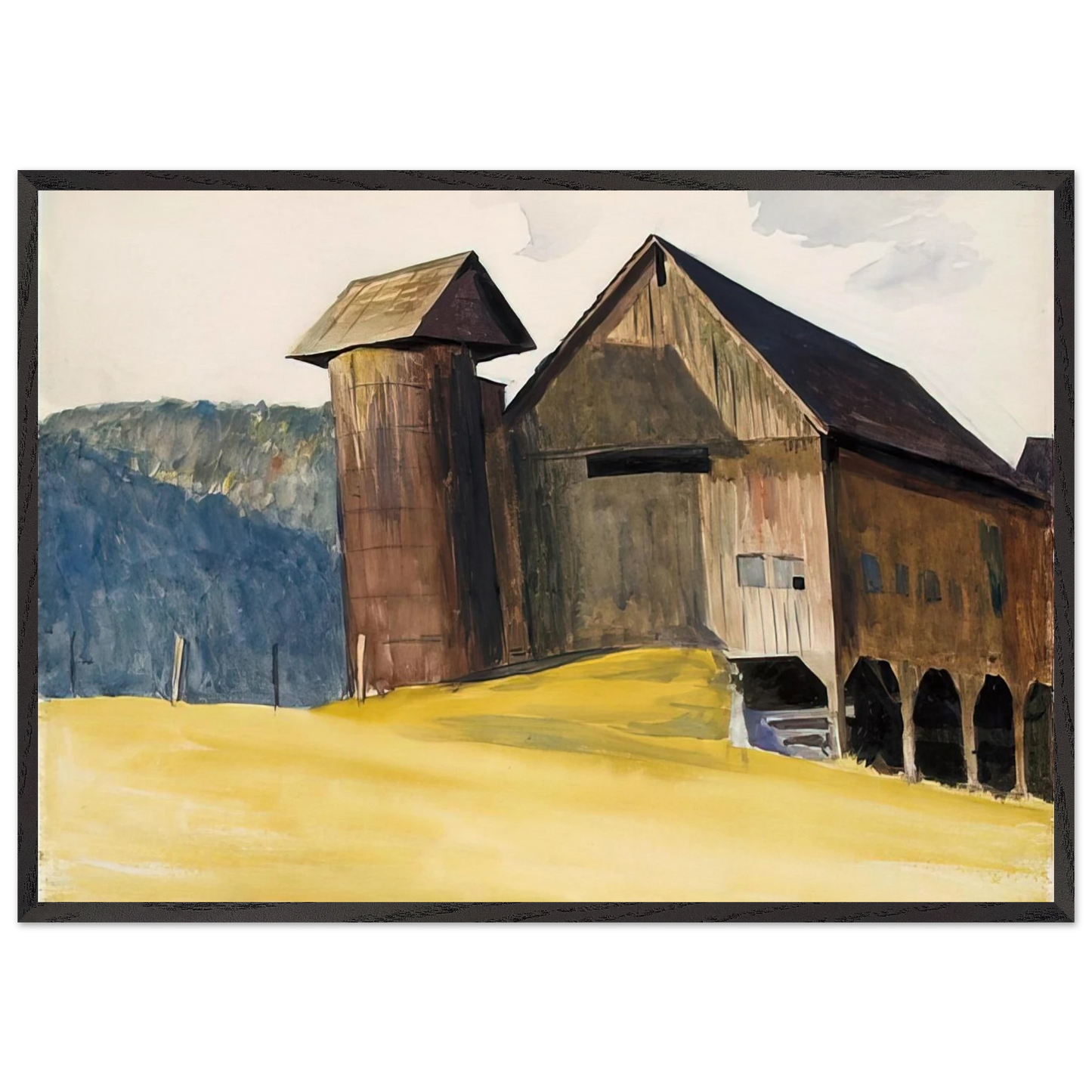
Barn and Silo Vermont - Edward Hopper 70x100 cm / 28x40 inches Stampa d'Arte Incorniciata – Cornice in Legno Nero
Barn and Silo Vermont - Edward Hopper 70x100 cm / 28x40 inches Stampa d'Arte Incorniciata – Cornice in Legno Nero
Impossibile caricare la disponibilità di ritiro
Scopri la Quiet Power di Edward Hopper’s Vermont
Edward Hopper, il massimo esponente del Realismo Americano, possedeva un'abilità senza pari nel catturare la profonda quiete e l'integrità architettonica del paesaggio americano. Barn and Silo Vermont è un'esplorazione quintessenziale di questo tema. Catturato originariamente durante i suoi viaggi nel New England, questo dipinto trasforma una semplice struttura rurale in uno studio monumentale di luce, ombra e solitudine. In RedKalion, abbiamo accuratamente selezionato questa stampa d'arte incorniciata di 70x100 cm (28x40 pollici) per garantire che la pennellata deliberata di Hopper e l'atmosfera evocativa siano preservate per il collezionista esigente.
Artigianato di Qualità Museale per la Casa Moderna
Ogni riproduzione RedKalion è più di una semplice stampa; è una testimonianza di eccellenza archivistica. Questa stampa d'arte Edward Hopper è realizzata su carta di qualità museale da 250 gsm (110 lb) con finitura opaca naturale bianca, che offre una superficie sofisticata e antiriflesso, permettendo alle sottili sfumature del paesaggio del Vermont di risaltare. Per garantire che il tuo capolavoro duri per generazioni, utilizziamo materiali privi di acidi e certificati FSC che resistono all'ingiallimento e al degrado.
Cornici Sofisticate e Durabilità
Quest'opera d'arte arriva incorniciata in una pregiata cornice nera in legno, realizzata con quercia e frassino provenienti da fonti responsabili. Con uno spessore e una larghezza di 20 mm (0,79"), la cornice offre un profilo contemporaneo e robusto, significativamente più resistente rispetto alle cornici da galleria standard. Per proteggere la delicata superficie della riproduzione di qualità museale, utilizziamo plexiglass infrangibile, che garantisce una visibilità cristallina e sicurezza in qualsiasi ambiente.
- Artista: Edward Hopper
- Titolo: Barn and Silo Vermont
- Materiale della Stampa: Carta opaca di archivio da 250 gsm
- Cornice: Legno nero di quercia/frassino spesso 20 mm
- Protezione: Plexiglass infrangibile e kit pronto per appendere incluso
- Sostenibilità: Materiali certificati FSC
Eleva il tuo interno con un capolavoro d'archivio che dura nel tempo. Questa stampa incorniciata arriva pronta per essere appesa, permettendoti di trasformare istantaneamente il tuo spazio con l'eleganza senza tempo della collezione curata di RedKalion.
Discover Unlimited Art Possibilities
At RedKalion, you can find virtually any artwork from any artist, available in a wide range of sizes to perfectly match your space.
If you didn’t find what you’re looking for, contact us at support@redkalion.com . We will source any artwork and produce it in any size and format you need, including art prints, posters, canvas, framed pieces, framed canvas, and more.
For dedicated art enthusiasts, we also offer handcrafted replicas of any artwork, carefully painted by highly skilled artists using traditional techniques.
For custom requests, contact us at support@redkalion.com .
Cosa rende le stampe di Edward Hopper di RedKalion di qualità museale?
Utilizziamo carta di qualità museale archivistica da 250 gsm (110 lb) con finitura opaca e non patinata. Questo garantisce un aspetto pesante e premium e previene lo sbiadimento nel tempo, preservando l'integrità della palette cromatica originale di Hopper per decenni.
La cornice in legno nero è di provenienza sostenibile?
Sì, tutte le nostre cornici sono realizzate in legno di quercia e frassino certificato FSC. Lo spessore di 20 mm offre un profilo premium e robusto, più durevole delle cornici commerciali standard, riflettendo il nostro impegno per qualità e sostenibilità.
Come viene prototta l'opera durante la spedizione e l'esposizione?
Ogni stampa è protetta da plexiglass trasparente infrangibile e arriva con un kit di montaggio preinstallato. Questo garantisce che l'opera rimanga al sicuro da polvere e danni ed è pronta per essere appesa direttamente all'arrivo.
Quali sono le dimensioni esatte e lo spessore della cornice?
La cornice ha uno spessore e una larghezza di 20 mm (0,79"). Questa misura specifica è stata scelta per offrire una presenza audace in stile galleria che sostiene perfettamente le dimensioni 70x100 cm della stampa di Edward Hopper.
Quanto durerà questa stampa archivistica senza sbiadire?
L'uso di carta archivistica da 250 gsm e materiali privi di acidi garantisce che la stampa rimanga vivida per generazioni. Questi materiali standard museali sono progettati specificamente per resistere al degrado ambientale e allo sbiadimento causato dalla luce.
Qual è il significato storico di "Barn and Silo Vermont" nella carriera di Hopper?
Realizzato nel 1927, quest'opera evidenzia la transizione di Hopper verso il 'Precisionismo'. Dimostra la sua ossessione per il modo in cui la luce solare interagisce con le strutture artificiali, trasformando l'architettura vernacolare americana ordinaria in uno studio profondo di forma e luce.
Perché Edward Hopper sceglieva frequentemente il paesaggio del Vermont come soggetto?
Hopper era attratto dal Vermont per i suoi paesaggi spogli e incontaminati e per la qualità unica della luce. La regione gli permetteva di esplorare la tensione tra natura e architettura, un tema centrale che definisce il suo contributo al Realismo Americano.