
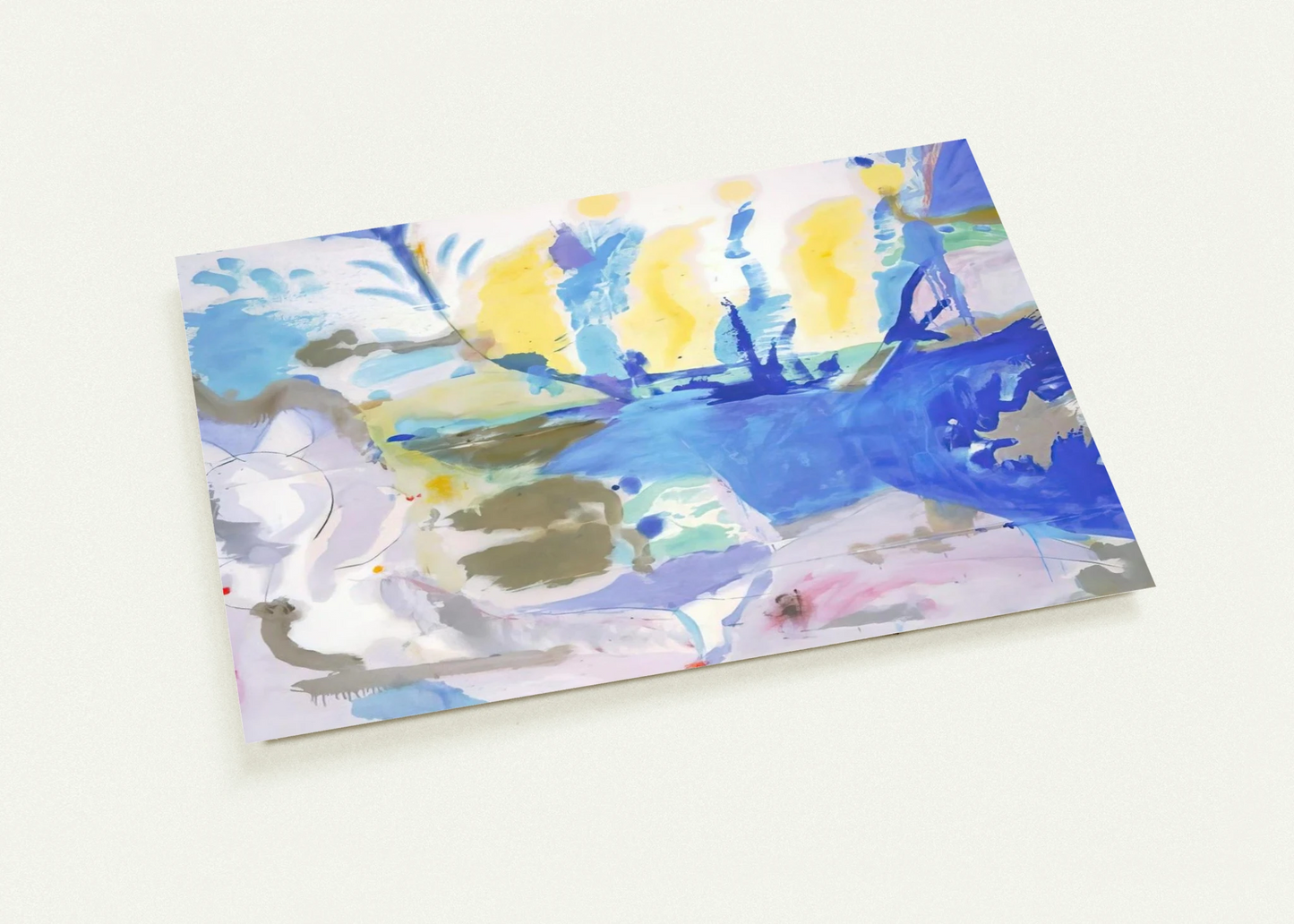
Spiaggia Basca - 1958 Di Helen Frankenthaler Pacco da 10 Cartoline | Cartoline di Helen Frankenthaler | A6 (10,5 x 14,8 cm) - 4,1 x 5,8 pollici
Spiaggia Basca - 1958 Di Helen Frankenthaler Pacco da 10 Cartoline | Cartoline di Helen Frankenthaler | A6 (10,5 x 14,8 cm) - 4,1 x 5,8 pollici
Impossibile caricare la disponibilità di ritiro
Elevate Your Correspondence with Helen Frankenthaler’s Abstract Vision
Nel 1958, Helen Frankenthaler continuò a ridefinire i confini dell’arte moderna con Basque Beach, un’opera che cattura l’essenza fluida e atmosferica della costa attraverso la sua rivoluzionaria tecnica del 'soak-stain'. Questo pacchetto di 10 cartoline di qualità museale di RedKalion ti permette di condividere un pezzo di storia dell’Espressionismo Astratto, trasformando messaggi personali in esperienze artistiche curate.
Riproduzione Magistrale e Eccellenza dei Materiali
In RedKalion crediamo che anche il formato più piccolo meriti i più alti standard di riproduzione d’arte. Queste cartoline di Basque Beach (1958) sono prodotte utilizzando la nostra avanzata tecnologia di stampa d’arte a 12 colori. A differenza delle stampe commerciali standard a 4 colori, il nostro processo cattura le sfumature sottili, le sfumature organiche e i lavaggi di colore eterei caratteristici dei capolavori di metà secolo di Frankenthaler.
- Qualità della Carta: Ogni cartolina è stampata su carta certificata FSC da 200 gsm (80 lb), che garantisce un aspetto sostanzioso e premium.
- Finitura Sofisticata: Una finitura opaca liscia offre una superficie priva di riflessi, mettendo in risalto la profondità dei pigmenti senza distrazioni.
- Resistenza: Con uno spessore di 0,26 mm (10,3 mil), queste cartoline sono progettate per resistere al viaggio postale o per essere incorniciate in serie con un aspetto eccellente.
- Curatela Eco-Consapevole: Utilizziamo materiali responsabili dal punto di vista ambientale, unendo la bellezza del passato con la sostenibilità del futuro.
Un’Eredità di Innovazione
Entro il 1958, Frankenthaler aveva superato la pennellata aggressiva dei suoi colleghi, optando invece per un’astrazione lirica ispirata al paesaggio. Basque Beach evoca l’orizzonte salmastro e le sabbie mutevoli non attraverso una rappresentazione letterale, ma attraverso la risonanza emotiva del colore. Queste cartoline fungono sia da mezzo sofisticato per la corrispondenza che da testimonianza dell’influenza duratura di una titanessa dell’avanguardia americana.
Discover Unlimited Art Possibilities
At RedKalion, you can find virtually any artwork from any artist, available in a wide range of sizes to perfectly match your space.
If you didn’t find what you’re looking for, contact us at support@redkalion.com . We will source any artwork and produce it in any size and format you need, including art prints, posters, canvas, framed pieces, framed canvas, and more.
For dedicated art enthusiasts, we also offer handcrafted replicas of any artwork, carefully painted by highly skilled artists using traditional techniques.
For custom requests, contact us at support@redkalion.com .
Cosa rende la qualità di stampa di queste cartoline superiore?
Utilizziamo una tecnologia di stampa fine art a 12 colori, che offre una vibranza cromatica e una profondità tonale significativamente maggiori rispetto alla stampa inkjet standard a 4 colori, garantendo che la riproduzione di Frankenthaler sia accurata al livello museale.
Qual è la texture e la finitura della carta?
Le cartoline presentano una finitura opaca liscia da 200 gsm. Questo assicura una visualizzazione pulita, senza riflessi, e una sensazione tattile premium perfetta sia per scrivere che per incorniciare.
Queste cartoline sono ecologiche?
Sì. RedKalion è impegnata nella sostenibilità; tutte le nostre cartoline sono stampate su carta certificata FSC, garantendo che i materiali provengano da foreste gestite in modo responsabile.
Quanto durano queste stampe senza sbiadire?
Le nostre inchiostri di grado archivistico e la carta senza acidi sono progettati per durare nel tempo. Se tenuti lontano dalla luce solare diretta, questi stampe manterranno la loro integrità cromatica per decenni.
Posso ordinare una quantità personalizzata di cartoline?
Sono disponibili in confezioni da 10. Ogni confezione viene stampata su richiesta senza requisiti minimi di ordine oltre alla confezione iniziale, riducendo gli sprechi e garantendo il controllo qualità.
In cosa consisteva la tecnica 'soak-stain' di Helen Frankenthaler?
Frankenthaler diluiva i suoi oli con acquaragia e li versava su tela non preparata. Questo permetteva ai pigmenti di penetrare direttamente nelle fibre, creando gli effetti fluidi e simili all'acquerello visibili in Basque Beach.
A quale movimento artistico appartiene Basque Beach?
Basque Beach (1958) è un esempio emblematico del Second-Generation Abstract Expressionism, che si avvicina in particolare alla pittura Color Field, dove il colore diventa il soggetto principale e l'elemento strutturale.