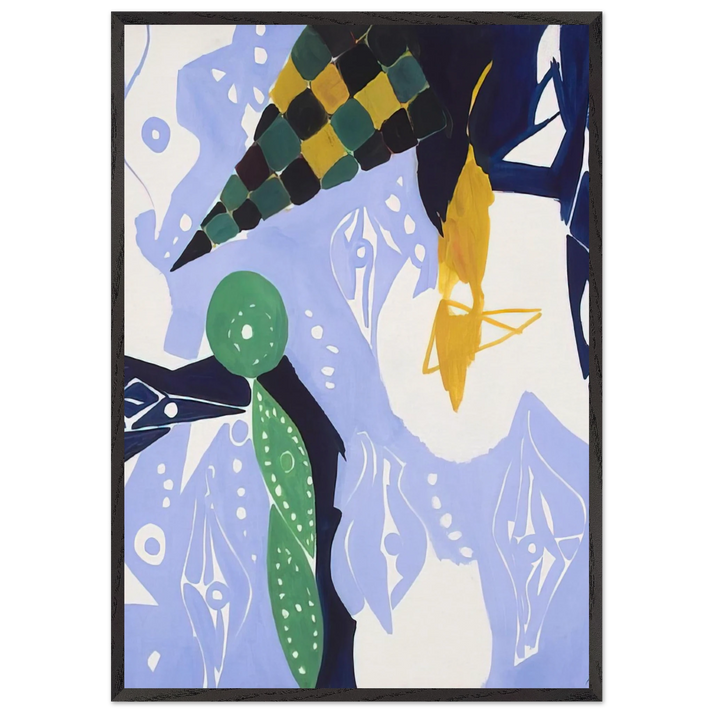
Blue Diaphan - 1965 - Ernst Wilhelm Nay 70x100 cm / 28x40 inches Stampa d'arte incorniciata – Cornice in legno nero
Blue Diaphan - 1965 - Ernst Wilhelm Nay 70x100 cm / 28x40 inches Stampa d'arte incorniciata – Cornice in legno nero
Impossibile caricare la disponibilità di ritiro
Eleva il tuo spazio con il Blue Diaphan (1965) di Ernst Wilhelm Nay
Immergi il tuo interno nella teoria dei campi di colore vibrante del dopoguerra europeo con questa riproduzione di qualità museale Blue Diaphan, capolavoro del 1965 dell’acclamato artista astratto tedesco Ernst Wilhelm Nay. Come fulcro della collezione curata da RedKalion, questa stampa d’arte raffinata cattura l’energia ritmica e la stratificazione traslucida che hanno definito il periodo tardivo di Nay. La qualità 'diafana' a cui si riferisce il titolo si manifesta attraverso forme ampie e liriche che danzano sulla tela, offrendo uno studio sofisticato del blu e della sua risonanza emotiva.
Significato storico-artistico
Ernst Wilhelm Nay fu una figura chiave del movimento Art Informel , e nel 1965 il suo lavoro aveva già evoluto verso uno stile più chiaro e ampio, noto come le sue 'Immagini tarde'. Blue Diaphan rappresenta una svolta rispetto alle sue precedenti 'Immagini dell’occhio', orientandosi verso un’astrazione serena e orientata alla superficie. Questo pezzo non è solo un elemento decorativo; è un’esplorazione del colore come forza costruttiva, rendendolo un’acquisizione fondamentale per collezionisti del modernismo di metà secolo e dell’astrazione europea.
Artigianato archivistico di qualità premium
RedKalion è dedicata a preservare l’integrità dell’arte di livello mondiale attraverso materiali di grado archivistico. Questa stampa d’arte incorniciata da 70x100 cm (28x40 pollici) è prodotta su carta di qualità museale bianca naturale da 250 gsm (110 lb). La finitura opaca e non rivestita garantisce un’esperienza di visione senza riflessi, permettendo alle sottili sfumature della tavolozza di Nay di rimanere il punto focale. La stampa è protetta da plexiglass infrangibile, assicurando sia sicurezza che durata.
Cornici sofisticate e sostenibilità
Per valorizzare l’astrazione audace dell’opera, questa stampa è incorniciata in una cornice in legno nero di qualità premium nero realizzata con quercia e frassino provenienti da fonti responsabili. Con uno spessore e una larghezza di 20 mm (0,79"), questa cornice offre un profilo più sostanziale e standard da galleria rispetto ai tipici telai da 14 mm. Ogni componente è certificato FSC, riflettendo l’impegno di RedKalion verso un lusso sostenibile. La tua opera d’arte arriva pronta per essere appesa con un kit di montaggio incluso, progettato per durare generazioni.

Discover Unlimited Art Possibilities
At RedKalion, you can find virtually any artwork from any artist, available in a wide range of sizes to perfectly match your space.
If you didn’t find what you’re looking for, contact us at support@redkalion.com . We will source any artwork and produce it in any size and format you need, including art prints, posters, canvas, framed pieces, framed canvas, and more.
For dedicated art enthusiasts, we also offer handcrafted replicas of any artwork, carefully painted by highly skilled artists using traditional techniques.
For custom requests, contact us at support@redkalion.com .
Che qualità di carta viene utilizzata per la stampa Blue Diaphan?
Utilizziamo carta di qualità museo da 250 gsm (110 lb), bianca naturale, opaca e non patinata che preserva la profondità dei colori senza riflessi, garantendo la longevità della tua stampa di Ernst Wilhelm Nay.
Quali sono le specifiche della cornice nera in legno?
La cornice è realizzata in legno di quercia e frassino provenienti da fonti responsabili. Misura 20 mm (0,79") di larghezza e spessore, offrendo un'estetica premium e robusta che supera gli standard delle cornici commerciali comuni.
Come viene prototta l'opera durante la spedizione?
Ogni stampa è protetta da un vetro acrilico trasparente infrangibile e spedita in imballaggi robusti per garantirne l'arrivo in condizioni perfette. È incluso un kit di montaggio per l'installazione immediata.
I materiali utilizzati per questa stampa sono sostenibili?
Sì, RedKalion utilizza materiali certificati FSC o equivalenti con certificazioni sostenibili, garantendo che la tua riproduzione d'arte supporti una gestione forestale responsabile e standard ambientali.
La stampa arriva pronta da appendere?
Assolutamente. La tua stampa incorniciata da 70x100 cm arriva completamente assemblata con il kit di montaggio incluso, permettendoti di valorizzare immediatamente il tuo spazio al momento della consegna.
Cosa significa il titolo 'Blue Diaphan' nell'opera di Nay?
Il termine 'Diaphan' si riferisce alla trasparenza. In quest'opera del 1965, Nay esplora l'interazione tra luce e colore, orientandosi verso forme più piatte e fluide che caratterizzano la sua astrazione ritmica della tarda carriera.
Chi era Ernst Wilhelm Nay?
Ernst Wilhelm Nay (1902–1968) è stato un importante pittore astratto tedesco. È celebrato per le sue serie in evoluzione — dalle 'Immagini ritmiche' alle 'Immagini a disco' — che hanno influenzato in modo significativo l'arte moderna europea del dopoguerra.