
Pane e piatto con frutta sul tavolo - Stampa acrilica di Pablo Picasso - 70x100 cm / 28x40″ pollici
Pane e piatto con frutta sul tavolo - Stampa acrilica di Pablo Picasso - 70x100 cm / 28x40″ pollici
Impossibile caricare la disponibilità di ritiro
Eleva il tuo spazio con un capolavoro cubista
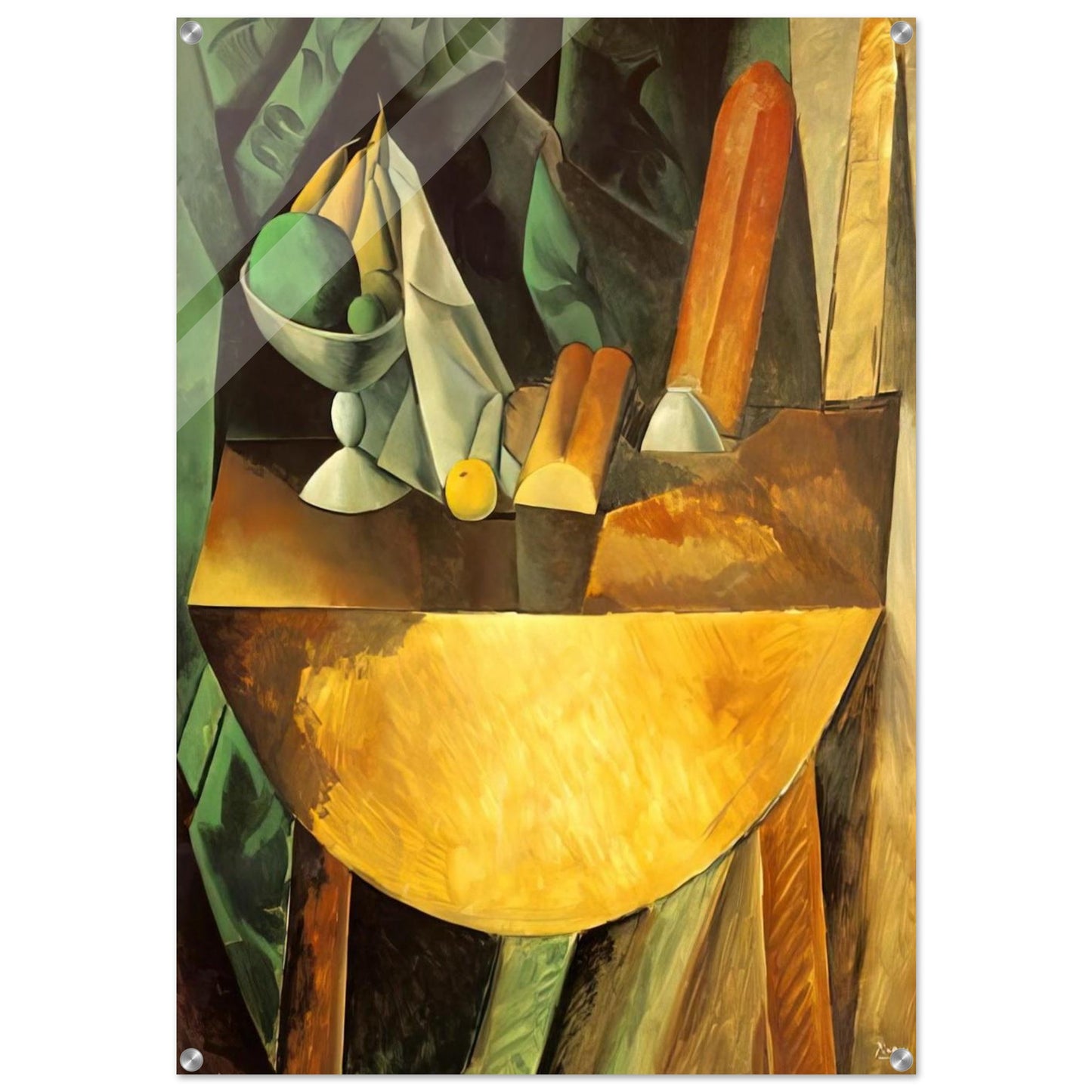
Scopri il potere trasformativo di "Bread and dish with fruits on the table", capolavoro di Pablo Picasso realizzato tra il 1908 e il 1909, Bread and dish with fruits on the table. Questo pezzo fondamentale segna un punto cruciale nella storia dell'arte, rappresentando la transizione di Picasso dal suo periodo influenzato dall'arte africana verso l'intelletto strutturato del Cubismo analitico. Presso RedKalion, abbiamo riprodotto con cura questa natura morta come una stampa acrilica di qualità museale, garantendo che gli ocra terrosi e i verdi profondi siano resi con una profondità e chiarezza mozzafiato.
L'intersezione tra tradizione e innovazione
In questa composizione, Picasso rende omaggio a Paul Cézanne, semplificando le forme di pane e frutta in essenziali geometrici. La natura tattile del tavolo e l'arrangiamento ritmico degli oggetti invitano lo spettatore a contemplare lo spazio tra realtà e astrazione. Questa stampa d'arte non è semplicemente una riproduzione; è uno studio sofisticato di forma e volume che funge da pietra miliare per qualsiasi collezione seria.
Artigianato premium in acrilico archivistico
Per onorare l'eredità di questa riproduzione di grado archivistico, RedKalion utilizza una stampa ad alta definizione su acrilico premium da 4 mm (0.15"). Questo materiale offre una finitura moderna e raffinata che esalta la vivacità dei pigmenti, garantendo al contempo una durabilità eccezionale. Gli angoli tagliati dritti e la profondità dell'acrilico creano un effetto luminoso che fa sembrare l'opera d'arte risplendere dall'interno, superando di gran lunga la cornice tradizionale in vetro sia dal punto di vista estetico che della sicurezza.
Pronto per l'installazione in stile galleria
La tua stampa acrilica di Pablo Picasso arriva già pronta per essere esposta. Ogni pezzo include un kit di montaggio completo con viti e accessori di grado industriale. La stampa è preforata con fori da 8 mm (0.31") di diametro, posizionati a 14 mm (0.55") da ogni angolo, progettati per alloggiare le teste delle viti da 15 mm (0.6"). Questo sistema di montaggio sicuro garantisce che il tuo capolavoro di 70x100 cm rimanga un punto focale stabile e duraturo nella tua casa o ufficio.
Discover Unlimited Art Possibilities
At RedKalion, you can find virtually any artwork from any artist, available in a wide range of sizes to perfectly match your space.
If you didn’t find what you’re looking for, contact us at support@redkalion.com . We will source any artwork and produce it in any size and format you need, including art prints, posters, canvas, framed pieces, framed canvas, and more.
For dedicated art enthusiasts, we also offer handcrafted replicas of any artwork, carefully painted by highly skilled artists using traditional techniques.
For custom requests, contact us at support@redkalion.com .
Quali sono le dimensioni fisiche e il materiale di questa stampa?
Questa stampa misura 70x100 cm (28x40″) ed è realizzata in acrilico premium da 4 mm (0,15"). Il materiale offre una finitura ad alta lucentezza e risulta significativamente più resistente del vetro tradizionale.
La ferramenta di montaggio è inclusa nell'acquisto?
Sì, ogni stampa acrilica RedKalion include un kit completo di sospensione con viti e ferramenta. Ogni angolo presenta fori preforati da 8 mm per un'installazione sicura e professionale in stile galleria.
Come viene protetta l'opera durante la spedizione?
Utilizziamo imballaggi specializzati ad alto impatto per garantire che la stampa d'arte arrivi in condizioni perfette. I nostri partner logistici globali sono esperti nel maneggiare riproduzioni di qualità museale con la massima cura.
I colori della stampa di Picasso sbiadiranno nel tempo?
No, utilizziamo inchiostri di grado archivistico e acrilico resistente ai raggi UV. Questo garantisce che i verdi profondi e gli ocra della tavolozza di Picasso rimangano vibranti per decenni, anche in ambienti ben illuminati.
La stampa ha uno sfondo trasparente o bianco?
Sebbene l'acrilico sia intrinsecamente trasparente, le aree trasparenti dell'immagine originale vengono stampate con un supporto bianco per garantire una densità cromatica ottimale e chiarezza dell'immagine.
Qual era il significato storico di questa specifica opera di Picasso?
"Pane e piatto con frutta sul tavolo" (1908-1909) rappresenta un collegamento fondamentale tra le prime opere di Picasso e il Cubismo, mostrando la forte influenza dell'approccio geometrico di Paul Cézanne alla natura.
Perché questa opera è considerata un 'lavoro di transizione'?
Cattura il momento esatto in cui Picasso si allontanò dall'arte rappresentativa verso la frammentazione degli oggetti, una tecnica che avrebbe poi definito il movimento del Cubismo Analitico.