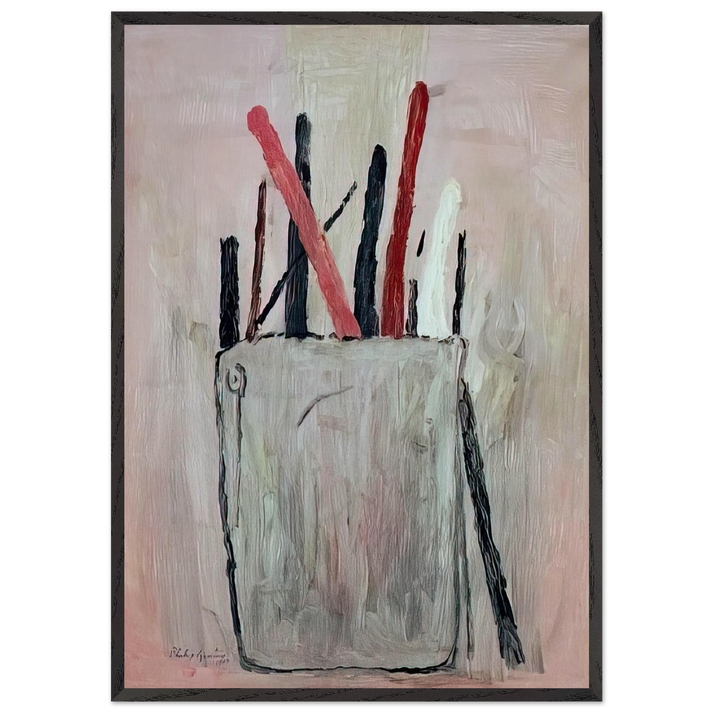
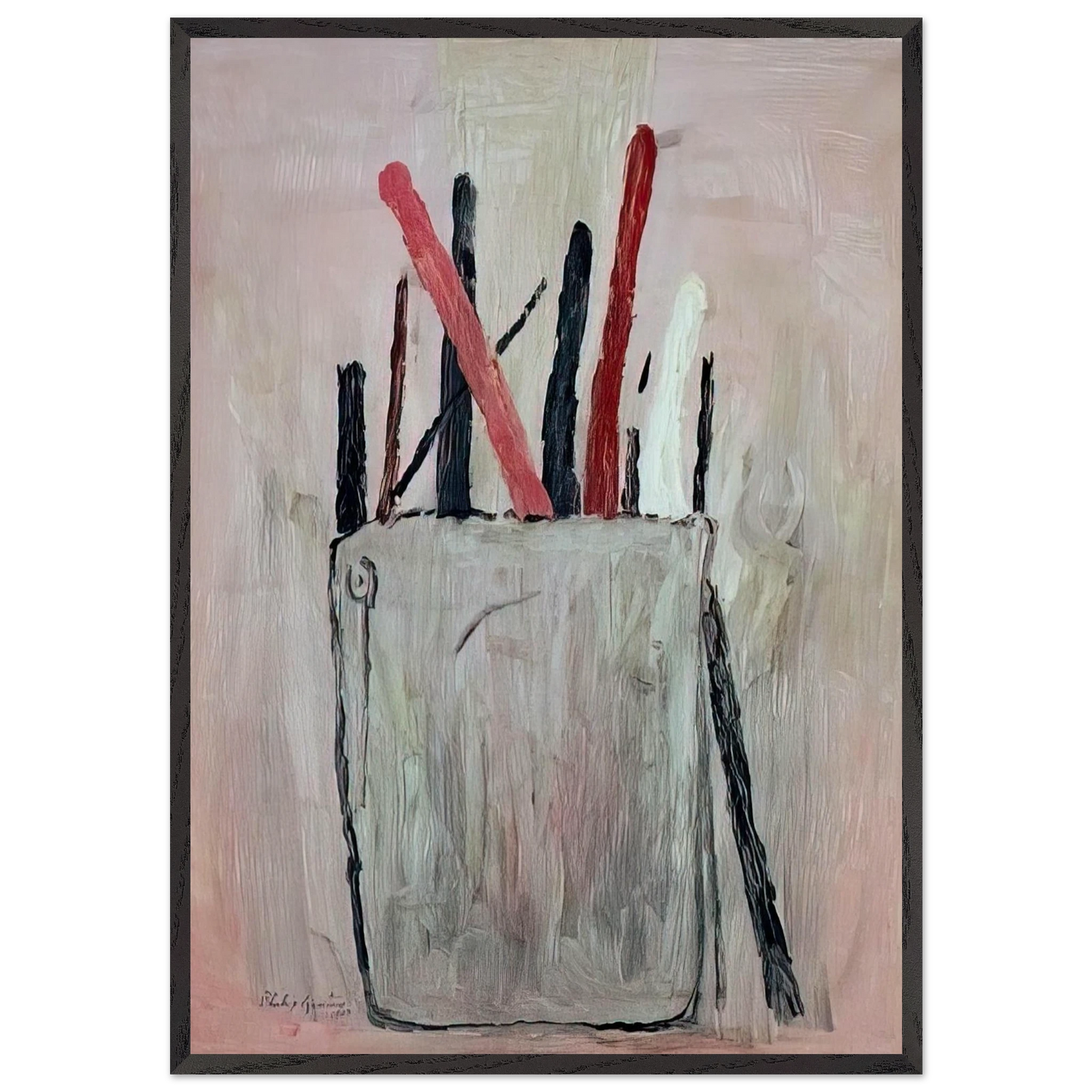
SPIZZOLI 1969 - Philip Guston 70x100 cm / 28x40 pollici Stampa d'Arte Incorniciata – Cornice in Legno Nero
SPIZZOLI 1969 - Philip Guston 70x100 cm / 28x40 pollici Stampa d'Arte Incorniciata – Cornice in Legno Nero
Impossibile caricare la disponibilità di ritiro
Un momento cruciale nel Neo-Espressionismo: i pennelli di Philip Guston (1969)
Philip Guston’s Brushes (1969) rappresenta una delle svolte più significative nella storia dell'arte del XX secolo. Dopo decenni come figura di spicco nell'Espressionismo Astratto, Guston sconvolse il mondo dell'arte alla fine degli anni '60 tornando alla figurazione. Questa stampa d'arte di qualità museale cattura l'energia esistenziale e grezza di quella transizione, presentando le iconiche immagini auto-riferite dell'artista. L'opera funge da profonda meditazione sull'atto creativo, resa nella sua palette distintiva di rosa carnosi, grigi carbone e neri profondi.
In RedKalion, curiamo le nostre riproduzioni con un impegno per l'integrità archivistica. Questa stampa d'arte incorniciata di 70x100 cm (28x40 pollici) è prodotta su carta di qualità museale da 250 gsm (110 lb). La finitura naturale bianca opaca elimina i riflessi, permettendo di cogliere le sfumature della spessa e deliberata pennellata di Guston nel vostro spazio. Ogni stampa è alloggiata in una cornice premium da 20 mm (0,79") di spessore realizzata con legno di quercia e frassino nero verniciato a spruzzo, che offre un profilo più audace e sostanziale rispetto alle cornici standard per la vendita al dettaglio.
Progettata per durare generazioni, questa opera d'archivio è protetta da plexiglass infrangibile, garantendo che il vostro investimento rimanga immacolato. Ogni dettaglio, dalla carta certificata FSC al kit di montaggio di precisione, riflette il nostro impegno per l'artigianato di qualità superiore. Arricchite il vostro interno con un pezzo che non si limita a decorare: dà vita a un dialogo con la storia dell'arte moderna.
- Qualità archivistica: Carta patinata acida da 250 gsm con uno spessore di 0,29 mm (11,4 mil).
- Cornice premium: Cornice in legno nero sostenibile (profilo da 20 mm).
- Pronto per essere appeso: Include un kit di montaggio professionale per un'installazione immediata.
- Standard museali: Plexiglass infrangibile e finitura opaca non rivestita per una chiarezza ottimale.
Discover Unlimited Art Possibilities
At RedKalion, you can find virtually any artwork from any artist, available in a wide range of sizes to perfectly match your space.
If you didn’t find what you’re looking for, contact us at support@redkalion.com . We will source any artwork and produce it in any size and format you need, including art prints, posters, canvas, framed pieces, framed canvas, and more.
For dedicated art enthusiasts, we also offer handcrafted replicas of any artwork, carefully painted by highly skilled artists using traditional techniques.
For custom requests, contact us at support@redkalion.com .
Quali sono le dimensioni e i dettagli della cornice per questa stampa di Philip Guston?
Questa riproduzione misura 70x100 cm (28x40 pollici). Presenta una cornice premium in legno di quercia e frassino solido da 20 mm (0,79") di spessore, che offre una presenza più robusta e sofisticata rispetto alle cornici standard da 14 mm.
Che qualità di carta utilizza RedKalion per le riproduzioni di arte?
Utilizziamo carta di qualità museo da 250 gsm (110 lb), bianco naturale. Questa carta pesante di grado archivistico presenta una finitura opaca e non patinata che evita i riflessi e garantisce una lunga durata senza ingiallimento.
I materiali della cornice sono di provenienza sostenibile?
Sì. Tutte le cornici RedKalion sono realizzate in legno certificato FSC o equivalente, proveniente da fonti gestite responsabilmente. Il nostro impegno per la sostenibilità garantisce che la vostra stampa d'arte sia tanto rispettosa dell'ambiente quanto bella.
Come viene prototta l'opera durante la spedizione e l'esposizione?
Ogni stampa è protetta da un plexiglass antiurto di alta qualità. Questo offre la chiarezza del vetro con una durabilità superiore. Per il trasporto, utilizziamo imballaggi protettivi specializzati per garantire che la vostra opera incorniciata arrivi in condizioni da galleria.
La stampa arriva pronta per essere appesa?
Assolutamente sì. Ogni stampa d'arte incorniciata di RedKalion include un kit di montaggio preinstallato. Potete spostare l'opera dalla scatola al muro in pochi istanti, garantendo una collocazione sicura e livellata.
Qual è il significato dell'anno 1969 nella carriera di Philip Guston?
Il 1969 segna la rottura radicale di Guston dall'astrattismo verso una figurazione cruda e cartoonesca. Questa svolta, inizialmente controversa, ha poi consolidato il suo lascito come pioniere del Neo-Espressionismo e ha influenzato generazioni di pittori.
Perché il motivo dei "Pennelli" è centrale nell'opera successiva di Guston?
Il motivo del pennello è uno strumento autoreferenziale utilizzato da Guston per esplorare l'identità del pittore. Rappresenta sia il lavoro della creazione artistica sia il legame fisico dell'artista con la tela in un periodo di fermento sociale.