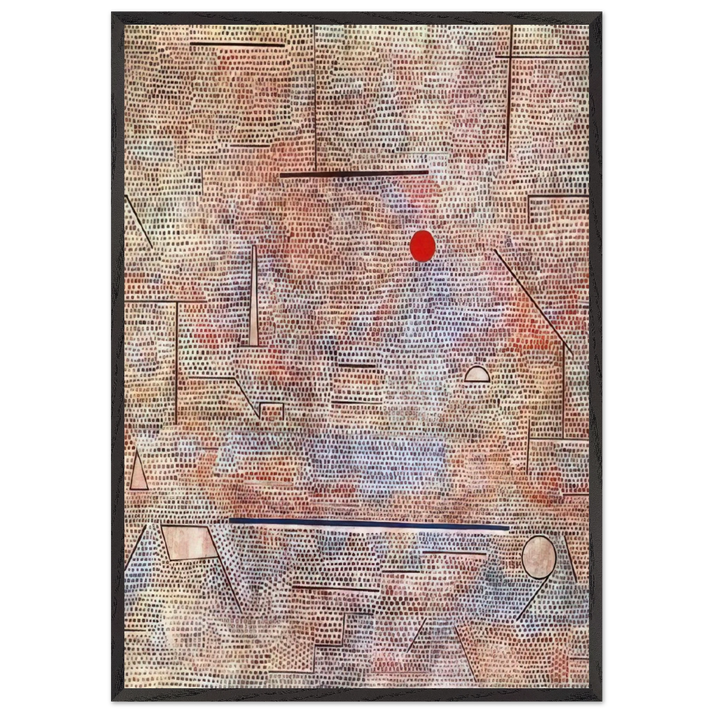
CACODEMONICO 1916 - Paul Klee 70x100 cm / 28x40 pollici – Stampa d'Arte Incorniciata – Cornice in Legno Nero
CACODEMONICO 1916 - Paul Klee 70x100 cm / 28x40 pollici – Stampa d'Arte Incorniciata – Cornice in Legno Nero
Impossibile caricare la disponibilità di ritiro
Immerse Yourself in the Enigmatic Vision of Paul Klee’s 'Cacodemonics' (1916)
Eleva il tuo interno con un capolavoro della storia dell'arte moderna. Paul Klee’s Cacodemonics 1916 rappresenta un momento cruciale nella carriera dell'artista, fondendo strutture geometriche astratte con le sfumature spirituali e sovrannaturali che hanno definito il suo contributo unico all'Espressionismo e al Surrealismo. Creato durante l'apice della Grande Guerra, quest'opera riflette la fascinazione di Klee per l'inconscio e le forze "cacodemoniche" della psiche umana.
Esecuzione di qualità museale per il collezionista esigente
Da RedKalion, curiamo stampe d'arte di pregio che colmano il divario tra significato storico e lusso contemporaneo. Questa riproduzione è stampata meticolosamente su carta di qualità museale archivistica con un peso di 250 gsm (110 lb). La finitura naturale bianca opaca garantisce una superficie non riflettente che permette alle intricate linee e alla raffinata palette cromatica di Klee di risuonare con la stessa profondità dell'opera originale.
Realizzata in modo sostenibile e pronta per l'esposizione
Questo capolavoro di 70x100 cm (28x40 pollici) è incorniciato in una solida cornice in legno nero, realizzata con quercia e frassino provenienti da fonti responsabili. Con uno spessore e una larghezza di 20 mm (0,79"), la cornice offre un profilo contemporaneo audace che supera gli standard alternativi da 14 mm. Ogni pezzo è protetto da plexiglass infrangibile, garantendo durata e chiarezza a lungo termine per la tua collezione.
- Carta: 250 gsm (110 lb) archivistica certificata FSC, finitura opaca.
- Cornice: Legno nero premium spesso 20 mm (quercia/frassino).
- Protezione: Plexiglass trasparente infrangibile per una conservazione duratura.
- Convenienza: Consegnato con un kit di montaggio di alta qualità, pronto per essere appeso all'arrivo.

Discover Unlimited Art Possibilities
At RedKalion, you can find virtually any artwork from any artist, available in a wide range of sizes to perfectly match your space.
If you didn’t find what you’re looking for, contact us at support@redkalion.com . We will source any artwork and produce it in any size and format you need, including art prints, posters, canvas, framed pieces, framed canvas, and more.
For dedicated art enthusiasts, we also offer handcrafted replicas of any artwork, carefully painted by highly skilled artists using traditional techniques.
For custom requests, contact us at support@redkalion.com .
Che qualità di carta viene utilizzata per la stampa Cacodemonics di Paul Klee?
La stampa utilizza carta di museo di qualità archivistica da 250 gsm (110 lb). Questa carta bianca naturale, non patinata, è progettata per preservare l'integrità dei colori per decenni senza ingiallire, garantendo che la vostra riproduzione d'arte rimanga un cimelio duraturo.
La cornice è di origine sostenibile e quali sono le sue dimensioni?
Sì, utilizziamo legno di quercia e frassino certificato FSC. La cornice nera ha uno spessore e una larghezza di 20 mm (0,79"), offrendo un'estetica più sostanziale e premium rispetto alle cornici standard, perfettamente adatta a una grande stampa da 70x100 cm.
Come viene prototta l'opera durante la spedizione e una volta esposta?
Utilizziamo plexiglass infrangibile per proteggere la superficie della stampa dai raggi UV e dai danni fisici. Per la spedizione, la stampa incorniciata viene imballata in modo sicuro con materiali rinforzati per garantire che arrivi in condizioni perfette alla vostra porta.
Quanto dureranno i colori di questa riproduzione di qualità museo?
Grazie ai materiali di grado archivistico e alla composizione senza acidi della nostra carta da 250 gsm, i colori sono progettati per resistere allo sbiadimento per oltre 100 anni se esposti lontano dall'umidità diretta e dalla luce solare intensa.
La stampa Cacodemonics viene fornita pronta da appendere?
Assolutamente sì. Ogni stampa incorniciata RedKalion include un kit di appendimento preinstallato. Potete passare questa opera d'archivio dalla scatola al muro in pochi minuti senza bisogno di hardware aggiuntivo.
Qual è il significato del titolo "Cacodemonics" nell'opera di Klee del 1916?
"Cacodemonics" si riferisce allo studio degli spiriti maligni o dei demoni. Nel 1916, Klee esplorò questi temi per elaborare il caos della Prima Guerra Mondiale, utilizzando l'astrazione geometrica per rappresentare le forze spirituali invisibili che influenzano il mondo fisico.
In che modo lo stile di Klee nel 1916 differisce dal suo periodo al Bauhaus?
Nel 1916, le opere di Klee erano più profondamente radicate nell'Espressionismo mistico. Sebbene anticipino la teoria del colore strutturale che avrebbe poi perfezionato al Bauhaus, "Cacodemonics" conserva un'intensità psicologica grezza tipica del suo output creativo durante la guerra.