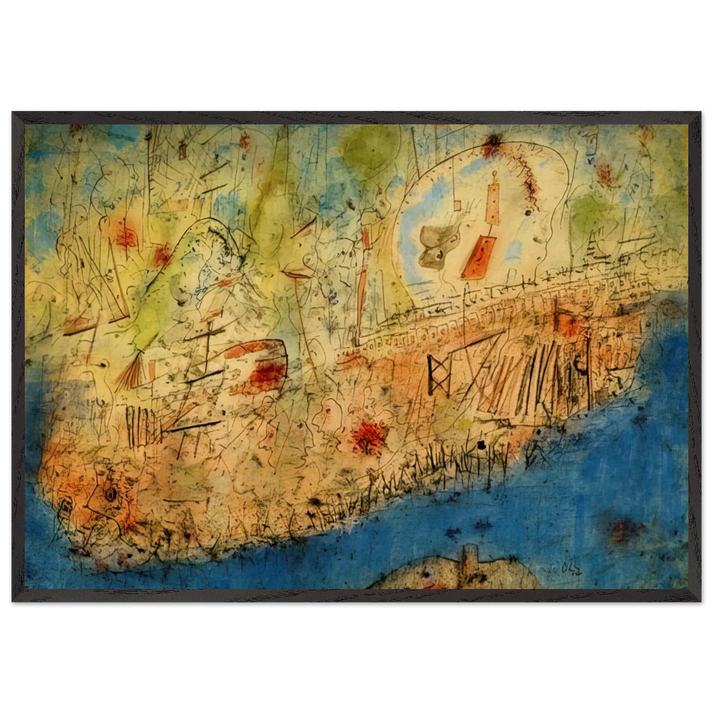
Camp des Milles - 1940 - Wols 70x100 cm / 28x40 pollici Stampa d'Arte Incorniciata – Cornice in Legno Nero
Camp des Milles - 1940 - Wols 70x100 cm / 28x40 pollici Stampa d'Arte Incorniciata – Cornice in Legno Nero
Impossibile caricare la disponibilità di ritiro
Eleva il tuo spazio con un frammento di storia dell'arte: capolavoro del 1940 di Wols
Prova la profonda profondità emotiva e il peso storico di Camp des Milles di Wols (1940). Questa riproduzione di qualità museale cattura il momento fondamentale in cui Alfred Otto Wolfgang Schulze, noto semplicemente come Wols, passò dalla fotografia surrealista all'astrazione cruda e viscerale del Tachisme. Creato durante la sua prigionia al Camp des Milles in Francia, questo pezzo è una testimonianza struggente e bellissima della resilienza dello spirito umano in mezzo alla turbolenza della Seconda Guerra Mondiale.
Rappresentazione autentica del Movimento Informale
Wols è celebrato come il padre dell'Informale europeo, e questa stampa d'arte incorniciata da 70x100 cm preserva la delicata e microscopica attenzione ai dettagli e il lavoro a inchiostro spontaneo che ha definito il suo stile. La composizione riflette la claustrofobia psicologica del campo, resa attraverso un intricato lavoro di linee e forme organiche che sembrano pulsare di vita sulla pagina. Scegliendo questa stampa d'arte, stai portando un capitolo fondamentale della storia dell'arte moderna nella tua casa o galleria.
Qualità fisica impeccabile per il collezionista esigente
In RedKalion curiamo le nostre stampe per soddisfare gli standard più rigorosi delle istituzioni più prestigiose al mondo. Questa riproduzione di grado archivistico è stampata su carta bianca naturale opaca da 250 gsm (110 lb), che garantisce una profondità di colore eccezionale senza riflessi. La cornice nera da 20 mm (0,79") è realizzata in quercia e frassino provenienti da fonti responsabili, offrendo un bordo robusto e sofisticato, più ampio e sostanziale rispetto alle cornici commerciali standard.
- Longevità archivistica: Carta senza acidi, certificata FSC, progettata per durare generazioni senza ingiallire.
- Protezione premium: Plexiglass trasparente infrangibile garantisce che l'opera rimanga immacolata e protetta da fattori ambientali.
- Eleganza sostenibile: Cornici in legno provenienti da fonti responsabili e processi di stampa eco-friendly.
- Installazione senza sforzo: Arriva pronta per essere appesa con un kit di montaggio di alta qualità incluso.
Trasforma il tuo interno con un capolavoro archivistico che parla di significato storico e maestria artistica. Questa stampa incorniciata di Wols è più di una decorazione; è un investimento duraturo nella sofisticazione estetica.

Discover Unlimited Art Possibilities
At RedKalion, you can find virtually any artwork from any artist, available in a wide range of sizes to perfectly match your space.
If you didn’t find what you’re looking for, contact us at support@redkalion.com . We will source any artwork and produce it in any size and format you need, including art prints, posters, canvas, framed pieces, framed canvas, and more.
For dedicated art enthusiasts, we also offer handcrafted replicas of any artwork, carefully painted by highly skilled artists using traditional techniques.
For custom requests, contact us at support@redkalion.com .
Quali sono le specifiche della carta utilizzata per questa stampa di Wols?
Utilizziamo carta di museo di qualità archivistica da 250 gsm (110 lb). Presenta una finitura opaca, non patinata, bianco naturale con uno spessore di 0,29 mm, garantendo un'alta fedeltà di riproduzione e una lunga durata per collezionisti di arte raffinata.
La cornice di 'Camp des Milles' è in legno massiccio?
Sì, la cornice è realizzata in legno di quercia e frassino certificato FSC, proveniente da fonti responsabili. Ha una finitura nera, uno spessore di 20 mm e una larghezza di 20 mm, offrendo un aspetto premium rispetto alle cornici standard da 14 mm.
Come viene prototta l'opera d'arte dai danni durante l'esposizione?
Ogni stampa è protetta da un plexiglass trasparente infrangibile. Questo garantisce la chiarezza del vetro proteggendo l'opera da urti e polvere, rendendola sicura per qualsiasi ambiente.
La stampa arriva pronta per essere esposta?
Assolutamente. Ogni stampa d'arte incorniciata di RedKalion include un kit di montaggio professionale. L'opera arriva completamente assemblata nella cornice ed è pronta per essere appesa direttamente al muro.
Qual è l'impegno di RedKalion verso la sostenibilità?
Diamo priorità all'ambiente utilizzando legno e carta certificati FSC o provenienti da fonti sostenibili equivalenti. I nostri processi produttivi sono progettati per minimizzare gli sprechi e garantire che l'acquisizione della vostra arte raffinata sia eticamente corretta.
Qual è la rilevanza del periodo del Campo di concentramento di Camp des Milles del 1940 per Wols?
L'internamento del 1940 a Camp des Milles fu un punto di svolta per Wols. Rinchiuso in una fabbrica di mattoni, passò dalla fotografia a dense acquerelli e disegni microscopici che diedero origine al movimento del Tachisme.
Perché Wols è considerato un maestro del Tachisme?
Wols si allontanò dalle forme geometriche premeditate verso 'macchie' (taches) spontanee e gestuali. Il suo lavoro enfatizza la fisicità del mezzo, esprimendo emozioni inconsce che hanno profondamente influenzato l'astrazione europea del dopoguerra.