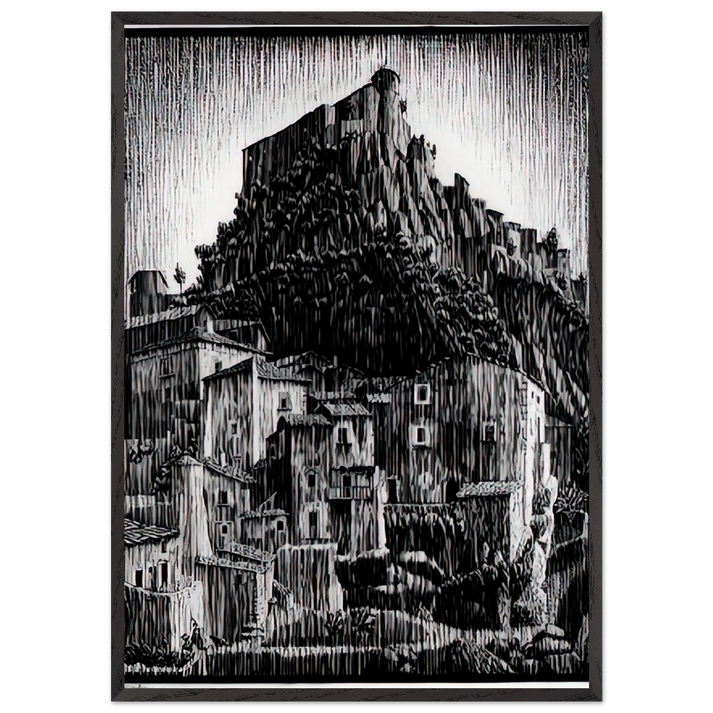
CERRO AL VOLTURNO ABRUZZI GENNAIO 1930 1930 - MC Escher 70x100 cm / 28x40 pollici Stampa d'Arte Incorniciata – Cornice in Legno Nero | Stampe di Maurits Cornelis Escher
CERRO AL VOLTURNO ABRUZZI GENNAIO 1930 1930 - MC Escher 70x100 cm / 28x40 pollici Stampa d'Arte Incorniciata – Cornice in Legno Nero | Stampe di Maurits Cornelis Escher
Impossibile caricare la disponibilità di ritiro
L'Architetto della Natura: Le opere di M.C. Escher a Cerro al Volturno
Prima della sua transizione verso gli enigmi matematici delle scale impossibili e delle tassellazioni infinite, Maurits Cornelis Escher fu profondamente ispirato dai paesaggi aspri e accidentati dell'Italia. Cerro al Volturno Abruzzi gennaio 1930 cattura un momento cruciale della sua carriera, mostrando la sua padronanza della prospettiva e della luce durante i suoi viaggi per la campagna italiana. Questo lavoro non è semplicemente un paesaggio; è uno studio meticoloso dell'armonia geometrica presente nel mondo naturale e nell'architettura umana.
RedKalion è orgoglioso di presentare questa riproduzione di qualità museale, che cattura la linea intricata e i profondi contrasti tonali che definiscono il periodo italiano di Escher. La scena, che ritrae il villaggio e il castello di Cerro al Volturno, utilizza una prospettiva drammatica che preannuncia la futura ossessione dell'artista per la complessità strutturale. Ogni ombra e contorno delle montagne del Molise è reso con la precisione chirurgica di un artista che vedeva il mondo come un complesso puzzle visivo.
Eccellenza Archivistica per la Tua Galleria Privata
La nostra stampa d'arte di M.C. Escher è realizzata secondo i più alti standard del mercato dell'arte globale. Utilizziamo 250 gsm (110 lb)di carta naturale bianca di grado archivistico con finitura opaca sofisticata e non patinata. Questo specifico peso e texture della carta garantiscono che i neri profondi e i grigi sfumati della tecnica litografica originale di Escher siano preservati senza il disturbo dei riflessi.
- Carta di Qualità Museale: Carta archivistica da 250 gsm (110 lb), certificata FSC, per una brillantezza duratura.
- Cornici Premium: Incorporata in una cornice in legno nero spesso 20 mm (0,79") , realizzata con quercia e frassino provenienti da fonti responsabili.
- Protezione Duratura: Protetta da plexiglass trasparente infrangibile per garantire sicurezza e chiarezza.
- Pronto da Appendere: Confezionato con un kit di montaggio professionale per un'installazione immediata.
Eleva il tuo spazio interno con un capolavoro archivistico che perdura. Questa stampa incorniciata da 70x100 cm rappresenta l'impegno di RedKalion per l'eccellenza curata, portando il genio di M.C. Escher nelle case moderne con sofisticazione senza tempo.

Discover Unlimited Art Possibilities
At RedKalion, you can find virtually any artwork from any artist, available in a wide range of sizes to perfectly match your space.
If you didn’t find what you’re looking for, contact us at support@redkalion.com . We will source any artwork and produce it in any size and format you need, including art prints, posters, canvas, framed pieces, framed canvas, and more.
For dedicated art enthusiasts, we also offer handcrafted replicas of any artwork, carefully painted by highly skilled artists using traditional techniques.
For custom requests, contact us at support@redkalion.com .
Che tipo di carta viene usato per questa stampa di M.C. Escher?
Utilizziamo carta di qualità museo da 250 gsm (110 lb), bianca naturale, senza acidi e con finitura opaca. Essa è archivistica e cattura perfettamente i dettagli e le texture dell'opera originale senza riflessi fastidiosi.
La cornice è inclusa ed è pronta per essere appesa?
Sì, la stampa arriva in una cornice nera in legno di quercia e frassino da 20 mm di spessore, dotata di kit di montaggio preinstallato per appendere direttamente l'opera al muro al momento dell'arrivo.
Come viene protetta l'opera durante la spedizione e l'esposizione?
Ogni stampa incorniciata è protetta da un vetro acrilico infrangibile che garantisce massima chiarezza e resistenza. Utilizziamo imballaggi sicuri e resistenti agli urti per assicurare che la vostra riproduzione di qualità museo arrivi in condizioni perfette.
I materiali utilizzati per questa stampa sono sostenibili?
La sostenibilità è al centro di RedKalion. Utilizziamo legno certificato FSC per le cornici e materiali cartacei, garantendo che il vostro acquisto d'arte sostenga una gestione forestale responsabile e standard ambientali.
I colori di questa stampa sbiadiranno nel tempo?
No, utilizziamo carta di grado archivistico e inchiostri a pigmenti elevati progettati per la longevità. La carta da 250 gsm è stata specificamente scelta per la sua resistenza all'invecchiamento, garantendo che il vostro investimento rimanga vibrante per decenni.
Qual era l'ispirazione di M.C. Escher per Cerro al Volturno?
Escher rimase affascinato dal "ritmo strutturale" dei paesi collinari italiani. Nel 1930, si concentrò sull'interazione geometrica tra il castello medievale e il paesaggio aspro del Molise, cercando di trovare ordine matematico nel caos della natura.
In che modo questo paesaggio differisce dalle opere "impossibili" successive di Escher?
Mentre le sue opere successive si concentrarono su costruzioni mentali, questo periodo mette in luce la sua abilità come osservatore realista. Tuttavia, si possono già intravedere i primi segni del suo genio nelle prospettive drammatiche e nel modo in cui organizza i piani architettonici.