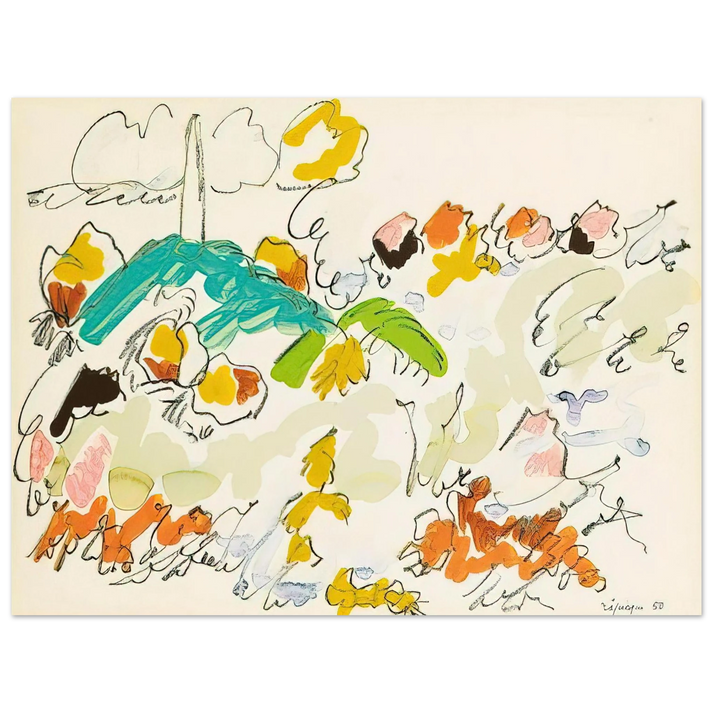
Charles Lapicque - Paesaggio marino - 1950 75x100 cm / 30x40 pollici Poster d'Arte
Charles Lapicque - Paesaggio marino - 1950 75x100 cm / 30x40 pollici Poster d'Arte
Impossibile caricare la disponibilità di ritiro
Immerse Yourself in the Rhythmic Modernism of Charles Lapicque’s *Paysage de mer*
Experience the maritime soul of French modernism with this exceptional 1950 reproduction of Charles Lapicque’s *Paysage de mer*. Come un polimata—ingegnere, scienziato e pittore—Lapicque portò una profondità analitica unica sulla tela. Quest’opera, creata durante la sua transizione verso uno stile più fluido e ritmico, mette in mostra il suo uso rivoluzionario del colore e della linea per raffigurare la natura dinamica del mare. Respingendo la prospettiva tradizionale, Lapicque invita lo spettatore in uno spazio in cui la luce e l’acqua si intersecano attraverso tratti vibranti e "vibranti".
Questa riproduzione di qualità museale cattura il rigore intellettuale e la pennellata energica che hanno definito la Scuola di Parigi nella metà del XX secolo. In RedKalion preserviamo l’integrità della visione di Lapicque utilizzando la nostra carta Master’s Edition archival, garantendo che ogni sfumatura della composizione originale venga resa con assoluta fedeltà e profondità sofisticata.
Qualità di stampa e materiali senza pari
Il nostro impegno per l’eccellenza archivistica significa che la vostra stampa d’arte viene realizzata per durare come un pezzo da collezione. Utilizziamo una carta opaca, non patinata, bianco naturale che offre una texture lussuosa ed elimina i riflessi fastidiosi, permettendo di apprezzare la complessa composizione marina nella sua forma più pura.
- Peso Premium: 250 gsm (110 lb) per un effetto sostanziale e professionale da galleria.
- Longevità Archivistica: Costruzione senza acidi (pH superiore a 7) per prevenire ingiallimento o degradazione nel corso dei decenni.
- Spessore del Materiale: Uno spesso 0,29 mm (11,4 mils) garantisce che la stampa rimanga piatta e impressionante quando incorniciata.
- Sostenibilità: Carta a provenienza responsabile, certificata FSC , che riflette il nostro impegno per l’ambiente.
- Dimensioni: 75x100 cm (30x40 pollici), per una presenza imponente in qualsiasi ambiente curato.
Eleva il tuo spazio con un capolavoro archivistico che va oltre la semplice decorazione. Questo poster d’arte di Charles Lapicque è una testimonianza dell’innovazione del XX secolo, curato da RedKalion per il collezionista esigente.
Discover Unlimited Art Possibilities
At RedKalion, you can find virtually any artwork from any artist, available in a wide range of sizes to perfectly match your space.
If you didn’t find what you’re looking for, contact us at support@redkalion.com . We will source any artwork and produce it in any size and format you need, including art prints, posters, canvas, framed pieces, framed canvas, and more.
For dedicated art enthusiasts, we also offer handcrafted replicas of any artwork, carefully painted by highly skilled artists using traditional techniques.
For custom requests, contact us at support@redkalion.com .
Quali materiali vengono utilizzati per questa stampa d'arte di Charles Lapicque?
Utilizziamo carta da edizione master di qualità museale, un supporto da 250 gsm (110 lb). Questa carta pesante, spessa 0,29 mm, offre una sensazione premium e una durata eccezionale per la vostra riproduzione di qualità museale.
La carta ingiallisce nel tempo?
No. Le nostre stampe sono realizzate su carta senza acidi con un pH superiore a 7. Questo materiale di grado archivistico previene l'ingiallimento e il degrado, garantendo che la vostra opera d'arte mantenga la sua vivacità originale per decenni.
Come viene descritto il finitura della stampa?
La stampa presenta una finitura opaca non rivestita su una base bianca naturale (avorio). Questa texture lussuosa evita i riflessi e mette in risalto la complessa teoria dei colori utilizzata da Charles Lapicque.
Quali sono gli standard di sostenibilità per questo prodotto?
Ogni stampa è prodotta su carta certificata FSC. Questo garantisce che i materiali provengano da foreste gestite in modo responsabile, unendo la cura dell'arte premium alla tutela ambientale.
Come vengono gestiti la spedizione e l'evasione degli ordini?
Offriamo stampa su richiesta senza quantità minima. Ogni pezzo viene confezionato con cura e spedito direttamente per garantirne l'arrivo in condizioni perfette da galleria.
Qual è il significato dell'anno 1950 nella carriera di Lapicque?
Entro il 1950, Lapicque aveva sviluppato il suo stile caratteristico di linee "vibranti" e colori non naturalistici. Questo periodo segnò la sua padronanza dei temi marittimi, fondendo scienza e arte per ridefinire il modernismo francese.
Che stile artistico rappresenta *Paysage de mer*?
Questa opera rappresenta una fusione di Cubismo, Fauvismo e Espressionismo Astratto. Lapicque utilizzava la disposizione analitica dei colori per creare profondità senza la prospettiva tradizionale, un marchio del suo "arte spaziale".