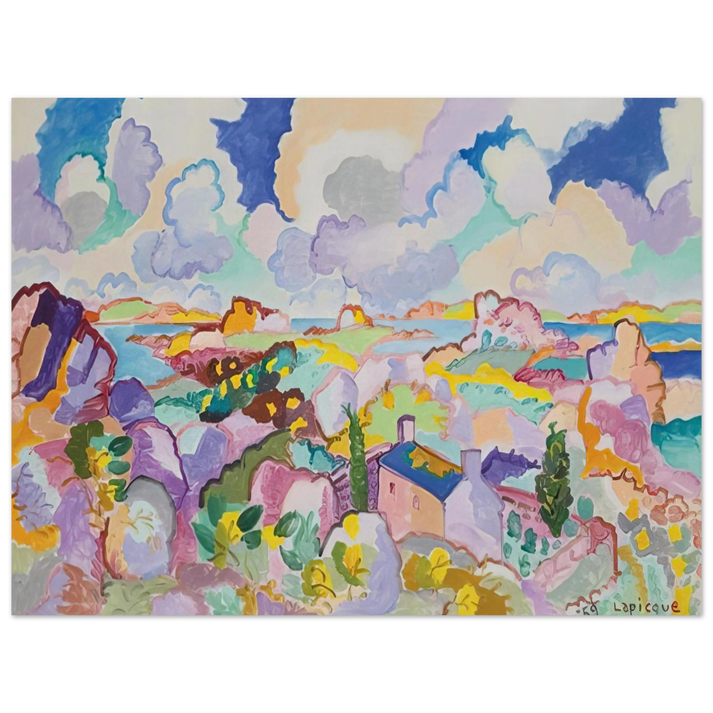
Charles Lapicque - Primavera in Bretagna - 1959 75x100 cm / 30x40 pollici Manifesto d'Arte
Charles Lapicque - Primavera in Bretagna - 1959 75x100 cm / 30x40 pollici Manifesto d'Arte
Impossibile caricare la disponibilità di ritiro
Charles Lapicque: Un capolavoro di energia cromatica
Vivi lo spirito vibrante del modernismo francese degli anni '50 con questa eccezionale riproduzione di "Printemps en Bretagne" (1959) di Charles Lapicque. Come figura centrale della Nouvelle École de Paris, Lapicque fuse la sua competenza scientifica in ingegneria con un approccio profondamente poetico alla teoria del colore. Questo dipinto cattura il risveglio della costa della Bretagna, reso attraverso le sue celebri linee ritmiche e una tavolozza audace e non naturalistica che sfida la prospettiva tradizionale.
Artigianato di qualità museale per il tuo spazio
In RedKalion, preserviamo l'integrità della vigorosa pennellata di Lapicque utilizzando la nostra carta Master's Edition. Questa riproduzione di pregio è realizzata per il collezionista esigente che richiede eccellenza sia nella precisione cromatica che nella longevità fisica. Ogni dettaglio dell'originale del 1959 è meticolosamente riprodotto su una base pesante di 250 gsm (110 lb) , garantendo una presenza tanto tattile quanto visiva.
- Finitura lussuosa: Una superficie non rivestita, opaca, di un bianco naturale (avorio) che elimina i riflessi e mette in risalto la profondità dei pigmenti.
- Integrità archivistica: Priva di acidi (pH superiore a 7) per assicurare che la tua stampa d'arte rimanga vibrante e resista all'ingiallimento per decenni.
- Peso sostanziale: Con uno spessore di 0,29 mm (11,4 mils), la carta offre la rigidità e la sensazione premium di un originale da galleria.
- Eccellenza sostenibile: Stampata su carta certificata FSC, a testimonianza del nostro impegno per la responsabilità ambientale.
Eleva il tuo interno con un capolavoro archivistico che dura nel tempo. Questo poster d'arte di 75x100 cm (30x40 pollici) è più di una decorazione; è una testimonianza dello spirito rivoluzionario dell'astrattismo europeo del dopoguerra, curato e realizzato su richiesta con i più alti standard del mondo dell'arte.
Discover Unlimited Art Possibilities
At RedKalion, you can find virtually any artwork from any artist, available in a wide range of sizes to perfectly match your space.
If you didn’t find what you’re looking for, contact us at support@redkalion.com . We will source any artwork and produce it in any size and format you need, including art prints, posters, canvas, framed pieces, framed canvas, and more.
For dedicated art enthusiasts, we also offer handcrafted replicas of any artwork, carefully painted by highly skilled artists using traditional techniques.
For custom requests, contact us at support@redkalion.com .
Cosa rende unica la stampa della RedKalion Master's Edition?
La nostra Master's Edition utilizza carta archivistica da 250 gsm con finitura opaca e non patinata. Questo materiale di qualità museale garantisce un'elevata profondità dei colori e una texture lussuosa, senza riflessi, che ricorda le opere originali delle gallerie.
Quanto durerà questa stampa di Charles Lapicque senza sbiadire?
La stampa è realizzata su carta senza acidi con un pH superiore a 7. Questo standard archivistico previene l'ingiallimento e preserva la vivacità della tavolozza di Lapicque per generazioni.
Quali sono le dimensioni fisiche esatte e il peso della carta?
Questa stampa misura 75x100 cm (30x40 pollici) su carta da 250 gsm (110 lb) con uno spessore di 0,29 mm, offrendo un aspetto pesante e di alta qualità.
Il processo di spedizione è rispettoso dell'ambiente?
Sì. Utilizziamo carta certificata FSC e stampiamo ogni ordine su richiesta. Questo modello riduce gli sprechi e minimizza la nostra impronta di carbonio, garantendo al contempo l'assenza di requisiti minimi di ordine.
Come influisce la finitura opaca sull'aspetto dell'opera d'arte?
La finitura bianca naturale e opaca offre una superficie sofisticata e non riflettente. Questo consente di vedere chiaramente i colori complessi di "Printemps en Bretagne" da qualsiasi angolazione.
Cosa ha ispirato la rappresentazione della Bretagna da parte di Lapicque nel 1959?
Lapicque era affascinato dal mare e dalla luce marittima. Nel 1959, ha impiegato teorie dei colori "invertite", utilizzando blu per i primi piani per creare un senso unico di movimento e profondità spaziale.
Perché il 1959 è considerato un periodo significativo per Charles Lapicque?
Entro il 1959, Lapicque aveva pienamente maturato il suo stile, superando l'astrazione tradizionale per approdare a un ibrido figurativo-astratto ritmico che gli valse il riconoscimento internazionale e importanti mostre retrospettive.