
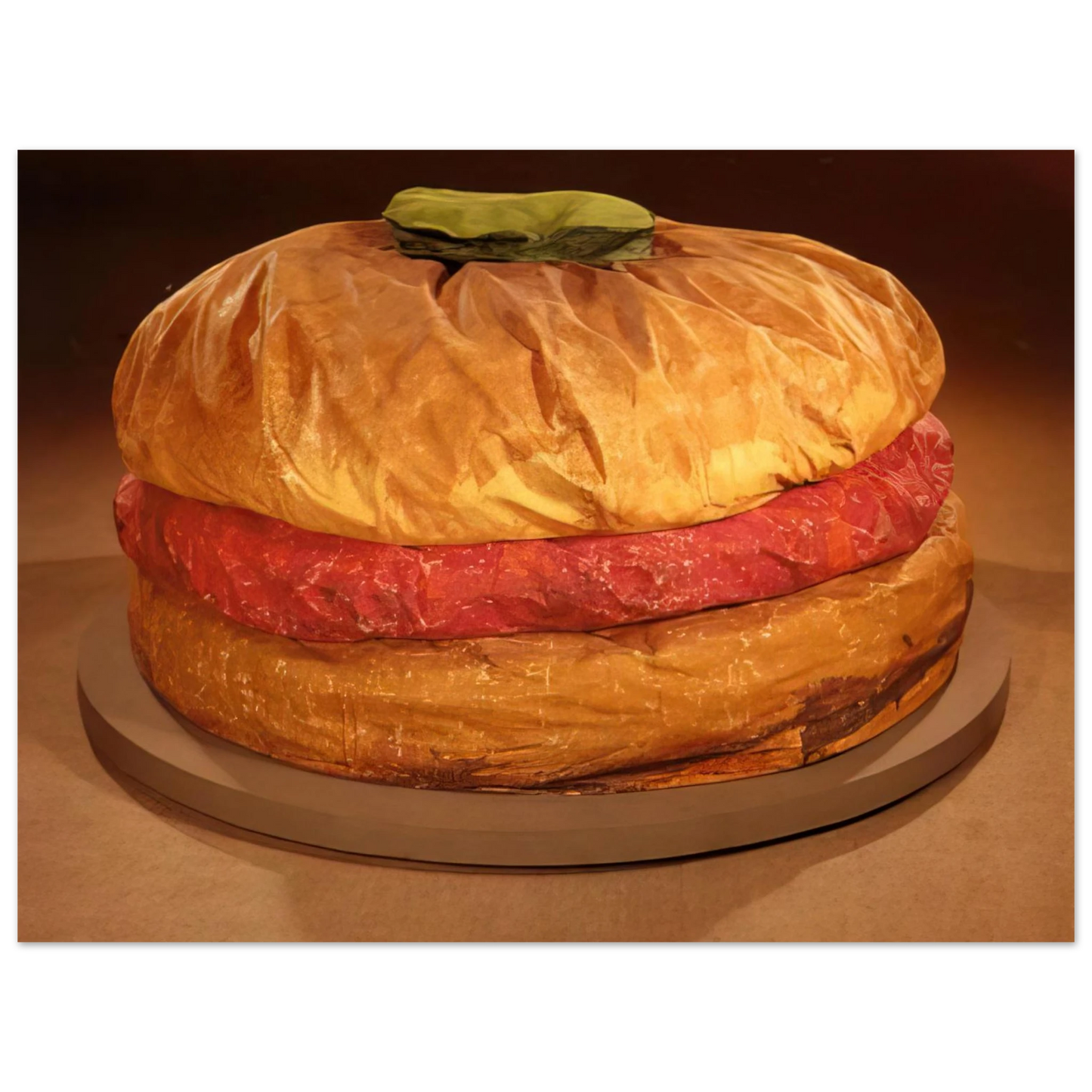
Claes Oldenburg - FLOOR BURGER GIANT HAMBURGER 1962 75x100 cm / 30x40 pollici Locandina d'Arte
Claes Oldenburg - FLOOR BURGER GIANT HAMBURGER 1962 75x100 cm / 30x40 pollici Locandina d'Arte
Impossibile caricare la disponibilità di ritiro
Eleva il tuo spazio con il leggendario "Floor Burger" (1962) di Claes Oldenburg
Trasforma il tuo interno con una riproduzione di qualità museale del Floor Burger (Hamburger Gigante), pietra miliare del movimento della Pop Art degli anni '60. Originariamente concepito per la sua rivoluzionaria installazione, The Store, quest'opera rappresenta la rottura radicale di Oldenburg con i materiali tradizionali. Reimmaginando un simbolo del fast food americano come una scultura massiccia e "morbida", Oldenburg ha sfidato le nostre percezioni del consumismo quotidiano e la rigidità dell'arte classica.
Questa stampa d'arte cattura l'umorismo e la presenza tangibile dell'originale del 1962. RedKalion è orgogliosa di offrire questa riproduzione di qualità archivistica, realizzata con cura per preservare le texture sfumate e le forme audaci che definiscono l'eredità di Oldenburg. In qualità di curatore d'élite di arte di livello mondiale, garantiamo che ogni dettaglio — dalle curve sottili del "panino" alla composizione stratificata — sia riprodotto con una chiarezza mozzafiato.
Eccellenza archivistica e sofisticazione dei materiali
Il nostro impegno per la qualità assicura che il tuo poster di Claes Oldenburg rimanga un pezzo centrale per generazioni. Utilizziamo carta archivistica Master's Edition, rinomata per la sua finitura lussuosa in bianco naturale (avorio) e la texture opaca. Questa carta non patinata evita riflessi fastidiosi, permettendo all'opera di risaltare in qualsiasi condizione di illuminazione.
- Peso e spessore: Carta robusta da 250 gsm (110 lb) con uno spessore di 0,29 mm per un effetto premium.
- Integrità archivistica: Composizione senza acidi (pH superiore a 7) che previene ingiallimento e degrado nel tempo.
- Sostenibilità: Stampato su carta certificata FSC, a testimonianza del nostro impegno per la responsabilità ambientale.
- Qualità museale: Realizzato secondo gli standard rigorosi delle più prestigiose gallerie al mondo.
Investire in questa riproduzione di qualità museale significa celebrare la storia della Pop Art. In RedKalion, offriamo il capolavoro archivistico definitivo che perdura, portando lo spirito rivoluzionario di Claes Oldenburg nella tua collezione privata.
Discover Unlimited Art Possibilities
At RedKalion, you can find virtually any artwork from any artist, available in a wide range of sizes to perfectly match your space.
If you didn’t find what you’re looking for, contact us at support@redkalion.com . We will source any artwork and produce it in any size and format you need, including art prints, posters, canvas, framed pieces, framed canvas, and more.
For dedicated art enthusiasts, we also offer handcrafted replicas of any artwork, carefully painted by highly skilled artists using traditional techniques.
For custom requests, contact us at support@redkalion.com .
Qual è il significato di 'Floor Burger' nella storia della Pop Art?
Il 'Floor Burger' (1962) di Oldenburg ha rivoluzionato la 'scultura morbida', sostituendo bronzo e pietra con tessuto e schiuma. Trasformò oggetti quotidiani di consumo in opere monumentali, criticando con umorismo e scala la domesticità americana e la produzione di massa.
Perché Oldenburg scelse un hamburger gigante come soggetto?
L'hamburger era un simbolo iconico della cultura emergente del fast food negli anni '60. Ingrandendolo a scala 'gigante', Oldenburg costrinse gli spettatori a interagire con oggetti quotidiani in un nuovo contesto scultoreo e spesso assurdo.
Che tipo di carta viene utilizzata per questa stampa d'arte fine RedKalion?
Questa stampa utilizza carta archivistica Master's Edition. Si tratta di una carta da 250 gsm (110 lb), bianco naturale, opaca e non patinata, scelta specificamente per la sua qualità museale e l'eccezionale assorbimento dell'inchiostro.
Come garantisce la carta senza acidi la longevità della stampa?
La carta è senza acidi con un pH superiore a 7, che previene la degradazione chimica che causa ingiallimento o fragilità. Questo assicura che la riproduzione di Claes Oldenburg rimanga vibrante e perfetta per decenni.
La carta utilizzata per questo poster è ecologica?
Sì, RedKalion utilizza carta certificata FSC (Forest Stewardship Council). Questa certificazione garantisce che i materiali provengano da foreste gestite in modo responsabile, che apportano benefici ambientali, sociali ed economici.
Come viene evaso e spedito l'artwork?
Ogni stampa viene evasa su richiesta senza requisiti minimi di ordine. Utilizziamo imballaggi protettivi e sicuri per assicurare che il poster d'arte fine da 30x40 pollici arrivi in condizioni perfette da galleria.
Quali sono le dimensioni di questa riproduzione di Claes Oldenburg?
Questa specifica stampa d'arte fine misura 75x100 cm, che corrisponde a circa 30x40 pollici, rendendola un'opera di grande impatto per spazi murali ampi.